Hoffman Estates Epoxy Flooring has spent more than 20 years on epoxy flooring in Winfield and across the western suburbs, and some of the floors we think hardest about are the ones that get wet on purpose. A bar, a lounge, a basement rec room with a tap system: each puts liquid on concrete every time it is used. The coating we specify for those rooms is chosen for seamlessness and impact first, and for color and gloss second.
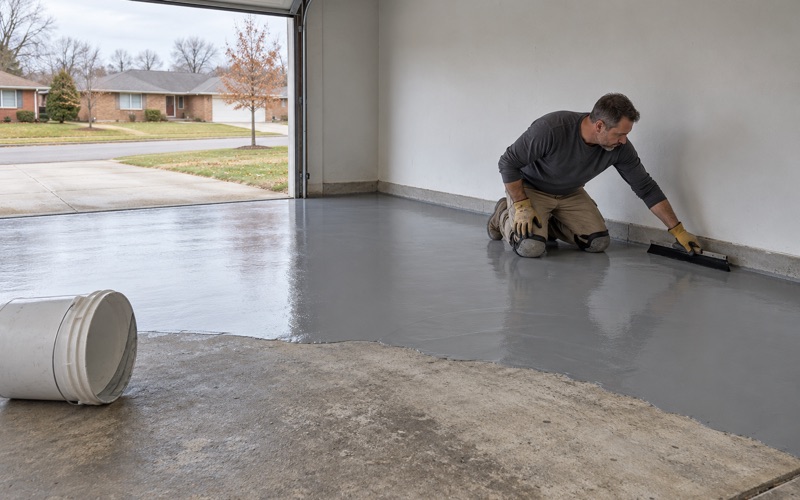
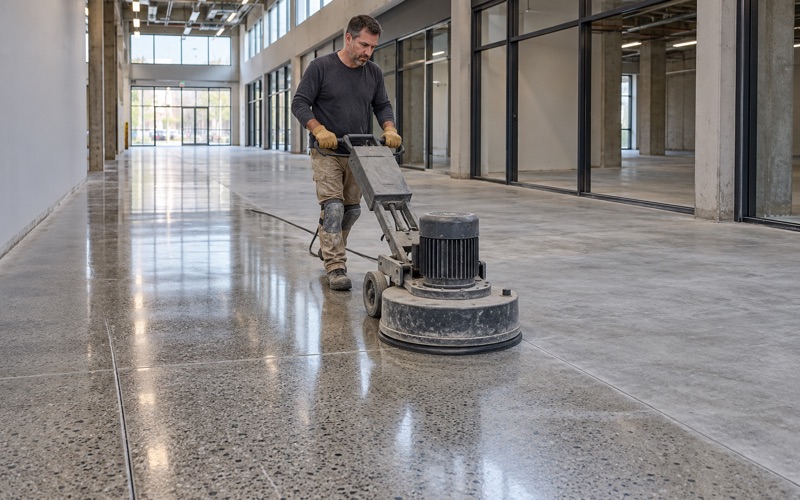
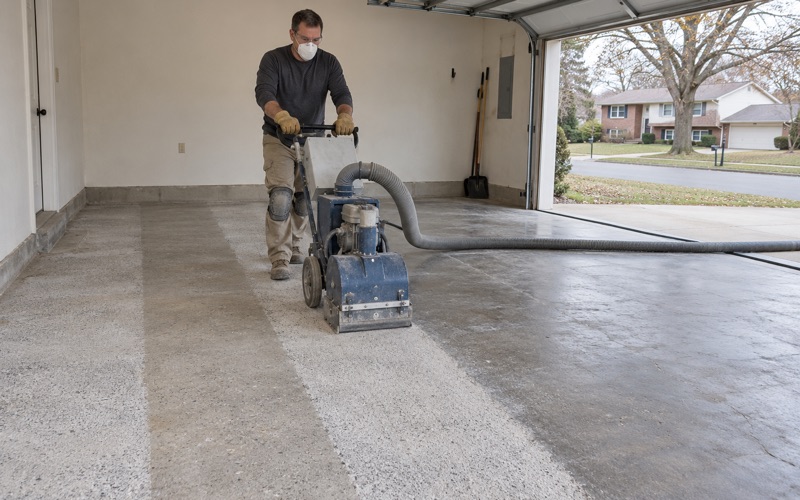
That order matters because a spill floor fails in its seams before it fails anywhere else. Liquid that sits in a joint, a grout line or a hairline crack soaks into the slab, feeds odor, and works its way under any coating that was laid over it without proper preparation. Every slab we coat is opened with a diamond grinder or a shot blaster, never acid etched, so the resin bonds to sound concrete rather than to a skin.
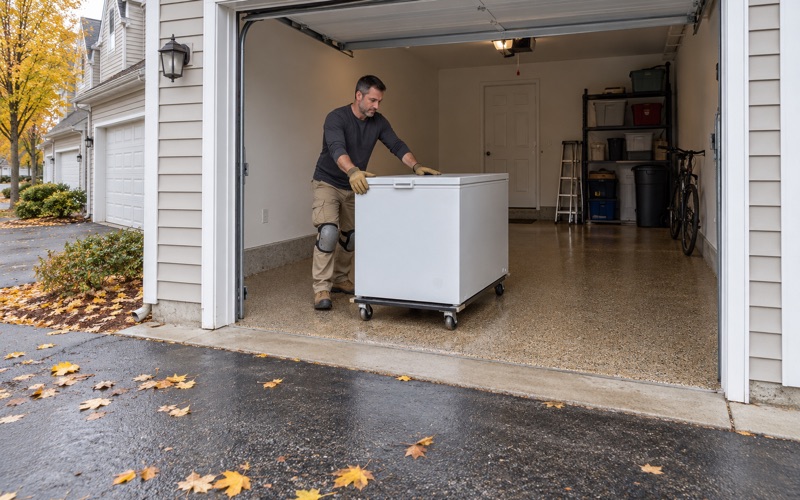
The proposal we hand over names the product, the system build and the finished thickness in writing. When the room is a commercial bar, the schedule is built around the hours the doors have to stay open, which usually means overnight or between-event work. When it is a home bar in a basement, the moisture test comes before the price, because a basement slab can be wet from below long before a single drink is poured on top.
A bar corner on Roosevelt Road since the 1940s
Winfield, DuPage County, has a drinking corner with unusual staying power. Cooper’s Corner, on Roosevelt Road between County Farm and Winfield roads, opened in 2014, and its owners describe the business as continuing a restaurant tradition that has existed at that location since the 1940s. It runs as a full bar and grill, with live music in its lounge every weekend, and the village’s 2024 principal-employer list counts it with 26 employees.
We name it here as a landmark, not as a customer, and we have not inspected any of its floors. What the corner illustrates is a type of room that has been serving the same purpose on the same piece of ground for roughly eight decades. Rooms like that wear in a predictable pattern, and the place that wears hardest is almost always the strip of floor behind the bar where the staff stand.
Why a long-running bar location is a useful example
A location that has hosted drinks and dinner for that long has seen generations of owners, and every one of them faced the same question: what holds up to liquid every single night? The answers on offer have shifted as materials changed, from wood and sealed concrete to quarry tile and grout, and more recently to seamless resin systems built specifically for spill zones.
What a weekend lounge adds
A weekend lounge with a band stretches the service night and packs the room. More people means more glasses set down, more ice dumped into sinks, more mopping between sets, and more trips across the floor with full cases. For a flooring contractor, a busy weekend room simply compresses a month of ordinary wear into a few long nights.
Looking for epoxy-flooring closer to Wauconda? See Epoxy-Flooring Services in Wauconda.
Behind the bar: spills, grout lines and joints
The working side of any bar takes liquid all night. Beer foams over during a pour, ice melts out of bins and wells, soda guns drip, glasswashers vent hot water, and the closing crew hoses or mops what is left. Sherwin-Williams, writing about bar floors, puts it plainly: spills happen frequently there, and the concrete takes a beating from heavy storage containers of alcohol and other liquids.
The same manufacturer says a bar floor should have no cracks, crevices, grout or joints where liquids can pool or bacteria can grow. That single sentence is most of the case for a seamless resin system behind a bar. A tile floor is hundreds of small seams, and every one of them is a place where sugar, beer and cleaning water settle and stay long after the mop has moved on.
Grout lines as spill traps
Grout is porous unless it is constantly resealed, and in a wet room it rarely is. Over time the lines darken, the edges of the tiles chip, and liquid finds its way under loose pieces. Once that happens the floor smells even when it looks clean, because the source sits below the surface where a mop never reaches it. A broadcast-and-seal epoxy system removes those lines entirely.
Saw cuts, cracks and the joints that cannot be ignored
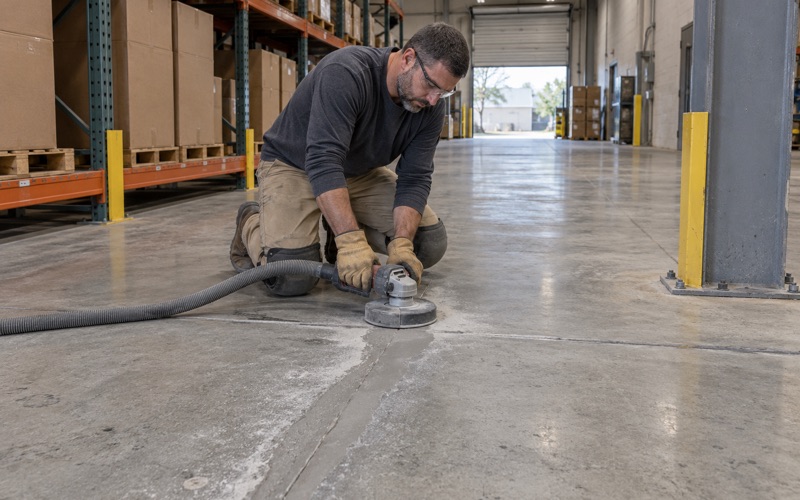
Concrete slabs carry control joints and usually a few cracks, and we read every one before we quote. Some can be filled and coated over; a moving joint has to be honored in the new floor or it will reflect straight through. A coating is a film that follows the slab under it, and we tell an owner that before the job rather than promising a floor that hides movement.
Building a floor for wet, sticky service
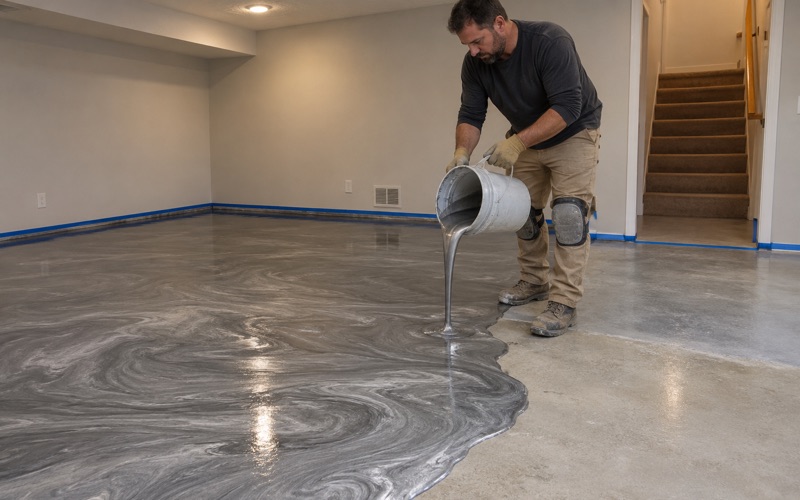
For a bar we generally look at a 100% solids epoxy base with a quartz aggregate broadcast, locked in with a polyaspartic or polyurea topcoat. The aggregate gives a wet floor grip, and the topcoat resists the sugars and acids in spilled drinks. Where hot water and aggressive cleaning are daily facts, urethane cement is the tougher option, and we say so when a room calls for it.
Kegs, cases and the impact side of a bar floor
Liquid is only half of the problem behind a bar. The other half is weight and impact. Kegs are rolled, tipped and occasionally dropped.
Cases of bottles get stacked, slid and dragged from the walk-in to the well. Ice bins are filled from buckets, and stools and carts scrape the same narrow lanes every shift. A thin decorative film that looks fine in a showroom will chip under that use in weeks.
Thickness is a specification, not a guess
This is why our proposals state a finished thickness rather than a vague number of coats. A spill-and-impact floor needs real build, typically a broadcast system or a troweled mortar, so that a dropped keg dents the surface instead of shattering a film down to bare concrete. When the quote names the product and the thickness, an owner can measure what went down against what was promised.
Surface preparation decides whether the floor stays put
Impact tests the bond more than the topcoat. That is why we grind or shot blast to a defined ICRI CSP profile, matched to the system, and why we never acid etch. Old coatings, sealers and contamination from years of spilled drinks have to come off before anything new goes down. If the slab itself is cracked or spalled badly enough to need repair first, we say that plainly before quoting.
Working around opening hours
A bar cannot close for a week while a floor cures. We plan commercial jobs around the hours a business has to stay open, which often means overnight work or a short window between events. Fast-curing polyaspartic topcoats help, but curing is still scheduled against slab temperature and the dew point spread at the surface, not just the clock, because amine blush and a soft finish are what a rushed cure produces.
A basement bar at home: the same floor, smaller
Plenty of Winfield homeowners have built a bar into a basement or a finished rec room, and the physics there are the same as on a commercial floor, only smaller. Drinks get spilled, ice melts, a kegerator drips, and a few nights a year the room fills with guests. The floor behind a home bar wants the same thing a commercial one does: no seams, real grip when it is wet, and a surface that tolerates a dropped bottle.
Moisture comes first on a basement slab
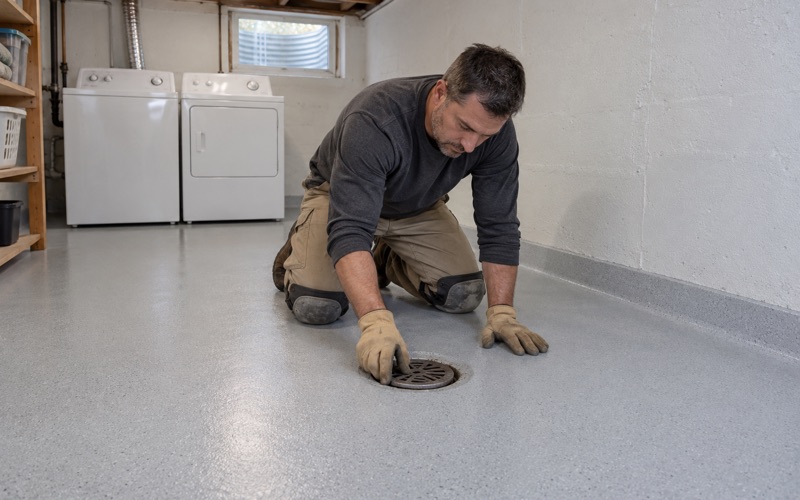
The difference is what comes up from below. A basement slab can carry moisture vapor or hydrostatic pressure that has nothing to do with spilled drinks, and coating over it without testing is how a floor blisters. We write moisture testing into the scope, using ASTM F1869 calcium chloride or ASTM F2170 relative humidity probes, and a moisture-mitigation primer where the readings call for one.
What a coating will not do
We never sell a floor coating as waterproofing. Water entering through a basement slab is a drainage question first, and sump pits and floor drains have to be detailed rather than sealed over. We also do not sell a coating as radon reduction, which in Illinois requires an IEMA radon mitigation license. Warranty exclusions are read out before the job is signed, with moisture named first.
Paperwork on a home job
Every home project gets a written contract and the Home Repair: Know Your Consumer Rights pamphlet before work begins, as the Illinois Home Repair and Remodeling Act requires. Illinois issues no state license for coatings work, so we confirm the Village of Winfield’s own contractor registration, bond and insurance rules, and we ask its building department whether a basement coating needs a permit rather than assuming the answer either way.
- 20+ Years Coating Concrete
- Moisture Testing in Every Scope
- Written Contract on Every Home Job