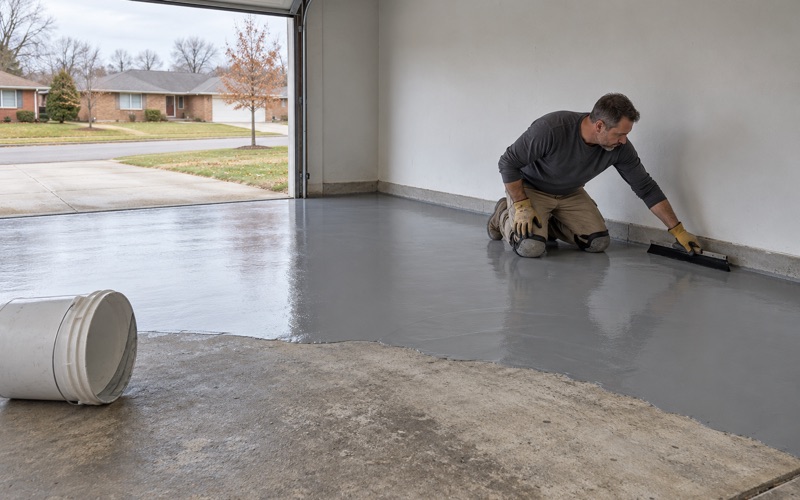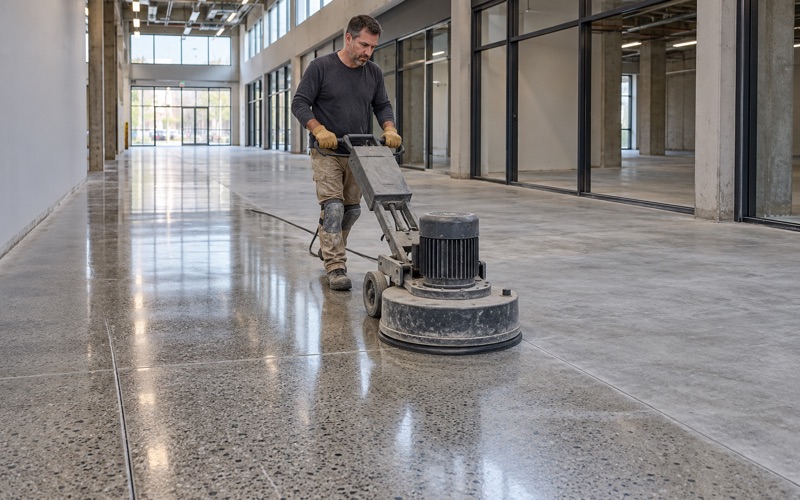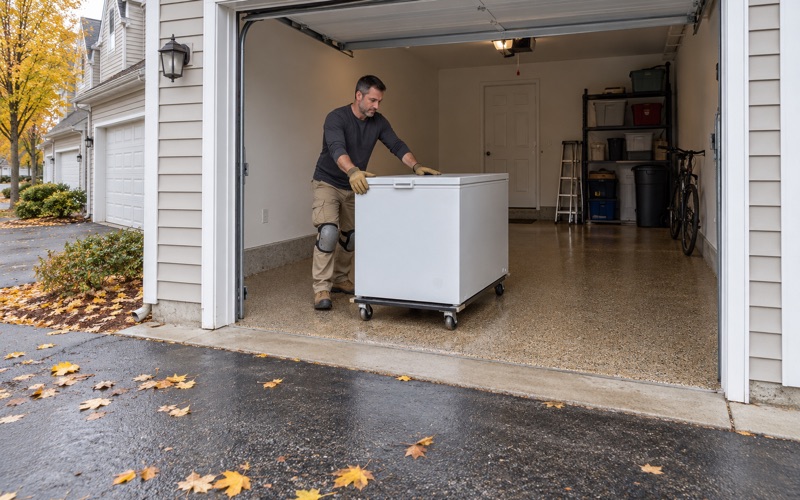
Hoffman Estates Epoxy Flooring has spent more than 20 years on epoxy flooring in Western Springs and across the western suburbs, and some of the most demanding floors we think about are the ones people play on. A game room, a home bar or a lounge floor beside a bowling lane is judged less by how it looks than by what it leaves behind on the soles of the people crossing it.
That changes how a coating has to be chosen, cured and cleaned. A resin floor in a play space has to finish completely, carry no film on its surface, and stay clean with products that leave nothing behind. A glossy floor that is still soft, waxed or coated in cleaner residue is a problem the moment someone walks off it in smooth-soled shoes.
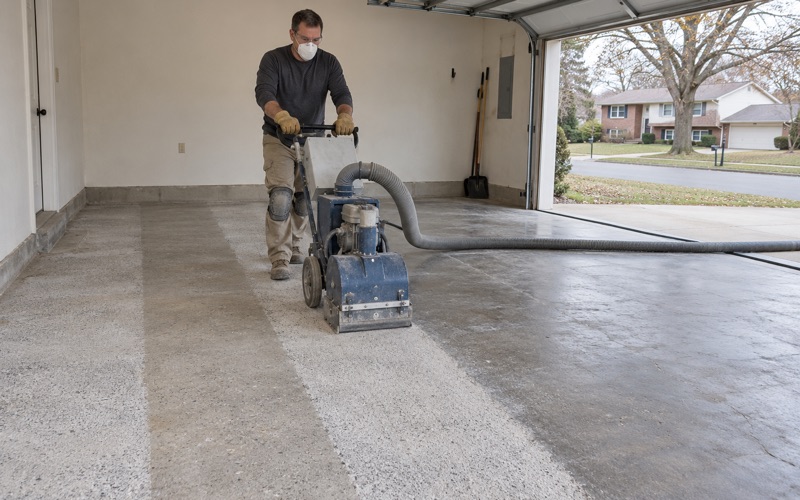
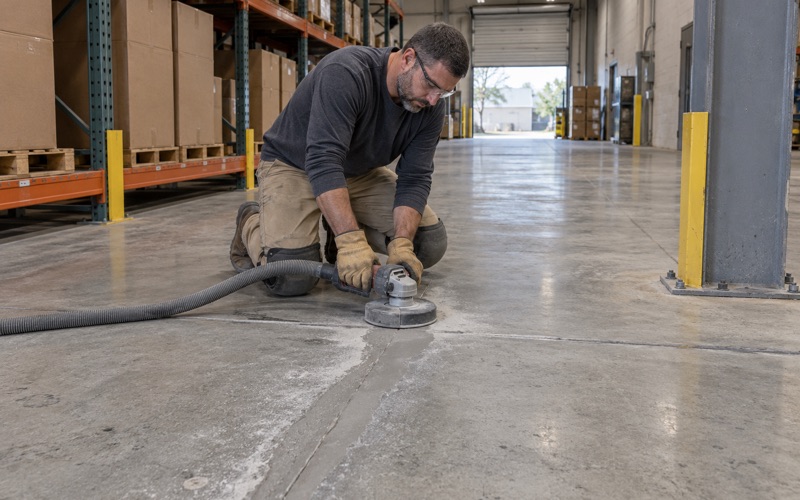
Every slab we coat is opened with a diamond grinder or a shot blaster first, and we never acid etch. Our written proposal states the product, the system build and the finished thickness, so the floor you were quoted is the floor you can check against what was installed.
Four bowling lanes in a club more than 115 years old
The Village Club on Lawn Avenue
The Village Club of Western Springs sits at 4221 Lawn Avenue, an address that geocodes inside the village in Lyons Township, Cook County. By the club’s own account, it has brought good friends and neighbors together for over 115 years. Its amenities include four classic bowling alleys for casual play or leagues, a golf simulator, and a cozy second-floor lounge with a bar, fireplace and meeting room.
The club describes itself as volunteer-led, and its Building Our Future, Together campaign lists a new fence, a rebuilt deck and significant interior upgrades, including a newly renovated bar. Members can also rent the historic club for private parties. A building that hosts league nights, parties and a working bar under one roof asks a lot of every floor in it.
What we know and what we do not
To be plain, we have never worked at the Village Club, and nothing there was coated by us. The club’s website does not say what floor surrounds the lanes, where in the building the lanes sit, or when the building went up. We raise it because bowling has a well-documented rule about the floors around the lanes, and that rule applies to any play space.
The lanes and the approaches themselves belong to bowling specialists, not to a floor coating contractor, and we do not work on them. Our interest is the floor around them: the bowlers’ area, the walkways, the lounge and the bar. Those are the surfaces that decide what reaches the approach on the bottom of a shoe.
Looking for epoxy-flooring closer to Brookfield? See Brookfield Epoxy-Flooring.
Everything on the floor ends up on a slide sole
Wax and carpet residue travel
A bowler slides on the final step, and the approach is maintained so that slide is predictable. Kegel, a lane maintenance company, puts the hazard plainly: wax from tiles and residues from carpets and carpet treatments can stick to shoes and can easily be tracked onto the approach. Their guidance treats the floor and carpet in the bowlers’ area as part of approach care, not a separate concern.
Jayhawk Bowling Supply adds the other half. Spills in the bowler’s area or on the approaches will also cause bowlers to stick, and if tile floors have been waxed or carpet cleaned and then scotchbrited, both wax and scotchbrite can be tracked onto the approaches. Their advice is that keeping food and drinks away from the bowler’s area is a good idea.
Why a coating does not get a pass
A resin floor is not exempt from any of that. A coated floor that has been finished with a maintenance wax, mopped with a cleaner that dries to a film, or left with a sticky spill will transfer it to a shoe exactly as tile or carpet does. The surface only helps if it is clean in the literal sense, with nothing sitting on top of it.
That is the real advantage of a properly built resin floor near a play area. A cured epoxy or polyaspartic surface needs no wax to look finished, so there is no wax to track. It sheds spills to a mop instead of absorbing them, which gives whoever cleans it a fair chance of removing everything rather than spreading a thin layer around.
Spills from the lounge and the bar
A bar on the same floor as the games means drinks, ice, syrups and snacks crossing the room. Sugar dries tacky, and a tacky patch on the way back from the bar is exactly the sort of spill the bowling supply guidance warns about. A seamless coated floor, coved where the room needs it, leaves no grout lines or carpet fibers for a sticky drink to settle into.
Fully cured and residue-free before the first league night
Cure is a schedule, not a date
A floor that feels dry is not necessarily a floor that has cured. We schedule curing against slab temperature and the dew point spread at the slab surface rather than the calendar, and we tell an owner plainly when a cold room has to wait. Resin coated too near its dew point can develop amine blush, a waxy film on the surface that weakens the next coat’s bond.
Amine blush matters doubly on a play floor. It is a residue in its own right, the kind a shoe can pick up, and it has to be washed off and the surface checked before a topcoat goes on. We build that check into the sequence rather than discovering a hazy, slightly greasy floor after the furniture has already been moved back.
The right finish for the room
A 100% solids epoxy base with a polyaspartic or polyurea topcoat gives a hard, dense surface that resists the scuffing a game room takes. Where the floor around a bar sees heavier spills, we can tighten the texture with a fine quartz aggregate broadcast for traction, locked under enough topcoat to keep it easy to wipe clean.
A vinyl flake broadcast is another common choice for a lounge or rec room, and it hides everyday dust well between cleanings. Whatever the build, the proposal names it, including thickness, so nothing about the finish is left to a verbal promise. A finish chosen for how it cleans tends to stay looking right far longer than one chosen only for its color.
Cleaning without leaving film
The cleaning plan is part of the floor. We tell owners to avoid wax, mop-on shine restorers and cleaners that dry to a film, because each one puts back the residue the coating was meant to remove. A neutral cleaner, clean water and a dedicated mop do more for a coated floor near a play area than any product sold as a gloss enhancer.
Abrasive scrubbing deserves the same caution. The bowling supply guidance names scotchbrite alongside wax as something that ends up on an approach, and an aggressive pad also dulls a topcoat and loosens fine particles that ride out of the room on shoes. A soft pad or a microfiber mop removes spills from a sound resin floor without grinding away the surface that makes it easy to keep clean.
We also cover what a coating cannot do. A coating is a film that follows the slab under it, so it will not stop a cracked slab from moving, and a crack that keeps opening will eventually show through. We read the cracks and any old coating before quoting, and we say so when a slab needs repair before it is coated.
The same rule in a home basement bar or game room
A family room built for play
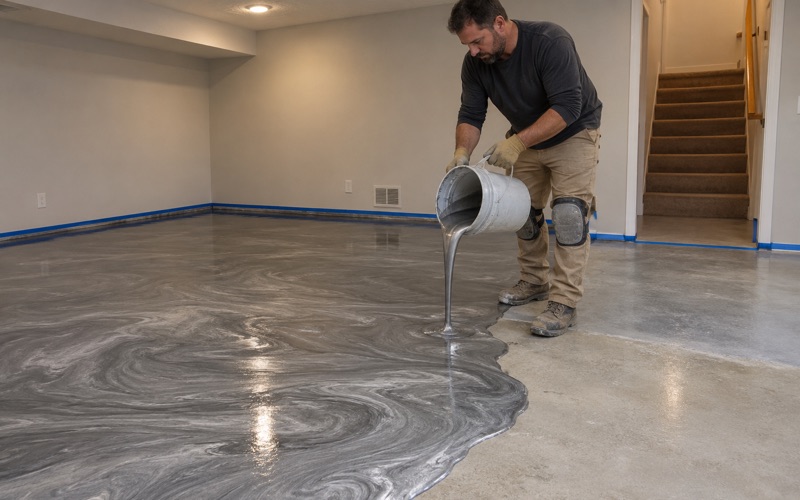
Plenty of Western Springs homes have a basement rec room, a bar, a pool table or a dartboard, and the same logic applies on a smaller scale. Socks, slippers and smooth-soled shoes pick up whatever is on the floor, and a waxy or sticky surface becomes a slip in a room where people are carrying drinks. A fully cured, film-free coated floor avoids that problem.
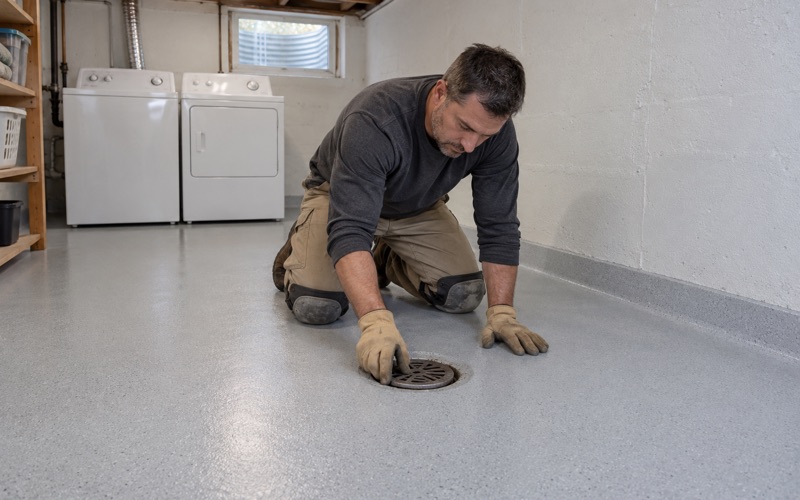
A home bar also concentrates spills in one spot, right where people stand. A seamless resin floor with a cove at the base of the bar keeps liquid out of the joint where floor meets cabinet. That is the joint where carpet and tile tend to fail first, and where a sticky residue settles in and spreads around the room on the bottom of every shoe.
Moisture first, then the coating
A basement slab can carry moisture up from below, and a coating laid over a damp slab can blister and lift. Moisture testing is a line item in our scope, using ASTM F1869 calcium chloride testing, ASTM F2170 in-situ relative humidity probes or an ASTM D4263 plastic sheet test. Where readings run high, a moisture-mitigation primer goes down first, and moisture is the first warranty exclusion we read out.
We never sell a floor coating as waterproofing. Water coming up through a basement slab is a drainage question before it is a flooring one, and a sump pit or floor drain needs its own detailing. We also do not sell a coating as radon reduction, because in Illinois that work takes a state radon mitigation license.
Paperwork in Western Springs
Every home job gets a written contract and the Home Repair: Know Your Consumer Rights pamphlet before work starts, as the Illinois Home Repair and Remodeling Act requires. Illinois issues no state license for flooring work, so we confirm the village’s own contractor registration, bond and insurance rules before scheduling.
We also ask Village of Western Springs Community Development, at 708-246-1800, whether a given coating counts as decorating or needs a permit, rather than assuming either answer. The products we specify fall within the Illinois limit on VOC content, which binds the installer as well as the manufacturer, and that matters in a basement where the air does not move much.
- 20+ Years Coating Concrete
- Moisture Testing in Every Scope
- Written Contract on Every Home Job