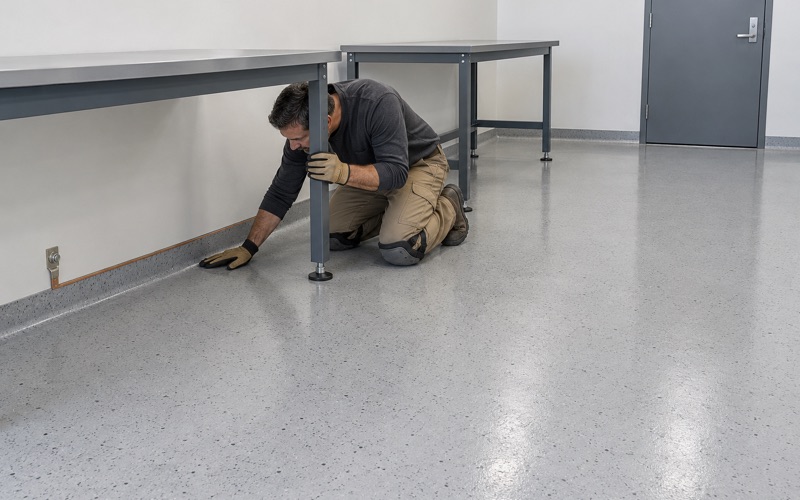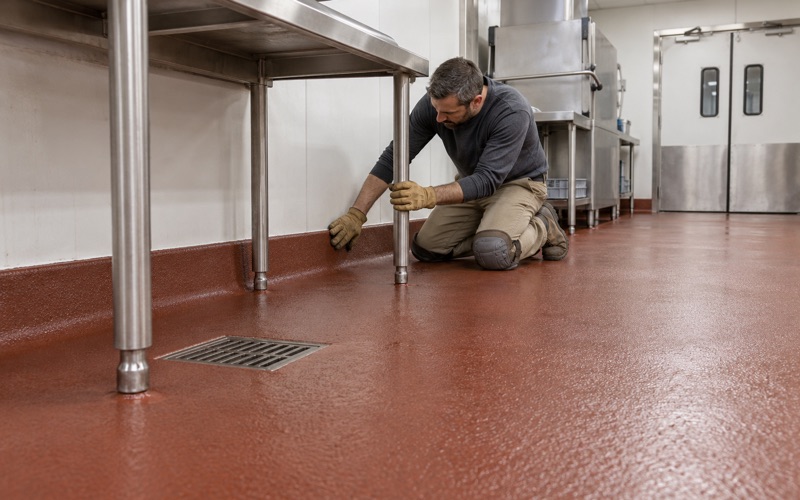
Hoffman Estates Epoxy Flooring brings more than 20 years to epoxy flooring in Westchester, and the floors we plan most carefully are the ones that get washed down on a routine and have to drain every single time. On a floor like that the coating is judged by what happens to water, not by how it looks on the first day. It has to shed a rinse toward the drain, stay bonded at the edges and come clean without holding a film.
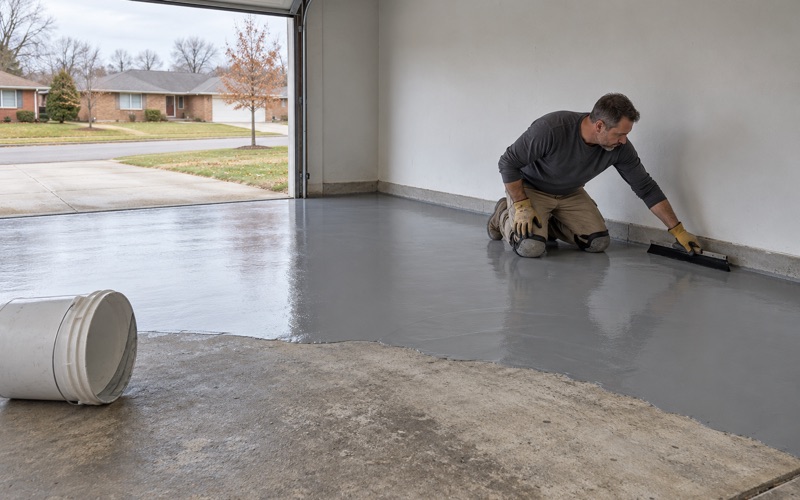
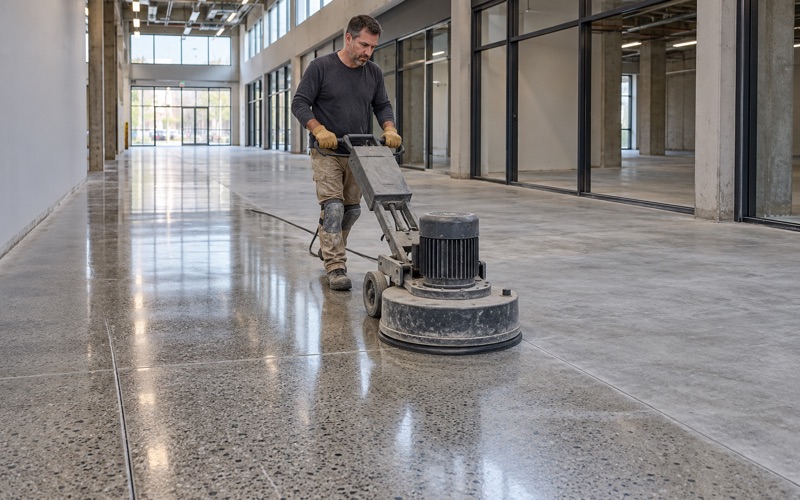
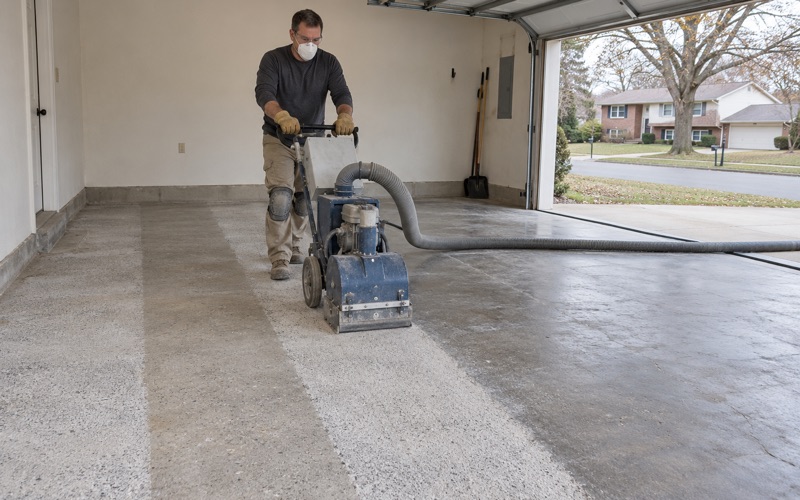
That kind of floor starts with preparation done by machine. We open every slab with a diamond grinder or a shot blaster to a measured ICRI CSP profile, and we do not acid etch. Moisture testing is written into the scope as its own line, using ASTM F1869 calcium chloride kits or ASTM F2170 in-situ relative humidity probes, rather than offered after a floor has already blistered.
Our proposals name the product, the system build and the finished thickness, so the floor that goes down can be checked against the floor that was quoted. Before quoting we read the cracks and any old coating, and we tell an owner plainly when a slab needs repair before anything can be applied to it.
A Cermak Road Funeral Home and the Room Illinois Regulates
Founded in 1885, serving four generations
Conboy-Westchester Funeral Home on Cermak Road describes itself as family-owned and founded in 1885, and it has served the Chicagoland area for four generations with traditional funerals, cremations and memorial services. Its address, 10501 W. Cermak Road, geocodes inside the Village of Westchester, in Proviso Township. We have done no work there. We point to it because the building holds a kind of floor the state writes rules around.
Westchester is a village in Cook County, a western suburb of Chicago, with 16,892 residents at the 2020 census. It is mostly homes, and few of the small floors in it are as closely regulated as the back rooms of a funeral establishment. That regulation is worth reading closely, because it describes a floor problem in plain terms.
What the licensing code asks for
The Illinois Funeral Directors and Embalmers Licensing Code, at 68 Illinois Administrative Code 1250.170, requires each funeral establishment to maintain a preparation room properly equipped with necessary drainage, running water, electricity and ventilation facilities. The room must be kept in a sanitary condition with necessary drainage and proper ventilation. It must also be available for inspection by the state Division.
What the section leaves out matters as much as what it says. It names no floor material, so no coating is required by code and no rule says the floor must be seamless or resin. What the rule does set is a standard a floor either supports or works against: water has to reach a drain, and the surface has to stay sanitary and hold up when an inspector looks at it.
For a room open to state inspection, a floor should read as maintained at a glance: no peeling at the drain, no lifted edges at the base and no worn patches where the coating has gone through to concrete. Those are the places a coated floor shows its age first. They are also where we look when an owner asks whether a floor can be recoated or has to come back to bare concrete.
Looking for epoxy-flooring closer to North Aurora? See Epoxy-Flooring in North Aurora.
Drainage and Washdown: A Floor Cleaned After Every Use
Falling to the drain
In any room washed down after each use, the first question is where the water goes. A coating is a film that follows the slab beneath it, so if the concrete does not already fall toward its floor drain, a layer on top will not create that slope. We check the fall before we quote, and where a slab ponds, the correction is made in the concrete with a sloped patch rather than left to the resin.
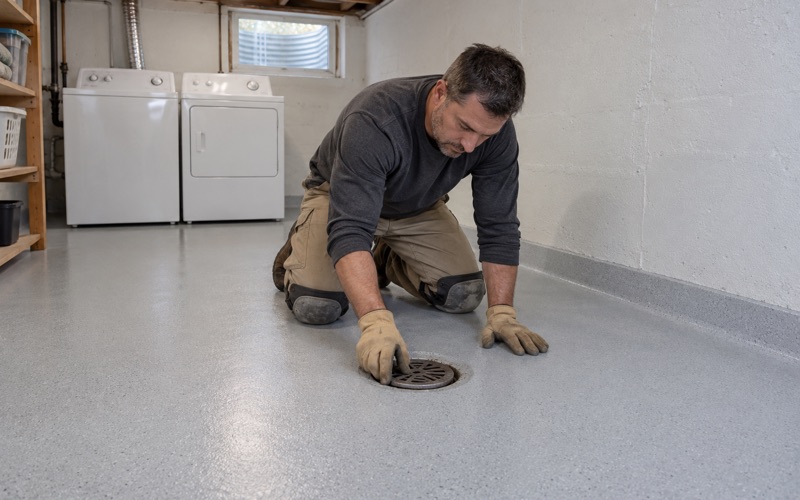
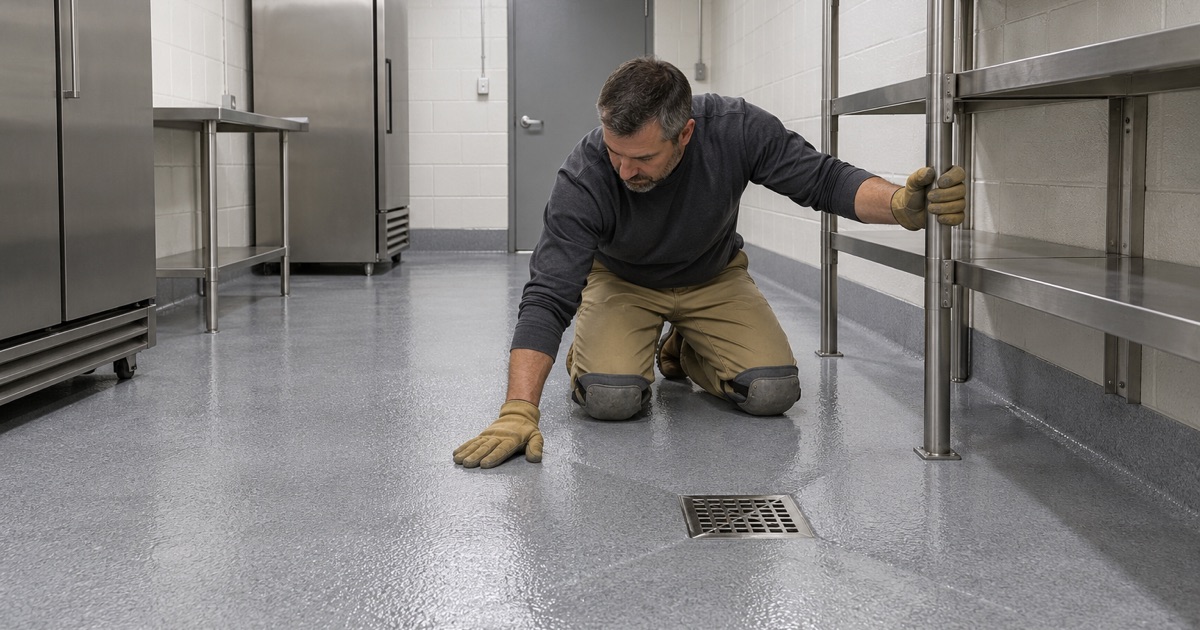
The drain body is the detail that fails first. We grind and clean right to the drain rim and terminate the system into it, so a rinse cannot track under the coating’s edge. The drain stays open and working when we leave, and we hold the same standard for a sump pit or floor drain in a basement or utility room.
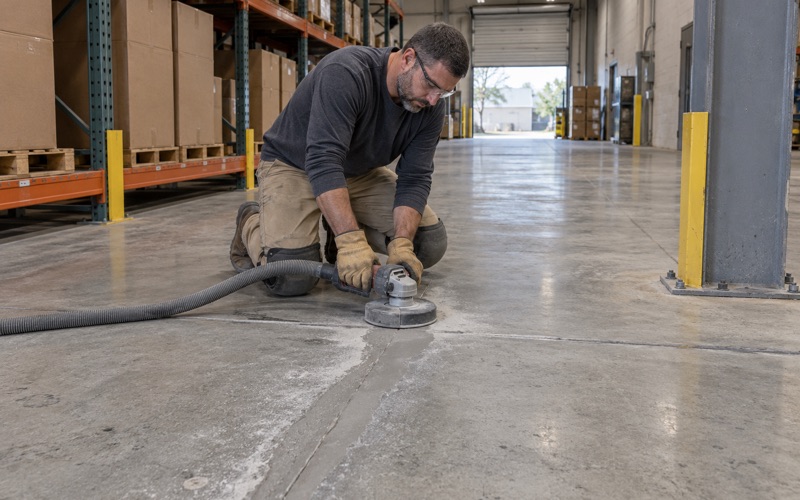
Cracks and joints in a wet room need their own decision. A static crack can be routed and filled before coating, while a joint that moves stays a joint, detailed so it can flex rather than bridged with a film that will split along its line. Where an owner wants bare concrete in a utility room instead, grinding followed by a lithium silicate densifier is an honest option.
Systems that shed water and come clean
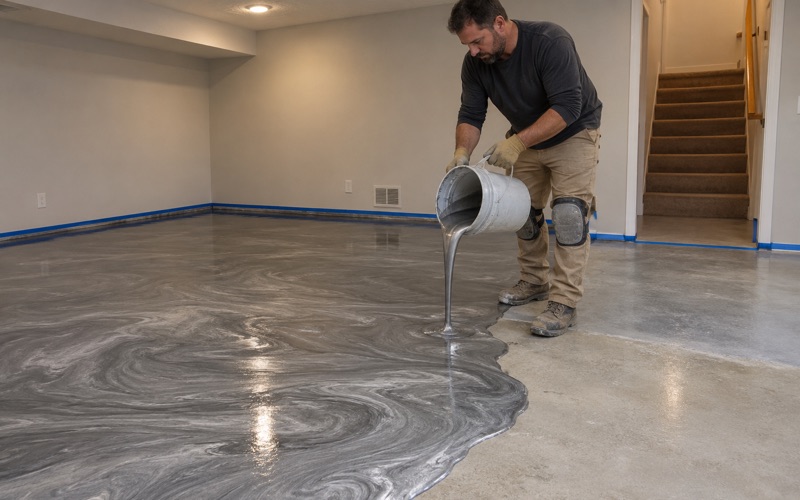
For a washdown floor we usually look at 100% solids epoxy built to a stated thickness, often with a quartz aggregate broadcast for footing, under a polyurethane or polyaspartic topcoat. Urethane cement is the heavier answer where hot water and frequent scrubbing are part of the routine. Texture is a trade-off we set with the owner: enough grip for wet shoes, not so much that the floor holds residue against a mop.
A coved base where the floor meets the wall turns that corner into one cleanable surface instead of a joint that collects water. We write the cove height into the proposal along with the rest of the system build. That way the owner, or anyone reviewing the room later, can see what was specified and confirm it was installed.
Moisture from below
A floor that is wet on top every day can also be taking on moisture from underneath, and the two are easy to confuse. Our test results are read against the product’s published limits, and a moisture-mitigation primer goes down when the numbers call for one. Warranty exclusions are read out before the job is signed, and moisture is the first exclusion we name.
Privacy and Scheduling: Working in a Room That Cannot Be Watched
Access limits written into the rule
The same section of the licensing code makes the preparation room private during preparation, with access limited to licensees, interns, students, medical examiners, coroners and Division representatives. It also requires a notice of privacy affixed to or adjacent to the room. For a flooring crew, that means a room like this is never ours on our own timetable. It is handed over empty and handed back on a date the establishment can plan around.
Planning cure around a working building
Any business that cannot close for a week needs the cure planned before the grinder arrives. We schedule curing against slab temperature and the dew point spread at the surface rather than the calendar, because amine blush and a soft cure come from cold, damp concrete. On commercial floors we work around the hours a building has to stay open, overnight included, and we say how long a room stays out of service.
A fast-curing polyaspartic topcoat can shorten the time a room is closed, but it does not shorten preparation. We price the grinding, repair and testing the same whether the topcoat cures in hours or overnight, because that work is what the bond depends on.
Products, registration and permits
Coatings we use are chosen within the Illinois VOC limits in 35 Illinois Administrative Code Part 223, which bind the installer as well as the manufacturer. That matters in a building with occupied rooms on the other side of the wall. Illinois issues no state license for coatings work, so we confirm the Village of Westchester’s contractor registration, bond and insurance rules before a job is booked.
We also ask the village’s Community Development and Building Department whether a particular coating job counts as decorating or needs a permit. We do not assume either answer, because a permit question settled after the work starts costs an owner time that a phone call beforehand would have saved.
Chapels, Visitation Rooms and the Rest of Westchester
The public side of the same building
A funeral home is two kinds of floor under one roof. The preparation room is private and washed down, while the chapel and visitation rooms are public spaces where quiet and appearance matter more than washdown. Where a building like this has a service entrance, vestibule or back hallway on bare concrete, a coated floor with a polyaspartic topcoat and modest texture handles winter boots and tracked-in deicer better than the bare slab. The rooms where families gather are a design choice for the owner, and we do not push resin where another finish suits the room.
Basements and the village’s backup program
Most of what we coat here is residential, and 90.8 percent of occupied homes in the village are owner-occupied. The village’s Home Emergency Preparedness Rebate Program helps owners of single-family homes and two-flats with part of the cost of protecting a basement from sewage backup, through options such as an overhead sewer or a backflow valve with a bypass pump.
The 1950s alone supplied 48.4 percent of the village’s housing, so a first coat or recoat here usually goes onto a slab about seventy years old. A slab that age often carries patches, old paint or adhesive, and we read each one before deciding whether the floor can be coated as it stands or needs repair first.
A floor coating is not on that list, and we never sell one as waterproofing. Water coming up through a basement slab is a drainage question first, the same principle that governs a washdown room. Nor do we sell a coating as radon reduction, since that work in Illinois takes a state radon mitigation license.
Garage floors in a salt winter
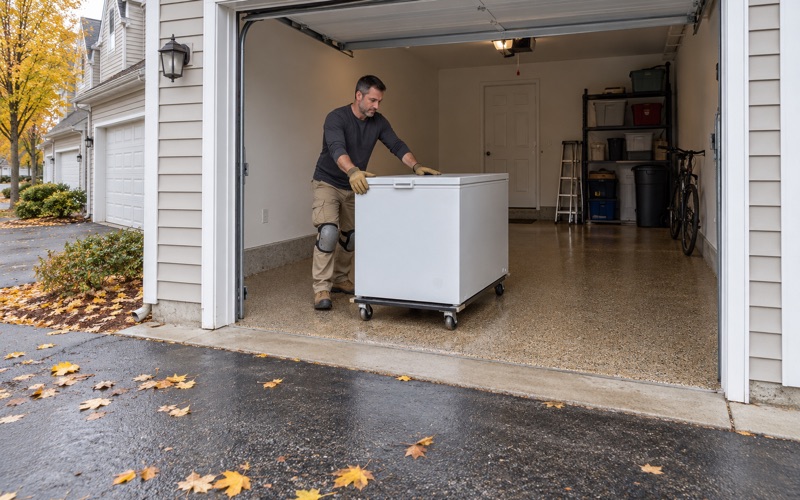
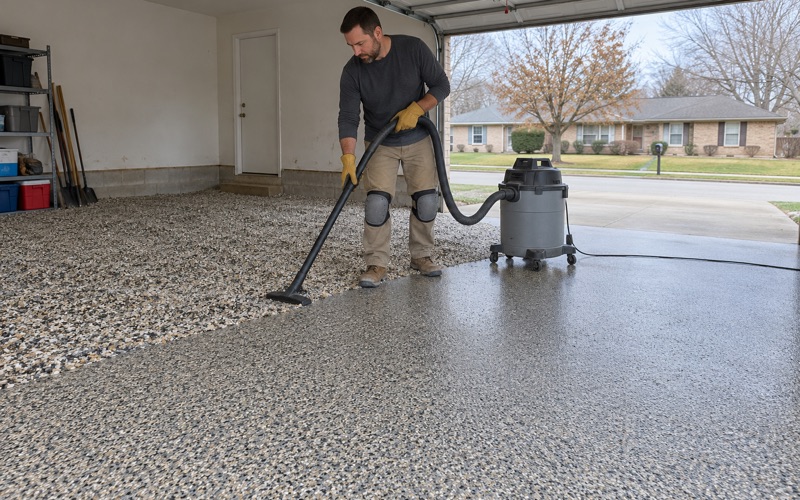
Garage floors here are built for the calcium chloride brine and rock salt a northern Illinois winter carries in on the tires. A typical system is a ground-open slab, a 100% solids epoxy base, a vinyl flake broadcast and a polyaspartic topcoat that resists hot tire pickup. In an unheated garage we say plainly when cure conditions mean waiting for spring.
Every home job comes with a written contract and the Home Repair: Know Your Consumer Rights pamphlet before work begins, as the Illinois Home Repair and Remodeling Act requires. A coating follows any crack or movement in the slab beneath it, and we explain that before the job rather than promising a floor that stops the concrete from moving.
- 20+ Years Coating Concrete
- Moisture Testing in Every Scope
- Written Contract on Every Home Job