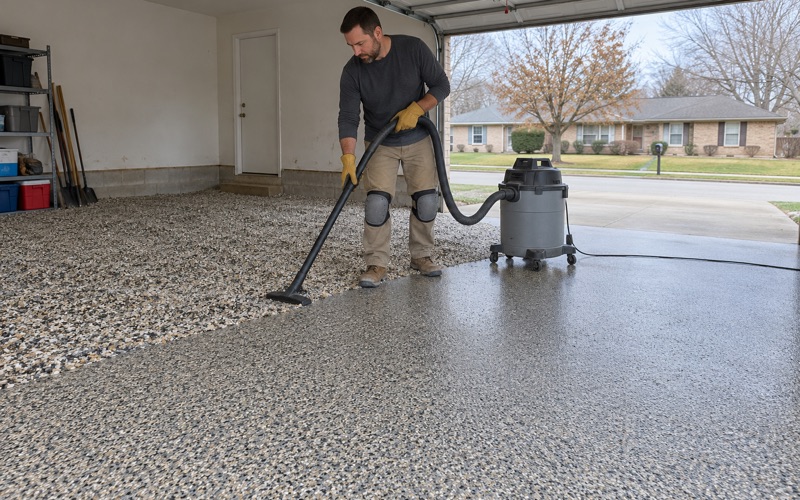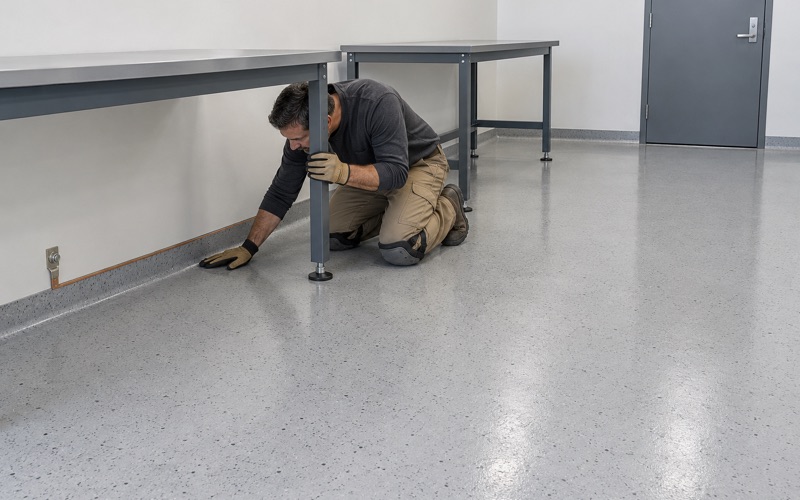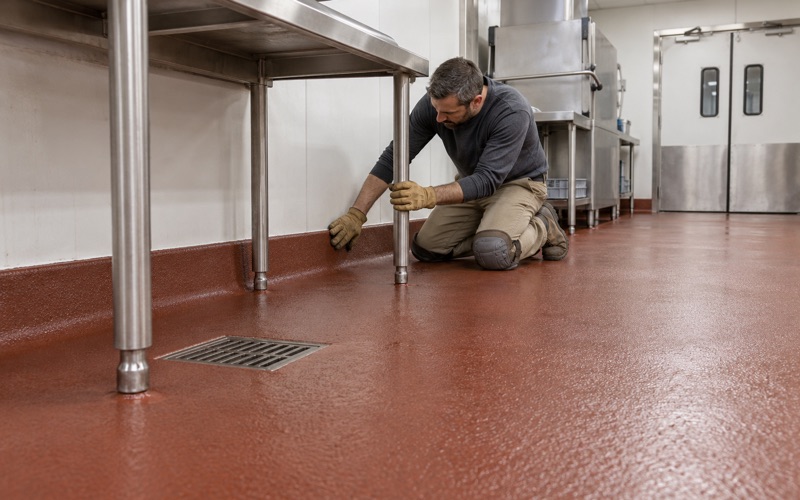
Hoffman Estates Epoxy Flooring brings more than 20 years of epoxy-flooring work to Round Lake, and the jobs we plan most carefully here are interiors where the floor has to be finished before anything else is fixed to it. A restaurant booth bolted down or a retail display anchored into the slab turns flooring into the first trade in the sequence rather than the last. Get that order wrong and the coating ends up cut around fixtures that are already standing.
We open every slab with a diamond grinder or shot blaster, never with acid, and moisture testing appears on the proposal as its own line. The written scope names the product, the system build and the finished thickness, so a business owner, a landlord or anyone reviewing the paperwork can check what was quoted against what went down.
Homeowners get the same preparation on a garage or basement slab, along with a written contract before work begins. The sections below cover how a storefront floor fits a downtown build-out, where anchored fixtures change the system we specify, and how a fixed deadline shapes curing.
A Village Program That Names Permanent Flooring
The Village of Round Lake runs a Downtown TIF grant package, and one piece of it, the Restaurant and Retail Build-Out Program, lists flooring among the items it will consider. It offers reimbursable grants to restaurants or retail businesses in existing buildings within the Downtown TIF District, covering up to 50 percent of eligible materials, permanent fixtures and labor. New ground-up construction is not eligible.
What the eligible-items list says
The village’s program document names “Permanent flooring materials” outright. Beside it sits a line for permanent seating fixtures, such as booths and tables mounted to the floor, or permanent retail showroom display fixtures. Plumbing, electrical, HVAC, fire suppression, ADA bathrooms and permanent kitchen infrastructure are listed too, which shows the floor is one trade among many in a build-out the village weighs as a whole.
We are not part of that decision. Eligibility and approval belong to the Village Board, and the program covers only restaurants and retail in existing downtown TIF buildings, so a garage or a home basement sits outside it entirely. What we can do is write a floor scope clear enough to drop into an application packet without anyone needing a translator.
Round Lake village, not its namesakes
The program belongs to the Village of Round Lake, incorporated January 7, 1909, with its village hall on Cedar Lake Road. Round Lake Beach, Round Lake Park and Round Lake Heights are separate villages with their own building departments, even though the Greater Round Lake Fire Protection District covers all of them. We check an address against the Census geocoder before assuming which permit desk applies.
A downtown storefront such as 602 N Cedar Lake Rd, named in a village facade-grant post, geocodes inside Round Lake village in Avon Township, Lake County. We have not read the floor in that building or in any other downtown space. That is why we walk the slab in person before a number goes on paper.
Looking for epoxy-flooring closer to Westchester? See Westchester Epoxy-Flooring.
Floor First, Fixtures Second
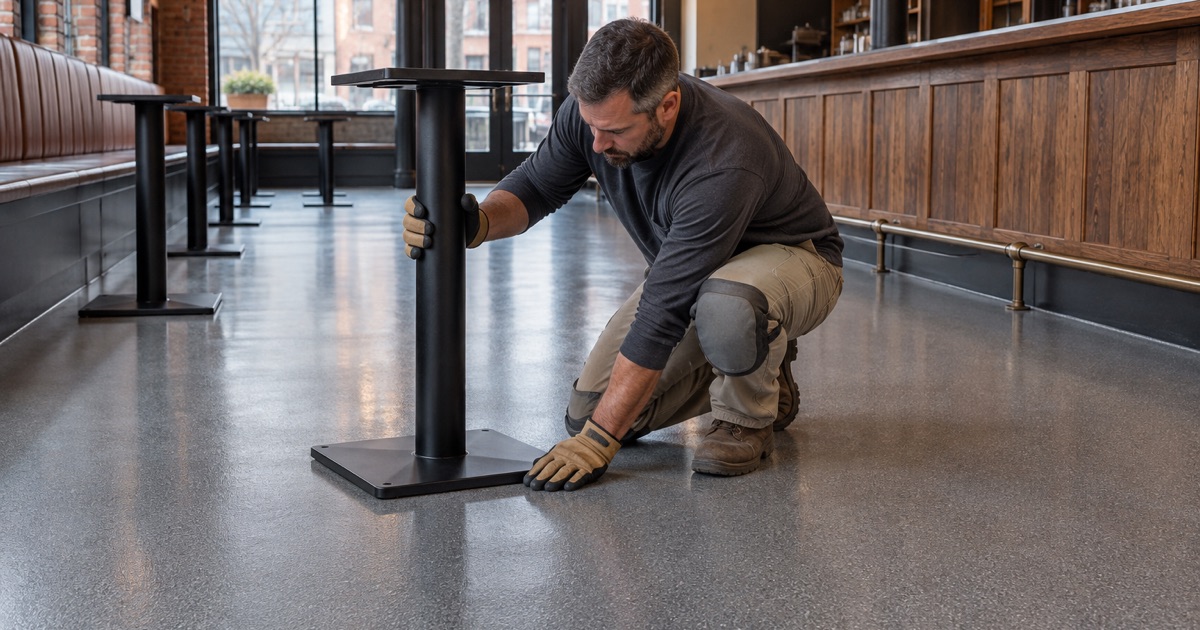
When booths and tables are mounted to the floor, the anchors pass through whatever finish is already there. That makes sequencing the whole question. If the coating goes down after the fixtures, every pedestal base becomes an edge to cut and seal by hand, and those edges are where a resinous floor tends to lift first.
The same logic applies to anything else fastened down for good, from host stands to counter bases. Each one is easier to set on a finished floor than to coat around afterward, and a floor laid in one continuous pass reads as one surface rather than a patchwork of islands between fixtures.
Anchoring through a finished floor
Our preference is a complete, cured system across the whole dining room before a single booth arrives. The fixture installer then drills through a finished floor, and the small hole around each anchor gets sealed rather than a full perimeter being cut in. We talk through anchor locations with that installer ahead of time so nobody is surprised by a layout change after the topcoat cures.
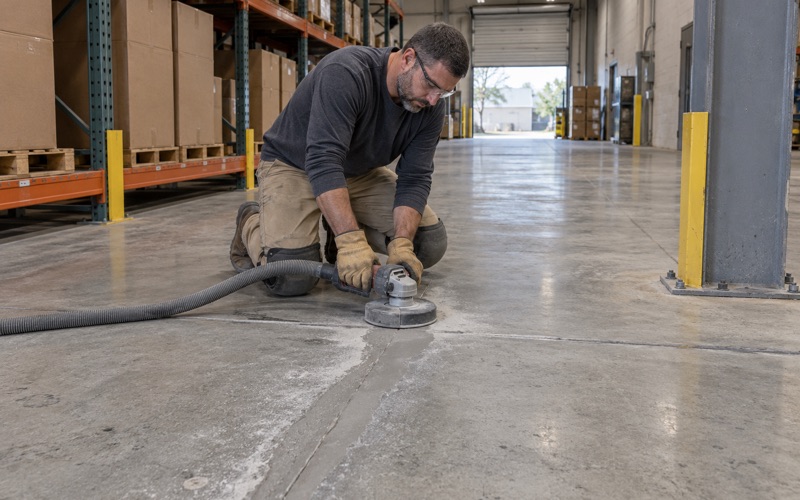
A coating is a film that follows the slab beneath it, so we say before the job that it will not stop a slab from moving. If cracks are telegraphing through an old finish, or an earlier coating is peeling, we read both before quoting. When a slab needs repair before it can take resin, we say that plainly instead of coating over the problem.
Retail display fixtures and the floor under them
Retail spaces raise a different load question. A permanent showroom display fixture concentrates its weight on a few feet, while shoppers drag carts and heels along the aisles between them. For that kind of traffic we generally build on 100% solids epoxy with a quartz aggregate broadcast or a vinyl flake broadcast, then lock it under a polyaspartic or polyurea topcoat.
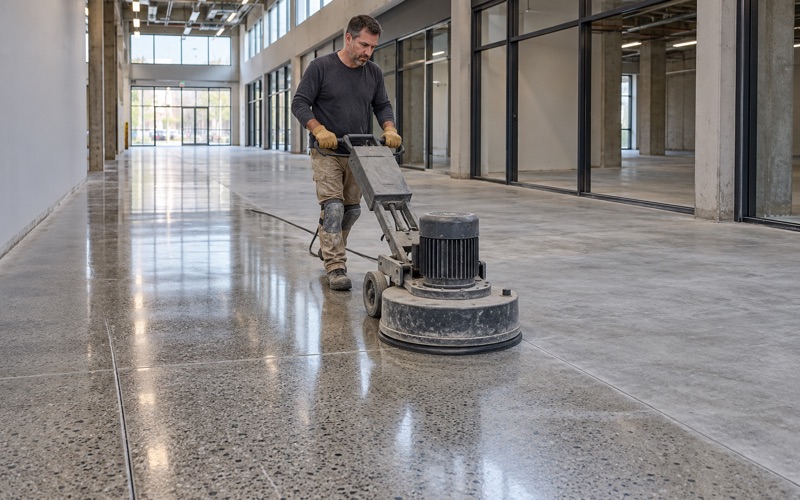
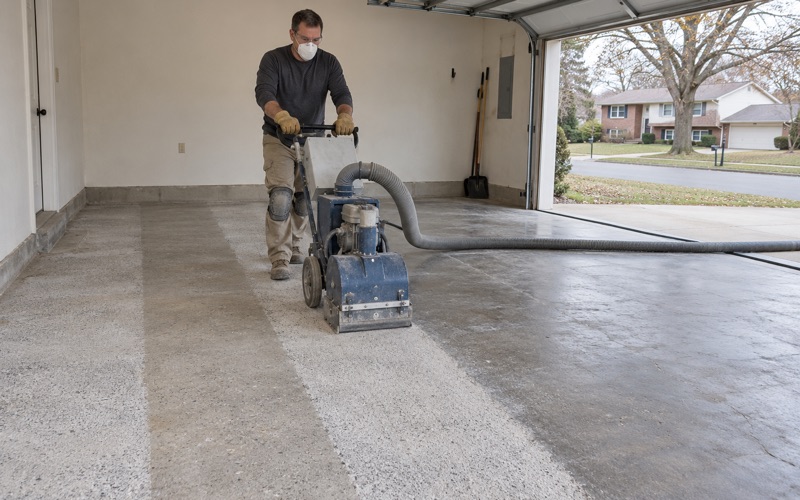
The surface profile matters as much as the resin. We grind or shot blast to a profile on the ICRI CSP 1-10 scale that suits the chosen system, then confirm it before priming. A storefront that has carried tile, carpet adhesive or an older coating usually needs more removal than its owner expects, and we say so during the walkthrough rather than on the invoice.
Some retail owners would rather keep exposed concrete than install a colored system. In that case we can grind the slab and harden it with a lithium silicate densifier, which leaves nothing to peel around a fixture base. It will not hide stains the way a broadcast floor does, and we explain that tradeoff before the owner chooses.
Six Months From Approval to Opening
The program puts a clock on all of this. After approval, the build-out has to be completed, permits closed, a certificate of occupancy obtained and the business opened within six months, and one six-month extension may be requested. The floor sits early in that window, so a delay there pushes every trade behind it.
Where curing fits the calendar
We schedule cure against slab temperature and the dew point spread at the slab surface, not against a date somebody circled. A storefront with its heat already running is far easier to plan than an unheated shell in midwinter, and we will say plainly when a space has to be warmed before resin goes down. Rushing a cure invites amine blush on the epoxy and a soft topcoat that marks under the first booth base.
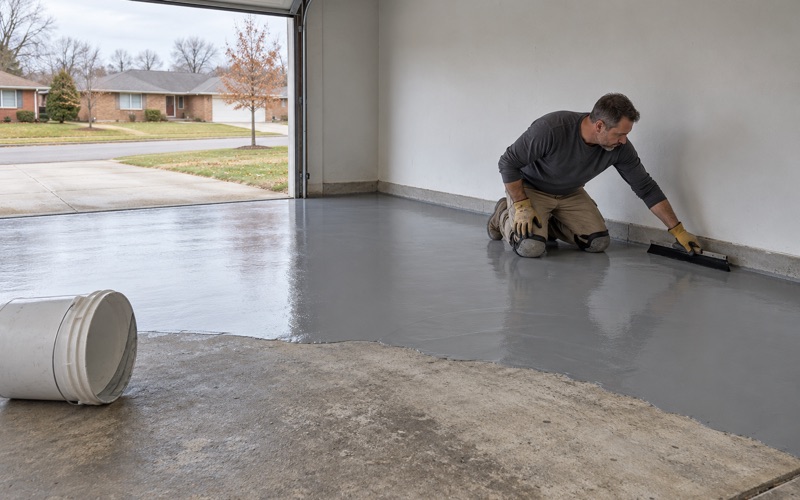
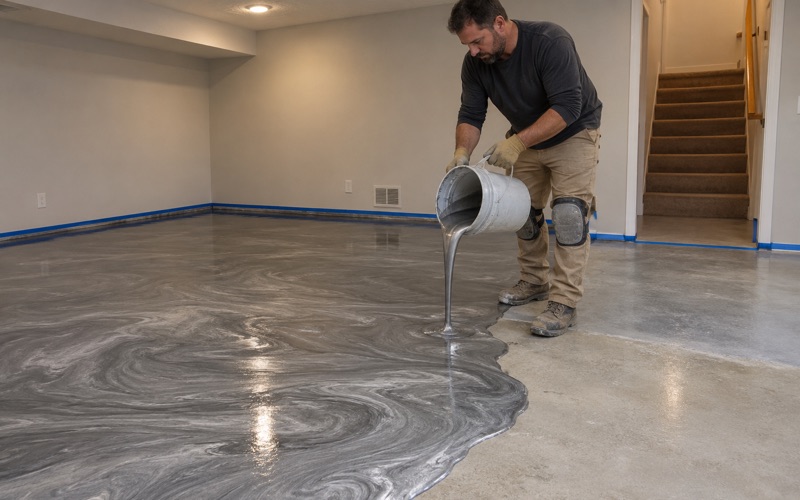
In a typical dining room our sequence runs grinding, testing, priming, the body coat, the broadcast and the topcoat, followed by a cure period before fixture installers walk on it. Any trench or patch the plumber or electrician cuts into the slab has to be filled and cured before we grind. We ask for those trades to finish their floor work first, because a fresh patch under a fresh coating is a common place for trouble.
Testing moisture before the clock runs
Moisture testing goes on the proposal as a priced item, ahead of any coating. Depending on the slab we use ASTM F1869 calcium chloride tests, ASTM F2170 in-situ relative humidity probes or a quick ASTM D4263 plastic sheet check, and we compare results against ASTM F710 thresholds. If readings come back high, a moisture-mitigation primer joins the build and the schedule reflects it.
Doing that first protects the deadline. A floor that blisters a month after the booths are bolted down is far harder to fix than one that waited for a primer. Warranty exclusions are something we read out before the job is sold, with moisture named first, not after a problem appears.
Permits and the village desk
Whether a coating counts as decorating or needs a permit is a question we put to the Village of Round Lake Building Department before work is scheduled, rather than guessing either answer. Illinois issues no state license for flooring or coatings work. So we also confirm the village’s own registration, bond and insurance expectations before a crew is booked.
Two Estimates, Hired Professionals and Lien Waivers
The program asks for paperwork that a vague floor quote only makes harder. Applicants must spend at least $10,000 in eligible costs, with a minimum grant of $5,000, and must either own the property or hold a lease of at least five years. They also need two comparable contractor estimates and must use hired professionals, since the applicant’s own labor is not reimbursed.
Making two estimates comparable
Two quotes are only comparable if they describe the same floor. Ours names the product, the system build and the finished thickness, with preparation method and moisture testing as separate lines. That lets an owner set our number beside another installer’s and see whether the gap is price or scope, which is the comparison two estimates are meant to allow.
Invoices and notarized final lien waivers
Reimbursement needs paid invoices and notarized final lien waivers. We issue an invoice that matches the line items on the accepted proposal and provide a final lien waiver for notarization once we are paid, so the floor never becomes the missing page in a reimbursement file. Whether that file is approved remains the village’s call.
The facade program next door
The companion Facade Improvement Program follows the Round Lake Downtown Design Guidelines adopted by the Village Board on February 3, 2025. That program concerns the storefront facade rather than the floor inside, but an owner working through both is coordinating two sets of contractors at once. We keep the floor scope tight and clearly bounded so it does not crowd either one.
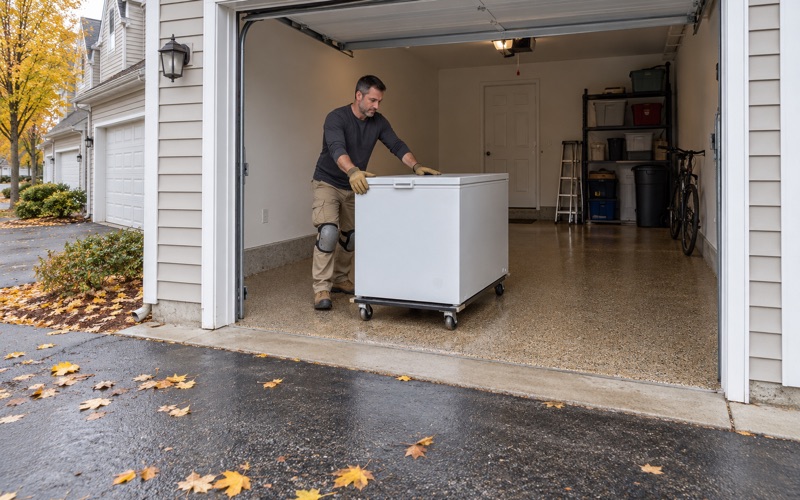
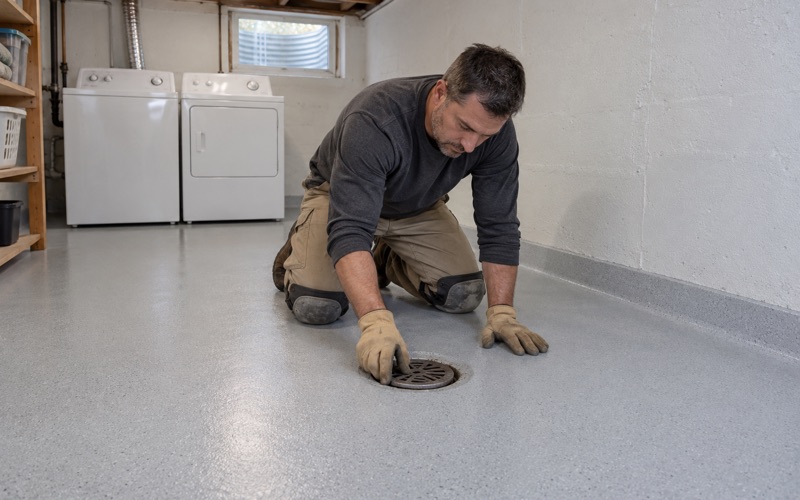
Away from downtown, most Round Lake floors we quote are residential: garage slabs built for the calcium chloride brine and rock salt a winter tracks in, and basements where water coming up is a drainage question before it is a coating one. A garage poured to code may have no vapor retarder under it, so we test even a newer slab. Every home job starts with a written contract and the Home Repair: Know Your Consumer Rights pamphlet, as the Illinois Home Repair and Remodeling Act requires.
- 20+ Years Coating Concrete
- Moisture Testing in Every Scope
- Written Contract on Every Home Job