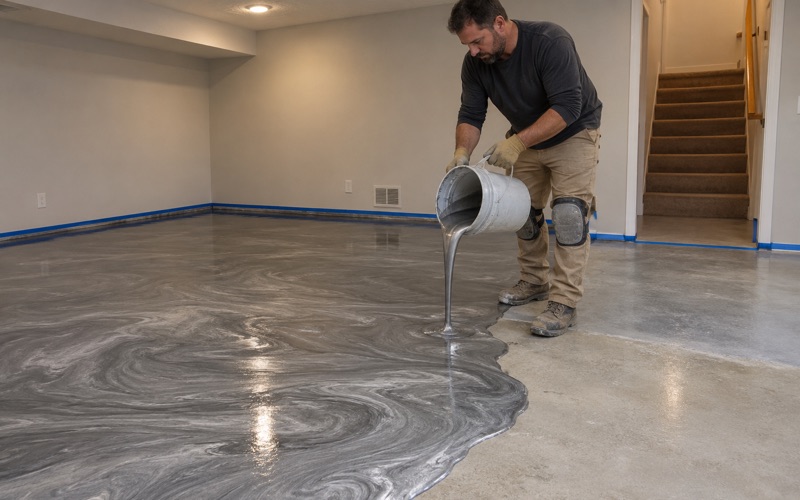
Hoffman Estates Epoxy Flooring has worked on epoxy-flooring in River Grove for 20+ years, and a good share of the questions we get here come from people who work with hot metal. A welder’s garage or a small fabrication shop asks something different of a floor than a family garage does, because some of what lands on the slab is glowing. We start by asking what will hit the surface, then decide where resin belongs.
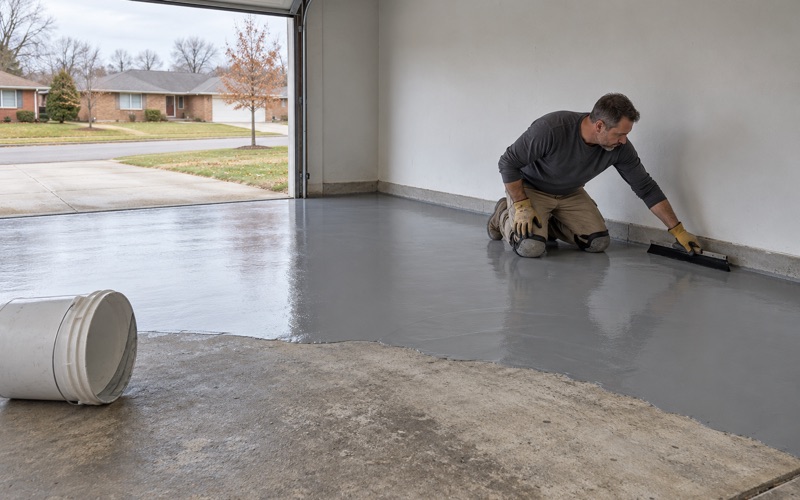
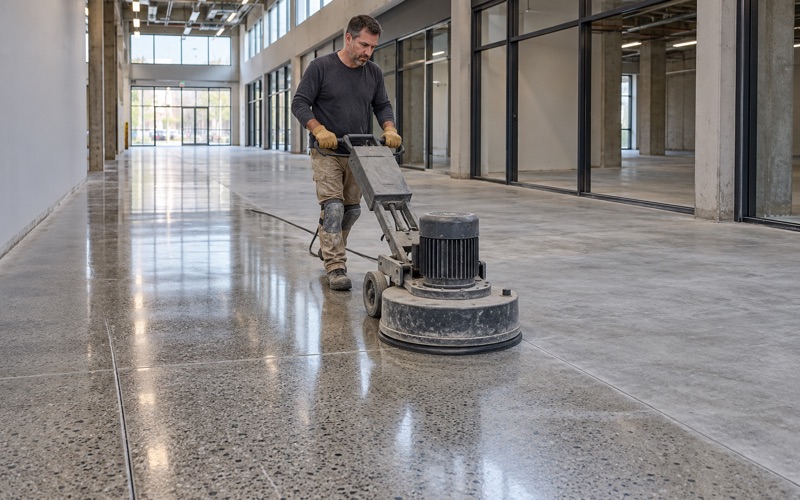
Every proposal we write names the product, the system build and the finished thickness, so the floor that goes down can be checked against the floor that was quoted. Before any coating, the slab is opened with a diamond grinder or a shot blaster to a measured ICRI CSP profile, and we do not acid etch. Moisture testing is its own line in the scope rather than a sale made after a blister appears.
The honest answer on a welding floor is often a split one: bare or densified concrete where sparks and slag fall, a coated system where people walk, park and store tools, and a clear line between the two. The sections below explain why that line exists, what the federal welding rule says about the floor around the work, and how we carry the same thinking into a home garage.
Triton College’s welding program and what it puts on the floor
River Grove’s college teaches welding. Triton College, whose campus at 2000 N 5th Ave sits inside the village in Leyden Township, lists an Illinois Aligned Basic Welding Certificate in its 2026-2027 catalog. The catalog describes the skills as welding safety, cutting and brazing, blueprint reading, and the four main arc processes: GMAW, SMAW, GTAW and FCAW.
From cutting and prep to vertical welds
The course sequence opens with WLD 100 Welding Cutting and Material Prep and runs through flat and horizontal work in each process before reaching the vertical positions, ending at WLD 232 FCAW Vertical. The catalog also lists Robotics Welding and Welding Fabrication certificates. The catalog does not give the lab’s building, room or booth count, so nothing on this page describes the college’s own floor.
What the program does describe is the work, and the work is what decides a floor. Cutting throws a stream of hot particles across the slab, while gas metal and flux-cored welding throw spatter. Stick and flux-cored welding leave slag that gets chipped off and falls, and a student fitting parts for a vertical joint drops hot cut-offs and stubs all class long.
Spatter, slag and hot cut-offs
Spatter is small beads of molten metal thrown from the arc. On bare concrete a bead cools and gets swept up, leaving at most a small mark. On an organic film, which is what an epoxy, urethane or polyaspartic coating is, a hot bead can scorch, pit or melt a small crater before it cools, and each crater becomes a place where dirt and oil settle in.
Slag and cut-offs are bigger and hold heat longer. A chunk of hot steel dropped from a cutting table can sit on a coated floor long enough to brown or soften the resin under it. Combustible dust is the other issue: grinding grit and fibers that collect in a scratched or pitted finish become fuel near the work, which is where the federal rule comes in.
Looking for epoxy-flooring closer to Bellwood? See Bellwood Epoxy-Flooring.
What OSHA’s welding rule asks of the floor around the work
The federal rule for fire prevention in welding and cutting is 29 CFR 1910.252. It is a workplace rule about combustibles and sparks, and it says nothing about floor coatings. It does not require epoxy, it approves no coating, and it is not a legal duty for a homeowner in a private garage. What it does is describe the floor around the work in a way that tells us where resin should not go.
A 35-foot sweep radius
Section 1910.252(a)(2)(v) says that where combustible materials such as paper clippings, wood shavings or textile fibers are on the floor, the floor shall be swept clean for a radius of 35 feet. Combustible floors are to be kept wet, covered with damp sand or protected by fire-resistant shields. The point is a floor that holds nothing able to catch around the arc.
A floor that sweeps clean helps that housekeeping. A tight, smooth surface sends grit and dust to the broom instead of letting it lodge in pores, which is one reason a sealed or densified slab beats raw, dusty concrete in a shop. A coating that has been scorched and pitted works against the same goal, since every crater holds a little of what the rule wants gone.
Cracks and openings that let sparks through
Section 1910.252(a)(2)(i) deals with sparks dropping through floor openings and cracks. Where those openings cannot be closed, precautions must keep readily combustible material on the floor below from being exposed. A slab-on-grade garage usually has no floor below, but open control joints and wide cracks still collect dust and fines, and a spark that lands in one can smolder unseen.
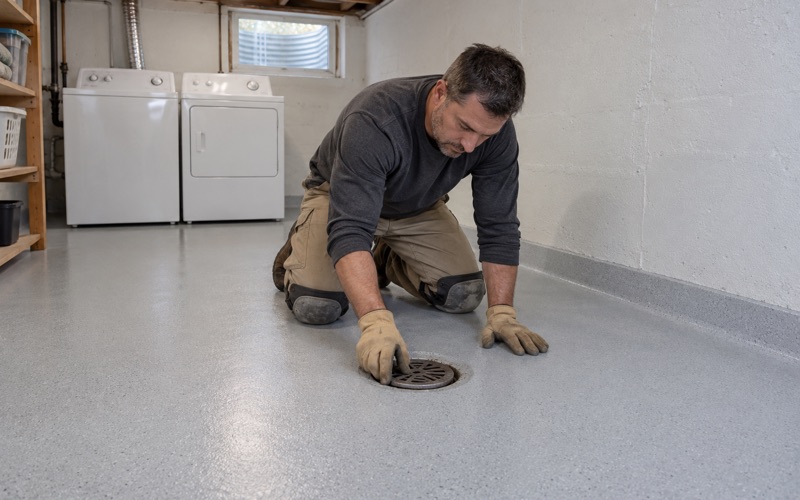
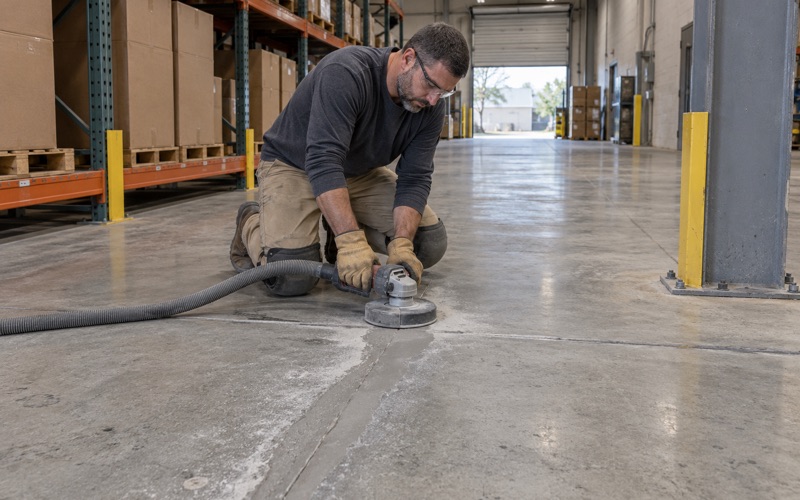
We read the cracks before we quote any floor, welding or not, and we say plainly when a slab needs repair before it can be coated. Filling an open crack with a rigid repair material closes the pocket. We also tell people up front that any coating is a film that follows the slab under it, so if the crack is still moving, the coating above it will crack too.
Bare, sealed or coated: zoning booths, cutting tables and aisles
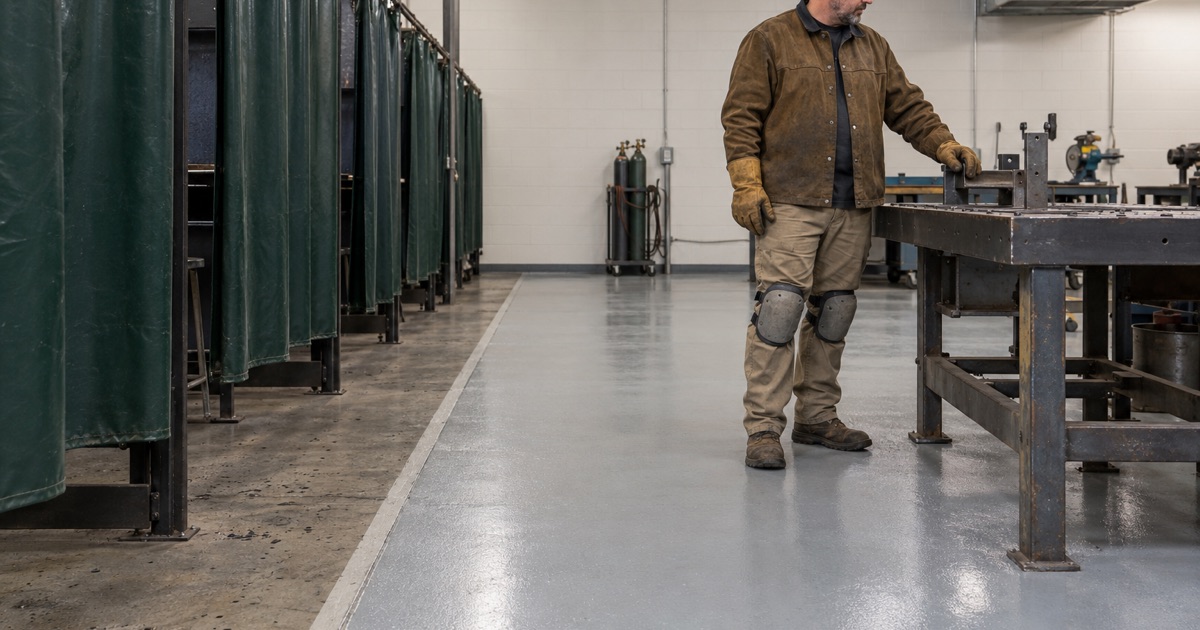
The practical answer for a working weld shop is zones. Under the booths and the cutting table, where spatter, slag and hot drops land, we leave the concrete bare or treat it with a lithium silicate densifier, which hardens the surface and cuts dusting without adding a film that can burn. Beyond the drop zone, a resin system can go down where it actually pays off.
Where the hot zone ends
The edge of the hot zone depends on the process and the person. Cutting throws farther than tungsten welding, and a shop running a plasma or oxy-fuel table needs a wider bare apron than one doing only GTAW on small parts. We mark the line with the owner, on the floor itself, before anything is ground, so the edge of the coating matches how the shop really works.
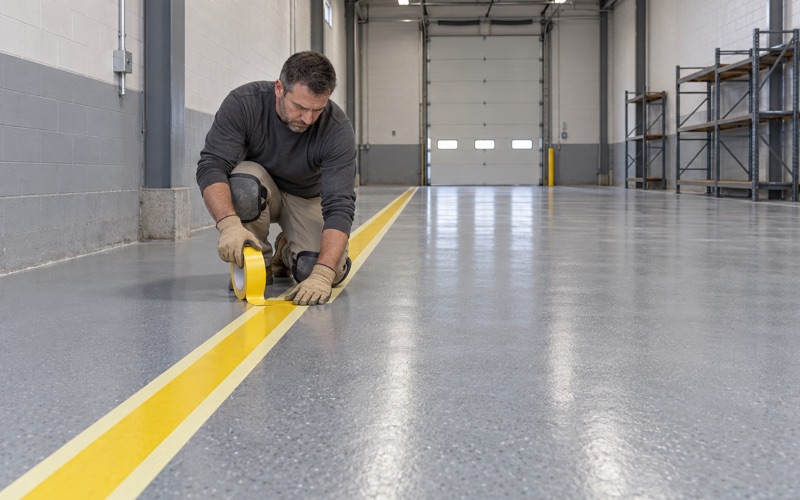
At the line itself we cut or grind a clean termination so the coating ends at full thickness instead of thinning out to a feathered edge that a stray bead or a dragged part can lift. That edge stays straight and easy to read, which also tells everyone in the shop where hot work is allowed and where it is not. A visible boundary does more for housekeeping than a rule posted on the wall.
Aisles, storage and the rest of the floor
Outside the hot zone the floor takes carts, dropped tools, oil and regular cleaning. There a 100% solids epoxy base with a quartz aggregate broadcast and a polyaspartic or polyurea topcoat gives a textured, cleanable surface. Urethane cement is worth considering in a shop that washes down with hot water, and whichever system fits is named in the proposal with its build and finished thickness.
Preparing the slab either way
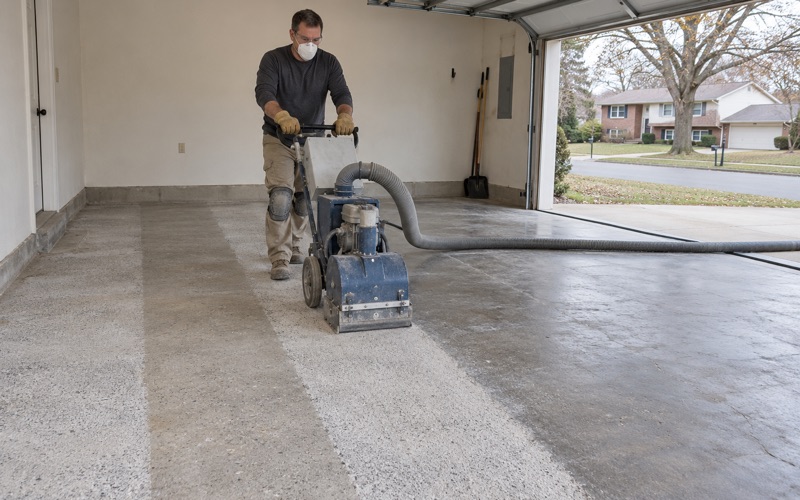
Bare zones and coated zones get the same start. The whole slab is diamond ground or shot blasted so the densifier penetrates and the resin bonds. Before any resin goes down we test moisture with ASTM F2170 in-situ relative humidity probes or ASTM F1869 calcium chloride testing, because a slab pushing vapor will blister a coating no matter what lands on top of it.
A welding corner in a River Grove garage
Plenty of welding in River Grove happens at home. The village has 1,579 owner-occupied single-family detached houses, and a hobby welder or someone who learned the trade in a college program may run a small MIG setup a few feet from the car. The OSHA rule is not a legal duty there, but the physics are the same, and the same zone approach keeps a new floor from scorching.
Keeping resin out of the drop zone
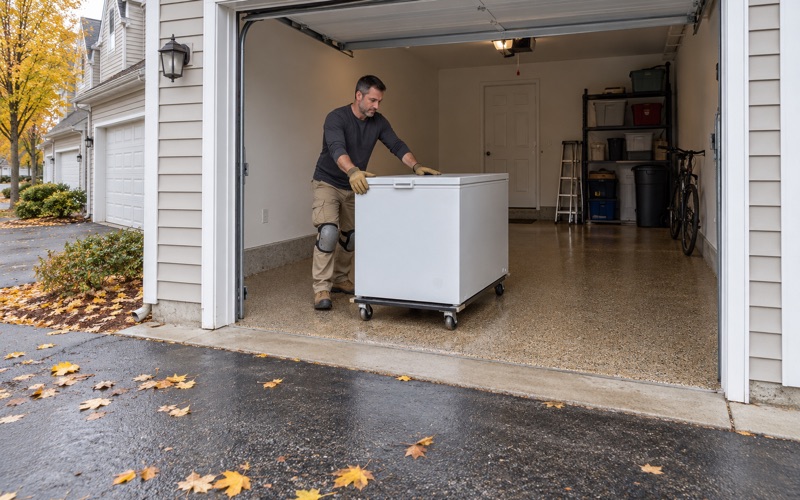
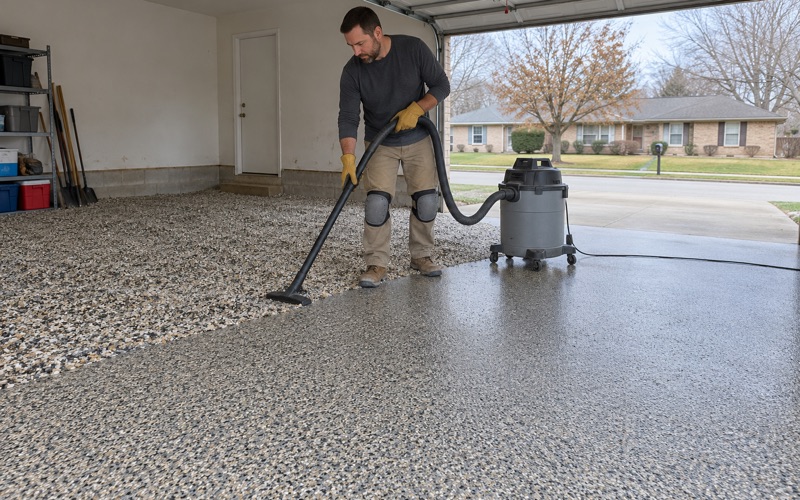
In a garage we usually leave a bare or densified pad where the welding cart and bench stand, and coat the parking side with a vinyl flake or quartz broadcast system. A welding blanket or fire-resistant sheet laid over the coated floor during work adds another margin. Sweeping the area clean before striking an arc is good practice whether or not anyone is checking.
The garage slab gets the same moisture testing as a shop floor. A garage poured to code may have no vapor retarder under it, because the model code exempts garages under IRC R506.2.3, so a newer slab is not automatically a dry one. We run the test first and pick the primer from the reading, rather than finding out from a blister on the parking side a season later.
Salt, winter and curing
The parking side still has to take what winter brings in. We build garage floors for the calcium chloride brine and rock salt that ride in on the tires, and we schedule curing against slab temperature and dew point rather than the calendar. An unheated garage in January may have to wait until spring, and we say so before the job is booked rather than coating a cold slab.
Permits, licenses and the paperwork
The Village of River Grove requires a building permit for any remodeling valued over $100, so we ask the Building Department at 2621 N Thatcher Avenue whether a floor coating counts before the job is scheduled. Contractor licenses in the village run January 1 to December 31 whatever the application date, with a $10,000 trade-specific bond and a certificate of liability insurance naming the village.
Illinois issues no state license for flooring or coating work, which is why those local rules matter. Every home job also gets a written contract and the state’s Home Repair: Know Your Consumer Rights pamphlet before work begins, as the Illinois Home Repair and Remodeling Act requires. Warranty exclusions are read out before anything is signed, with moisture named first.
- 20+ Years Coating Concrete
- Moisture Testing in Every Scope
- Written Contract on Every Home Job