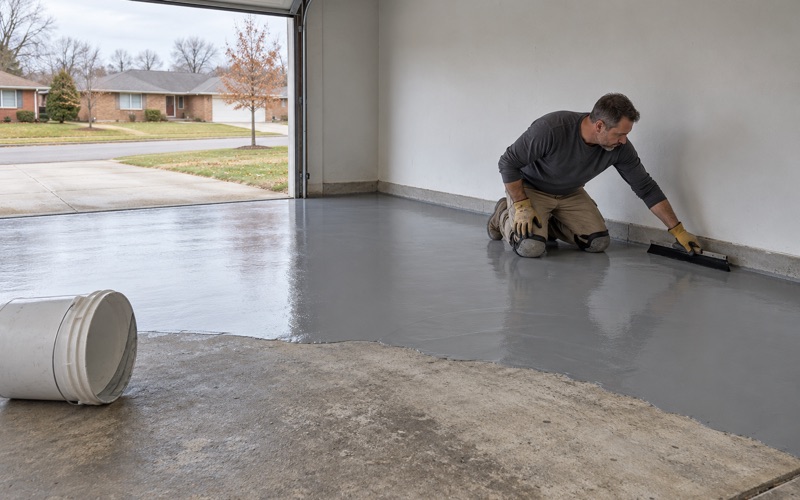
Hoffman Estates Epoxy Flooring brings more than 20 years of slab work to epoxy flooring in Norridge, and the rooms we think hardest about here are the ones where animals live, wait or get washed. A pet floor fails at its edges first. Urine and rinse water do not sit politely on a sound coating; they travel to the nearest joint, seam or wall line and soak into the concrete underneath.
That is why our quotes for grooming rooms, dog-wash stations, mudrooms and kennel corners start with the details nobody photographs: how the floor meets the wall, where the slab joints run, and where the water goes after a hose-down. A glossy flake finish laid over open seams is still a floor that holds odor, and no topcoat fixes that from above.
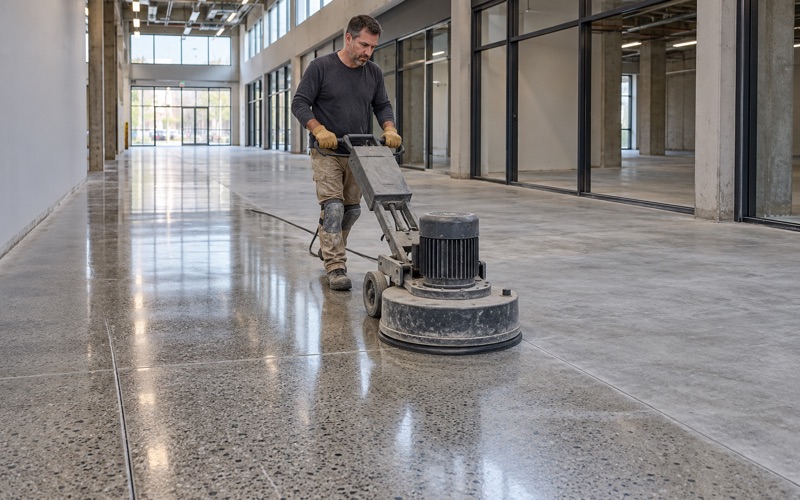
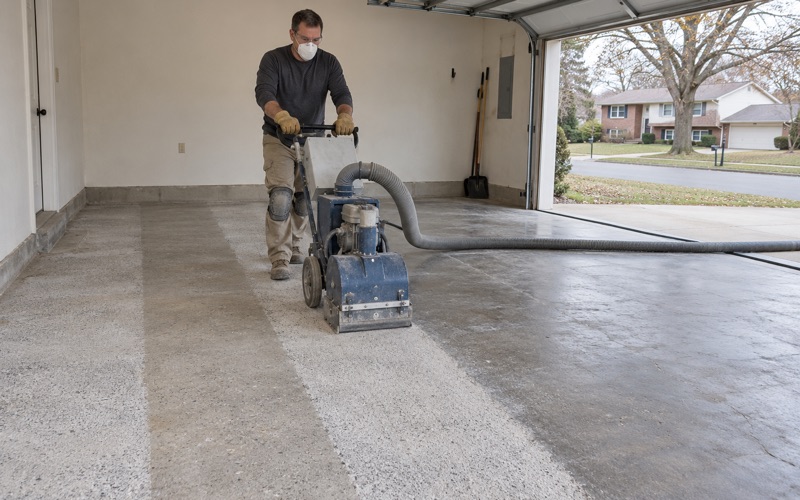
We open every slab with a diamond grinder or shot blaster rather than acid, price moisture testing as its own line in the scope, and write the product, system build and finished thickness into the proposal. On an animal floor those three habits decide whether a coating stays bonded through daily scrubbing or lifts at the first soaked joint.
A Seven-Day Animal Hospital and the State Rule Behind Pet Floors
Companion Animal Hospital of Norridge sits at 4321 N. Harlem Avenue, on the west side of the street. The east curb is the City of Chicago, a reminder that Norridge and Harwood Heights together form the enclave still called the Island Within a City.
The clinic lists surgical procedures, urgent care, diagnostics and pet grooming, with hours every day of the week and urgent care running into Saturday and Sunday afternoons. We have not worked there and have not seen its floors. We mention it because a practice open seven days shows what any animal-care room asks of the surface under it: cleaning and sanitizing between every patient, every day.
What Illinois writes down about animal floors
The rules under the state Animal Welfare Act say floors of buildings housing or displaying animals ‘shall be of permanent construction to enable thorough cleaning and sanitizing,’ and that cages must be built of material ‘impervious to urine and water.’ Cages are to be cleaned and sanitized at least once daily. The same section asks for adequate drainage, including gutters and discharge of fluid into a sewer, septic tank or filter field.
That rule binds licensees under the Act, and we do not assume which businesses those are. We read it instead as the plainest statement anywhere of what a floor under animals has to survive, and we use it as the design brief for grooming rooms and home pet spaces alike.
Why permanent and sanitizable rules out so much
Permanent construction and thorough sanitizing eliminate a lot of finishes that look fine on day one. Sheet goods with welded or taped seams, tile with porous grout lines and a thin roll-on paint over raw concrete all leave paths for liquid. A resinous system bonded to a properly profiled slab and carried up the wall has no grout line waiting to open.
Before incorporation in 1948, the area that became Norridge was nicknamed Swamp for its poor drainage and lack of streets. Nobody has measured whether that history shows up in slab moisture today, so we test each floor rather than guess from the street name.
Looking for epoxy-flooring closer to River Grove? See Epoxy-Flooring Services in River Grove.
Urine and Wash Water Find Every Seam and Joint
Urine is mostly water carrying salts and nitrogen compounds, and on a floor it behaves like any thin liquid: it runs to the lowest gap it can find. Concrete is porous, so once urine reaches bare slab through a joint, a chipped edge or a gap at the base of a wall, it wicks in, dries and leaves residue that rehydrates and smells every time the room is mopped.
Saw cuts, cracks and the wall line
Pet-area coating failures usually start in three places: the saw-cut control joints, random shrinkage cracks, and the line where the slab meets a wall or cabinet base. On a parked-car garage floor those are cosmetic flaws. In a grooming room they are open channels, and the coating beside them softens and lifts once liquid gets under its edge.
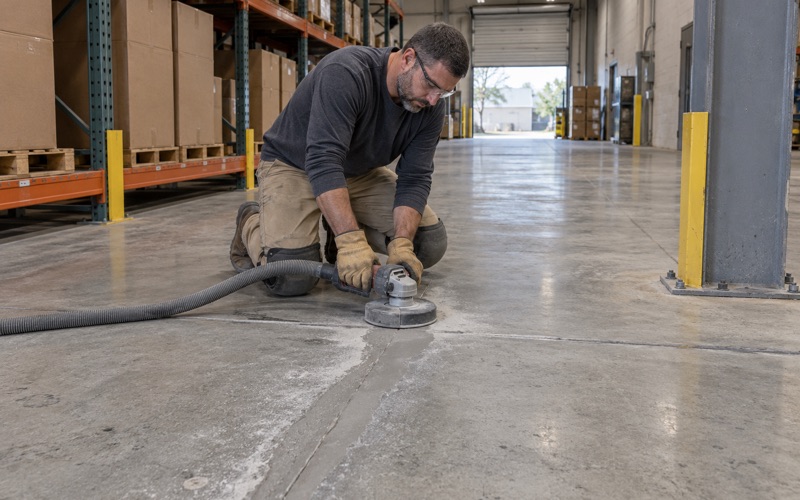
We read the cracks and any old coating before we quote, and when a slab needs repair before it can be coated, we say so plainly. Static cracks get routed and filled flush so the system runs over them as one continuous film. A joint that still moves is different, because a rigid fill bridging it will simply crack again along the same line, so we detail it with a flexible sealant and tell you that line needs watching.
What a coating can and cannot promise
A coating is a film that follows the slab under it, and we explain that before the job rather than after. The honest promise on an animal floor is a sealed surface over a sound slab, not a membrane that holds a moving crack closed. Seams we can close; movement in the concrete we can only accommodate.
Moisture from below
Liquid from above is half the problem and vapor from below is the other half. We run ASTM F1869 calcium chloride tests or ASTM F2170 in-situ relative humidity probes as a priced part of the scope, and warranty exclusions are read out before the sale with moisture named first. Where readings run high, we specify a moisture-mitigation primer rather than gambling that a sealed floor will stay bonded.
Coves, Drains and a Floor That Rinses Clean Between Patients
The wall edge is where most animal floors give up, so it is where we spend the most labor. A seamless floor that stops flat at the drywall still has a joint, and a mop pushes water straight into it.
The integral cove
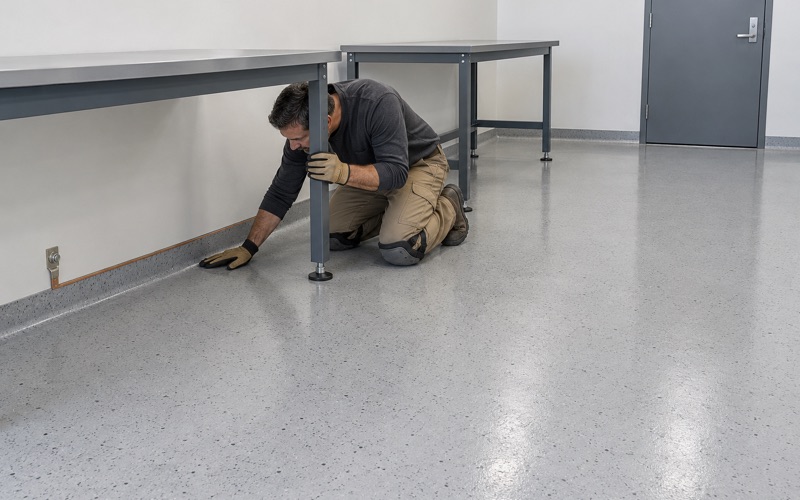
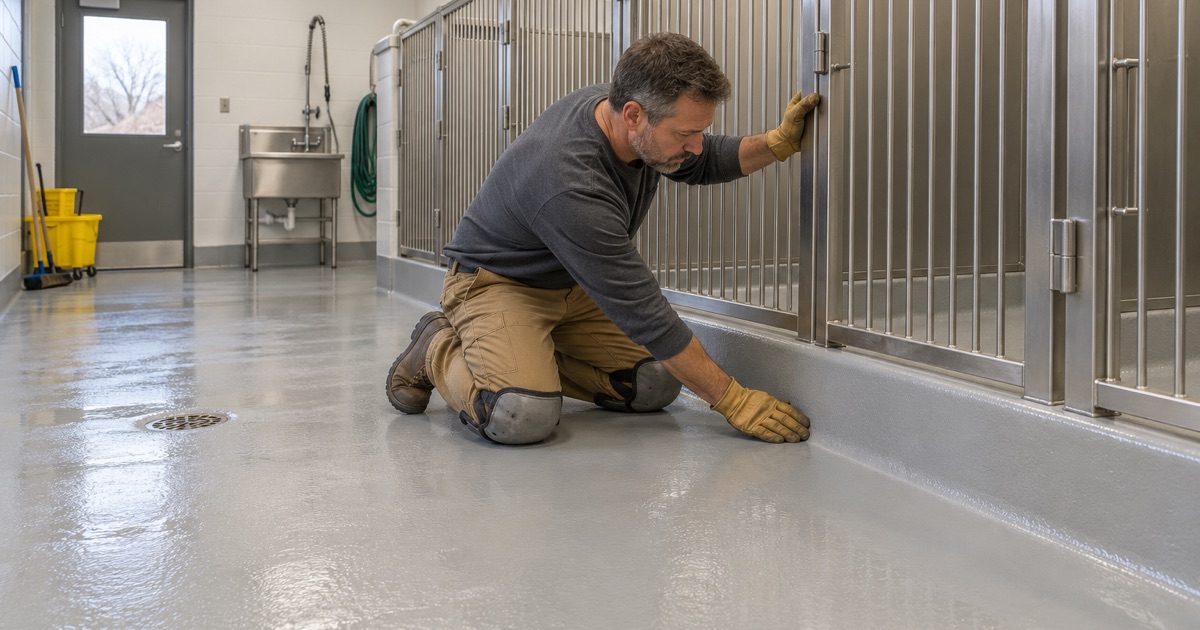
An integral cove carries the floor system up the wall in one continuous piece, typically four to six inches, over a radiused base troweled from epoxy mortar. It removes the right-angle corner where hair, dander and urine collect and where a mop never quite reaches. In a grooming room or kennel corner it is the single detail that does the most to keep liquid off bare concrete.
Building for the hose and the drain
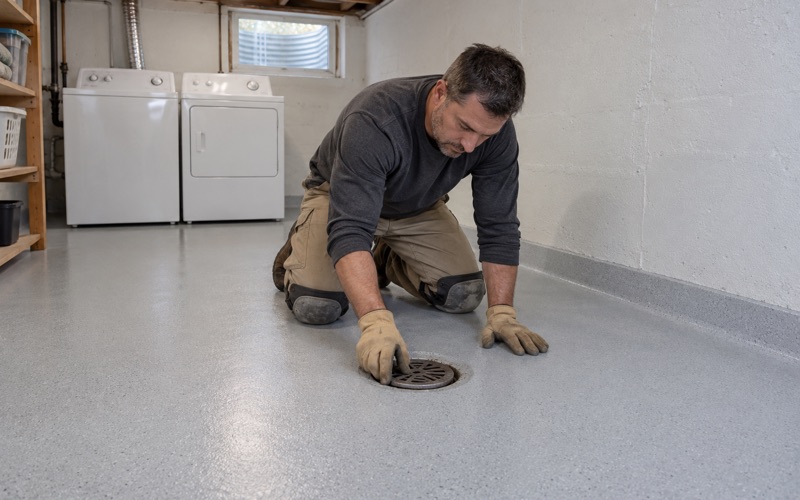
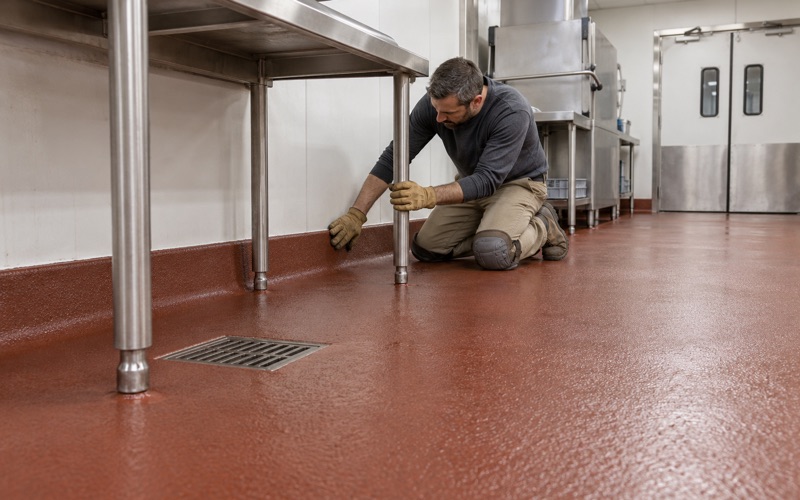
Grooming tubs splash, dogs shake, and staff rinse the floor down rather than mop it. Where a room has a floor drain, we grind and detail the coating into the drain body so the junction between metal and concrete is sealed. We also check that the floor actually pitches toward the drain before we coat, because a resinous system follows the slab and will not correct a low spot that holds a puddle.
The state rule’s mention of gutters and discharge to a sewer is a useful prompt here. If a room is going to be washed with a hose, it needs somewhere for that water to go, and the time to decide is before the coating goes down, not after the first wet floor.
Texture that works when wet
A wet, glossy floor under a nervous dog and the groomer lifting it is a fall waiting to happen. We broadcast quartz aggregate or vinyl flake into the base coat and lock it under a polyaspartic or urethane topcoat, tuning the texture so it grips paws and boots yet still squeegees clean. Too coarse and hair and grime lodge in it; too smooth and nobody can stand on it after a rinse.
For rooms that see hot-water washdowns all day, urethane cement is worth pricing alongside 100% solids epoxy, since it tolerates heat and constant wetting well. We lay out both options in the proposal with their thicknesses, so you can compare like with like.
Mudrooms, Dog-Wash Stations and the Home Garage Kennel
Most animal floors in Norridge are not in a clinic. The village’s housing is dominated by postwar construction, with 1,938 units built in the 1950s and 1,553 in the 1960s, so the pet floor here is usually a basement laundry turned dog room, a back-door mudroom, or a corner of the garage fenced off as a kennel.
Basement dog rooms
A basement slab from that era may have no reliable vapor retarder beneath it, and we never sell a coating as waterproofing; water rising through a slab is a drainage question first. We test, then choose a system that tolerates the reading. A cove along the walls and a sealed edge at the floor drain turn a damp utility corner into a room you can hose down without worry.
Dog-wash stations
A dog-wash station is a small grooming room: a tub or shower pan, constant splash and a floor drain. We treat it the same way, with a seamless cove up the walls behind the tub, aggregate texture in the walking area and the coating turned carefully into the drain. The aim is simple: nothing that lands on the floor can get under it.
The garage kennel
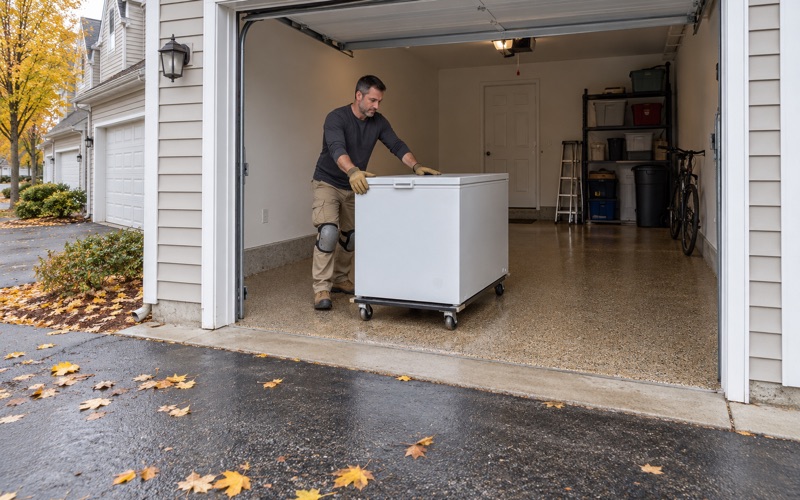
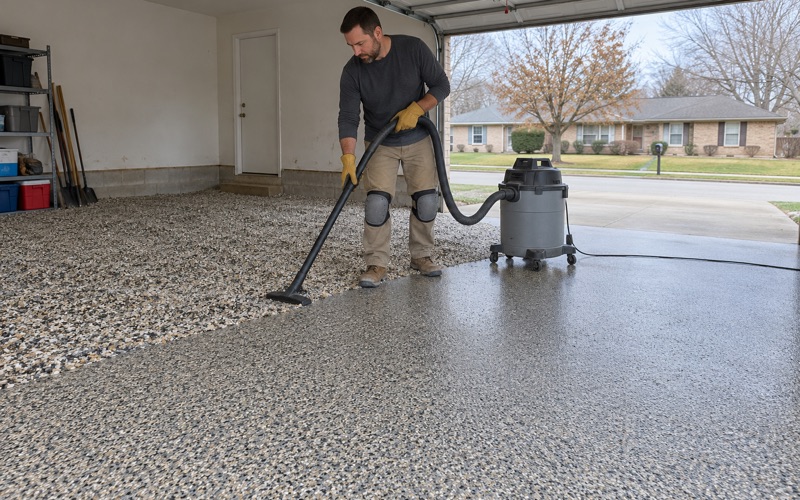
A garage kennel adds winter to the mix. The same floor takes urine at one end and calcium chloride brine and rock salt off the tires at the other, so we build it from 100% solids epoxy under a polyaspartic topcoat that stands up to both. Curing is scheduled against slab temperature and dew point rather than the calendar, and an unheated garage sometimes has to wait for spring.
Every home job gets a written contract and the state’s Home Repair: Know Your Consumer Rights pamphlet before work starts, as the Illinois Home Repair and Remodeling Act requires. Illinois issues no license for flooring work, so we confirm the Village of Norridge Building Department’s own registration, bond and insurance rules before a single day is scheduled.
- 20+ Years Coating Concrete
- Moisture Testing in Every Scope
- Written Contract on Every Home Job