Hoffman Estates Epoxy Flooring brings more than 20 years of coating work to epoxy-flooring in Lyons, and the floors that teach us the most are the ones that never get a day off. A bay that holds heavy vehicles, takes their drips and has to reopen on schedule is a harder job than a showroom. The product matters, but the plan wrapped around it matters more.
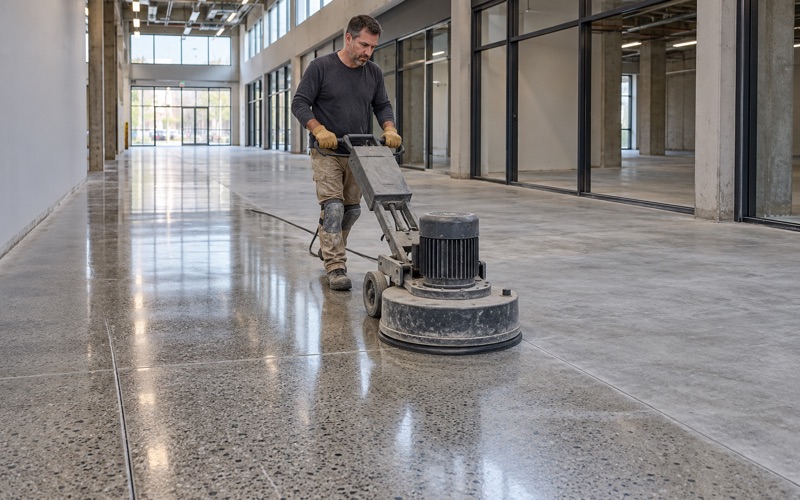
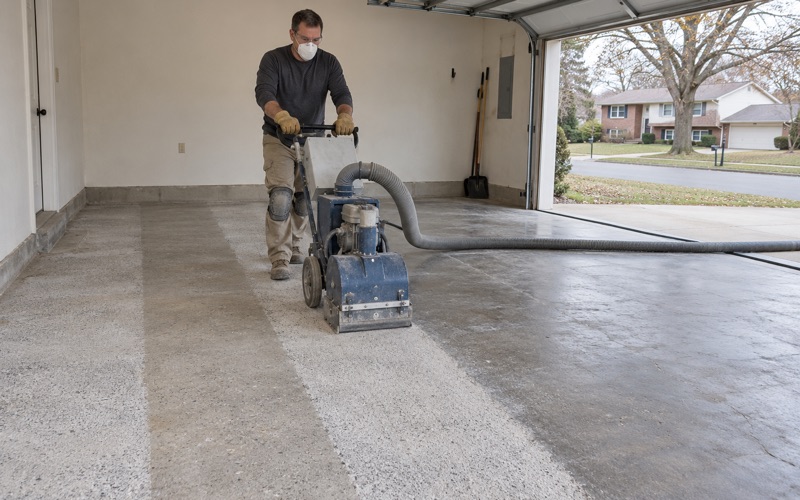
Every slab we take on is opened mechanically with a diamond grinder or a shot blaster to a measured ICRI CSP profile, and we never acid etch, because a coating can only hold as well as the surface under it. Before anything is quoted, we read the cracks and any old coating, price moisture testing as its own line item, and say plainly when concrete needs repair before it can be coated.
Our proposals name the product, the system build and the finished thickness, so what goes down can be checked against what was sold. Cure time is set by slab temperature and the dew point spread at the surface rather than by the calendar. On a floor that has to keep working, that cure schedule is what decides when vehicles roll back on.
A 1949 Station on Joliet Avenue, Enlarged in 1973
Lyons is a village of 10,817 people in Lyons Township, Cook County, and the Chicago Portage National Historic Site sits within its limits. Its fire department works out of the station at 4043 Joliet Avenue, a separate building from the Lyons Police Station at 4200 Lawndale Avenue. The village’s own fire department page lays out how that station grew over the decades.
One bay, then four
The station was originally built in 1949 with one large apparatus bay, and it stayed that way until 1973. That year an addition brought three more apparatus bays, office space and a second floor. Four bays now sit under one roof, with the original building and its addition put up in different decades by different crews working to the standards of their day.
Why this building makes a useful example
We have never worked in that station, and we know nothing about its floors beyond what the village publishes. What it offers is a clear picture of a demanding kind of floor: a bay that carries heavy vehicles every day and cannot simply shut down for a week. The same reasoning applies to a busy repair shop, a commercial garage or a two-car garage someone needs back by Friday.
A floor that is never empty
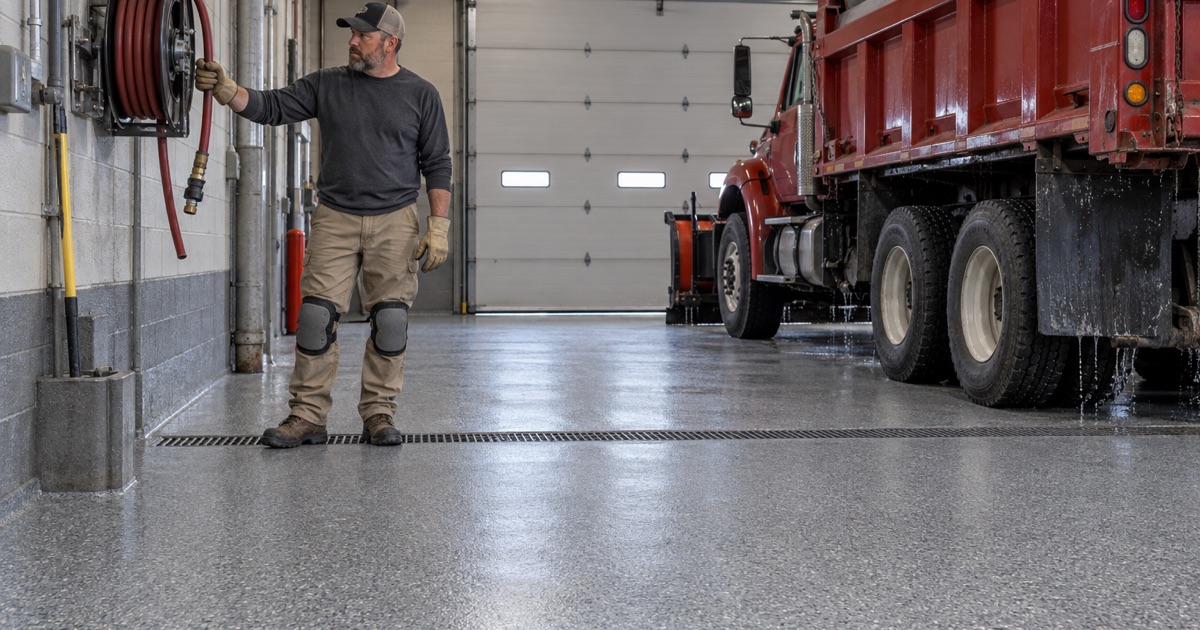
Most coating schedules assume an empty room, and an apparatus bay is never empty for long. Trucks leave on calls and come back wet, crews walk the floor around the clock, and the doors open in every season. Any coating plan for a space like that has to start with how the building is used, and only then move on to which resin goes down.
Who signs off in Lyons
The fire department is a village department, and building work in Lyons runs through the Village of Lyons Building Department at 4200 Lawndale Avenue. That office handles plan review, inspections, permits and occupancy certificates. We ask its permit desk before a job whether a floor coating counts as decorating or needs a permit, rather than assuming either answer for a commercial bay or a home garage.
Looking for epoxy-flooring closer to Barrington? See Epoxy-Flooring in Barrington.
What a Parked Fire Truck Asks of a Floor
An apparatus bay is not a garage with bigger doors. Trade guidance published in Fire Apparatus magazine in 2018 lists what a bay floor system has to deliver: tensile and flexural strength to withstand the vibration of heavy fire trucks, chemical resistance to harsh chemicals, oils, solvents and fuels, slip resistance to help prevent falls, and UV resistance so the floor holds its color.
Those demands pull against one another. A heavily textured floor grips a wet boot but is harder to squeegee clean, and the hardest topcoat is not always the most flexible. We weigh each requirement against how the bay is actually used, then write the chosen system and its finished thickness into the proposal so the tradeoffs are on paper.
Vibration and flexural strength
A heavy truck idling or warming up on its spot sends vibration through its tires into the slab, day after day and year after year. A brittle film can crack under that repeated load even where the concrete below holds. We favor a 100% solids epoxy base in a system build chosen for flexural strength, and we say up front that a coating follows the slab beneath it rather than stopping that slab from moving.
Fuels, oils, solvents and wet gear
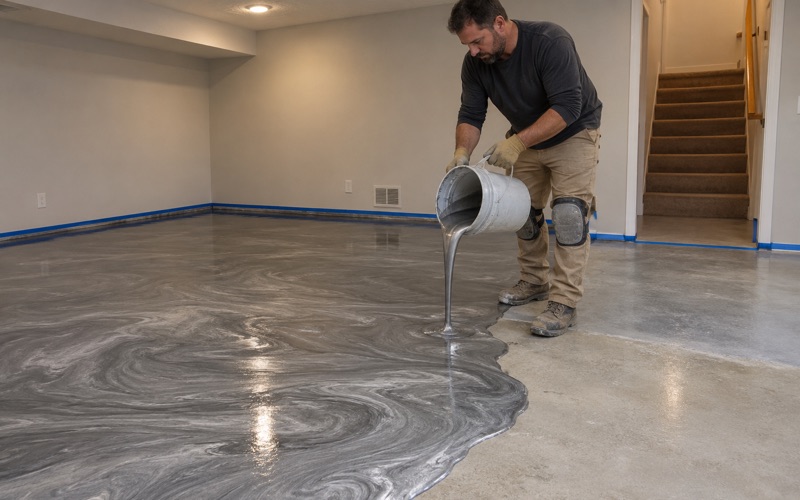
Bay floors collect drips of oil and fuel, cleaning solvents, and the water that runs off gear and hoses after a call. Chemical resistance keeps those from softening or staining the coating, and a polyaspartic or polyurea topcoat adds a tougher wearing surface. Wet gear on a smooth floor is also a slip hazard, so we broadcast quartz aggregate or vinyl flake to the texture the room actually needs.
Doors that open all day
Bays with tall doors take sunlight across the floor for hours, and many epoxies yellow under that UV exposure. A UV-stable topcoat holds its color, so the floor still reads clean years later. Hot tire pickup is the other test: tires parked warm can lift a poorly bonded coating, which is one more reason the base coat has to grip a properly ground surface.
One Bay at a Time: Keeping Engines Ready While a Coating Cures
A working station cannot empty all four bays for a week. One fire-station flooring contractor describes the approach this way: fire halls cannot always shut down like a standard commercial building, so the job is planned around access, bay availability, vehicle movement, cure windows and staff safety. The plan maps bay-by-bay sequencing, temporary access and return-to-service timing before any grinding starts.
Sequencing the bays
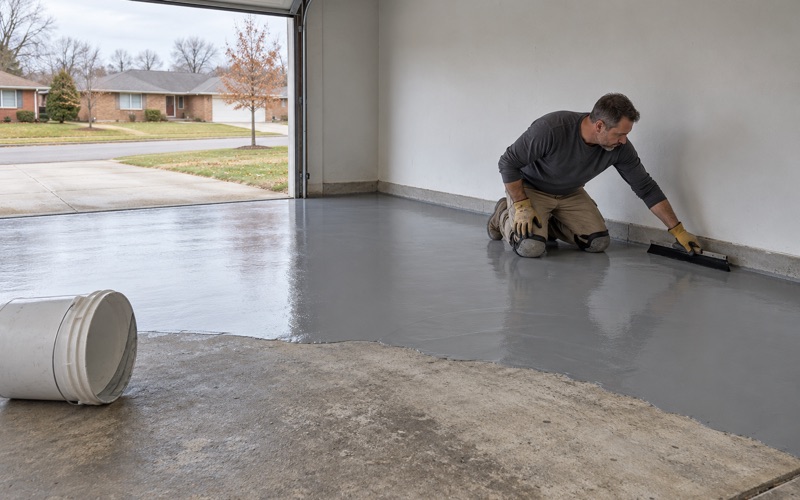
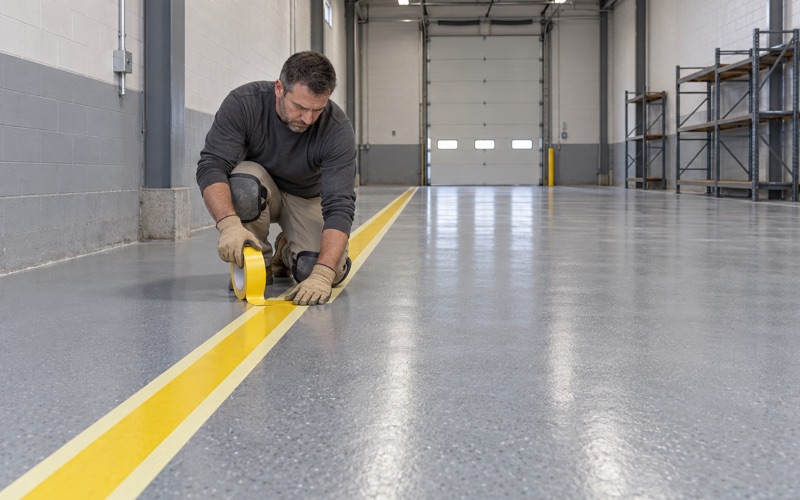
On a four-bay floor, that means taking one bay out of service, then grinding, priming and coating it and holding it closed until it has cured, while the other three keep working. Dust control and temporary routing keep crews and vehicles clear of the open bay. Then the next bay comes out of service, and the next, until the whole floor is finished.
The order inside each bay never changes: grind, vacuum, repair, prime, build, broadcast and topcoat. What changes is the clock, because a cool slab cures slower than a warm one. We agree the daily windows with whoever runs the building, so nobody is surprised when a bay stays taped off a day longer than a warm-weather estimate would suggest.
Cure windows before a vehicle returns
A coating that feels dry to the touch is not ready for a heavy vehicle, and parking on it early can leave tire marks or lift the film. We set return-to-service times by slab temperature, the dew point spread and the product’s own cure data, then write those times into the schedule. Amine blush from a cool, damp cure gets checked and removed before any recoat goes down.
The same logic in a home garage
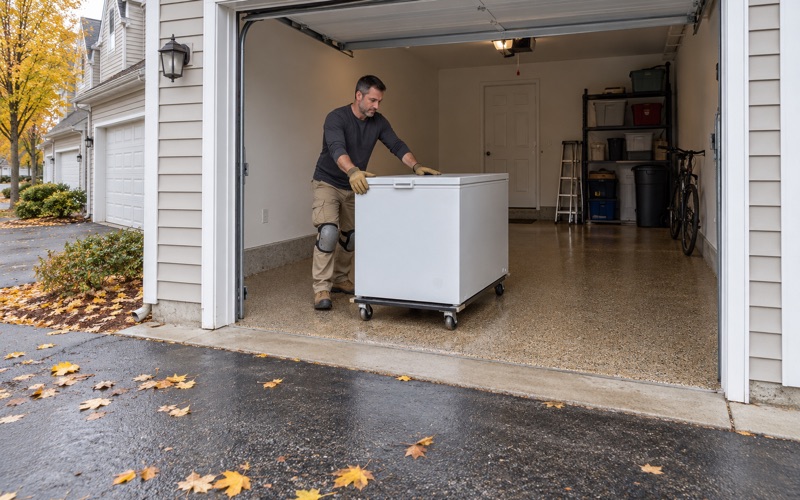
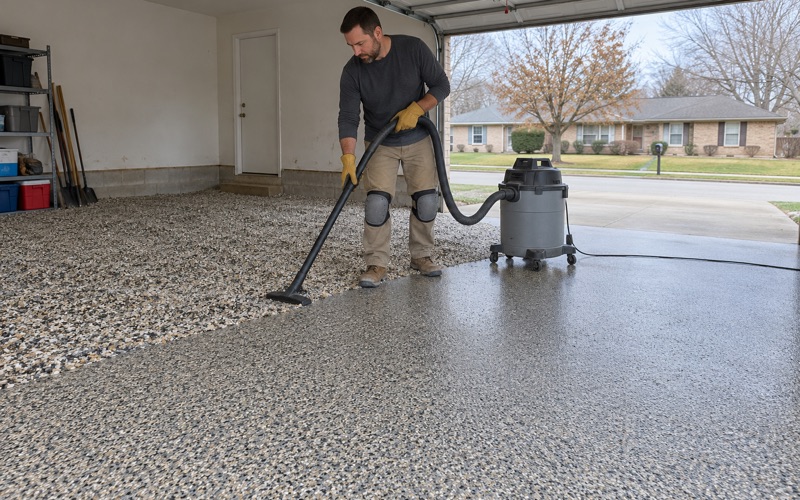
A two-car garage in Lyons gets the same treatment on a smaller scale. One side can be coated and cured while the other car stays parked, and then the cars swap. In an unheated garage, if slab temperatures will not support a proper cure, we say so and book the work for spring rather than gamble on a cold floor.
Every home job starts with a written contract and the Home Repair: Know Your Consumer Rights pamphlet, as the Illinois Home Repair and Remodeling Act requires. Coatings are chosen within the Illinois limits on VOC content, which bind the installer as well as the manufacturer. Before scheduling, we confirm the village’s current contractor license, bond and insurance requirements.
Two Eras of Concrete Under Four Bays: Test Each Before Quoting
A building that grew from a 1949 original to a 1973 addition usually stands on concrete poured in different decades, and slabs of different ages rarely behave alike. Older concrete may carry years of oil, earlier sealers or worn traffic paths, while a newer section can differ in hardness and porosity. We never quote one number across a floor like that without testing each part of it.
Moisture testing on each slab
Moisture is the first thing we test, and it is listed in the scope before any price. We start with an ASTM D4263 plastic sheet check, then move to ASTM F2170 in-situ relative humidity probes or ASTM F1869 calcium chloride tests, section by section, since one dry slab says nothing about the slab beside it. Where readings run high, a moisture-mitigation primer goes into the written scope.
Reading hardness, contamination and old coatings
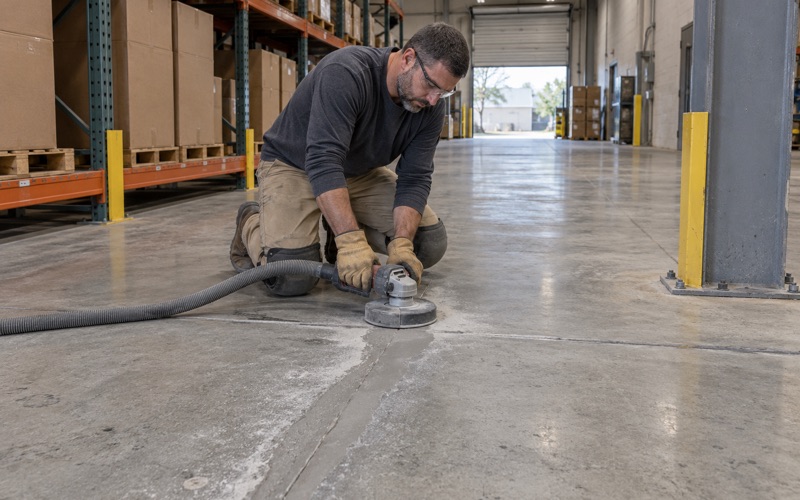
Grinding tells us a great deal: how hard the surface paste is, how deep contamination runs and whether an old coating is still bonded. Oil-soaked concrete may need extra cleaning or a deeper cut before a primer will hold. Cracks and spalls are repaired with materials suited to the system, and if a section needs more repair than coating, the proposal says so in plain terms.
A quote written section by section
When two slabs test differently, the proposal treats them differently. One section may need only grinding and a standard primer, while the next needs a moisture-mitigation primer or a urethane cement base. Each part of the floor gets its own line, so the price for an older slab is not hidden inside an average and nothing is assumed about concrete nobody has tested.
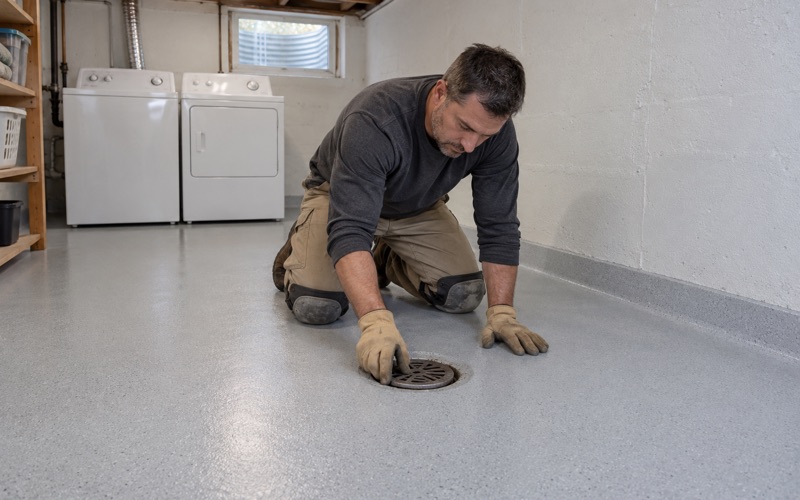
We also say plainly what a coating will not do. It is a film, not waterproofing, and water coming up through a slab is a drainage question first. Warranty exclusions are read out before the job is sold, with moisture named first, so the limits are understood before a single bay is closed.
Older slabs across Lyons
Lyons added no housing units at all in the 2010s, and 1,131 of its homes were built in 1939 or earlier, so most floors we see here are existing concrete with a history. That means recoats, failed earlier coatings and first coatings on old slabs. The station on Joliet Avenue is simply a large example of a small rule: test the concrete you have, not the concrete you assume.
- 20+ Years Coating Concrete
- Moisture Testing in Every Scope
- Written Contract on Every Home Job