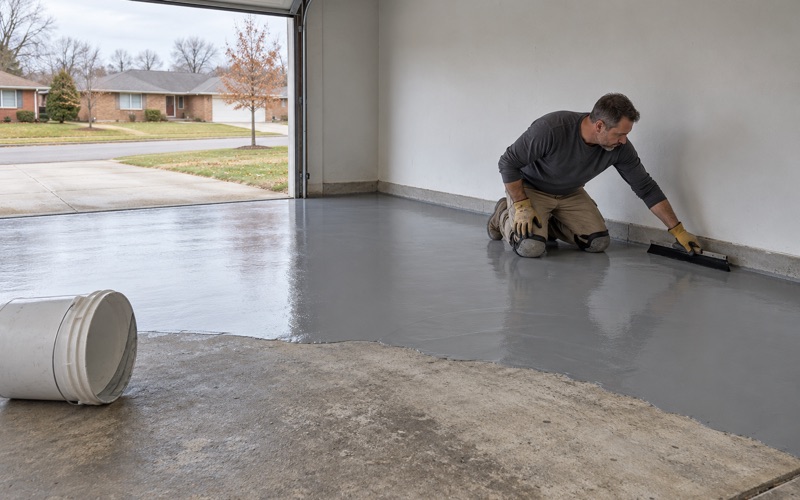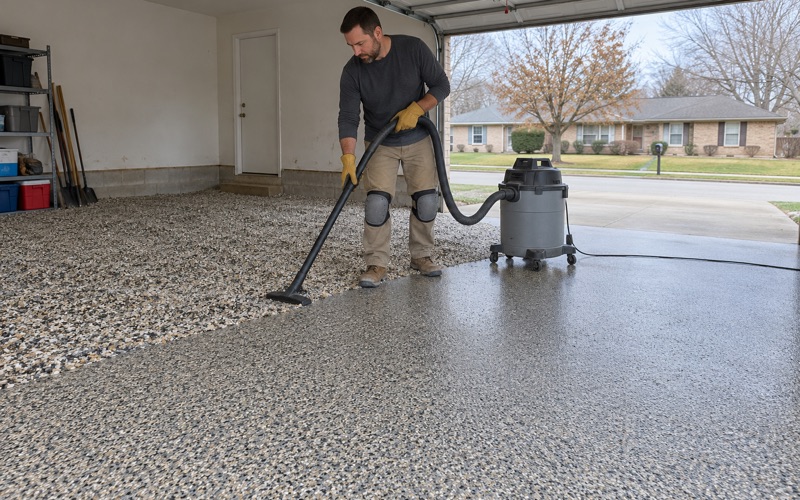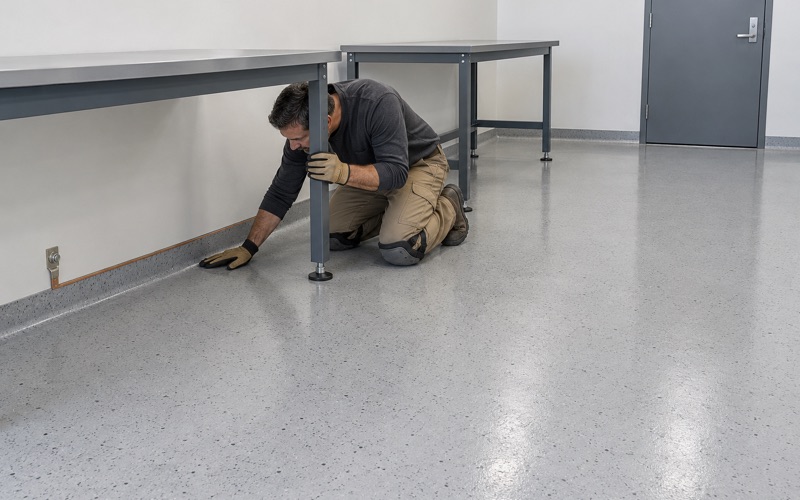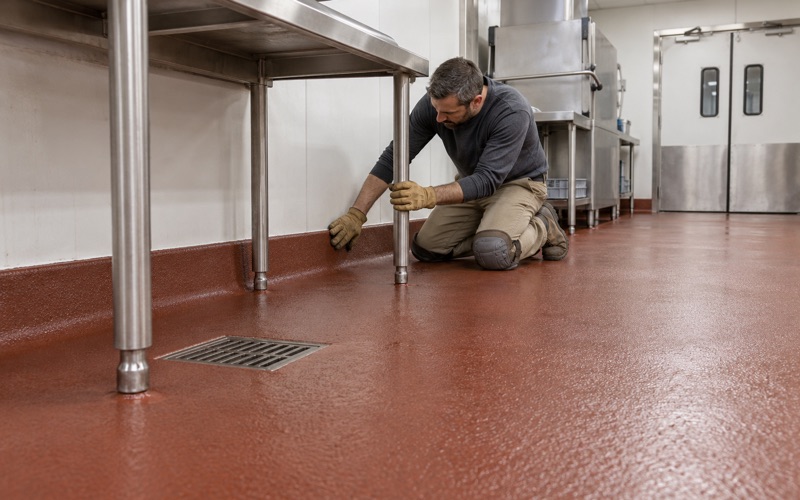
Hoffman Estates Epoxy Flooring has spent more than 20 years on epoxy flooring in Lincolnwood and across the northern suburbs, and the floors we think hardest about here are the ones that get wet on purpose. A potting room, a garden shed, a utility bay or a garage where the lawn feed lives is hosed down, splashed and walked on while damp. Those floors need a coating chosen for what lands on them, not just for how it looks on the day it cures.
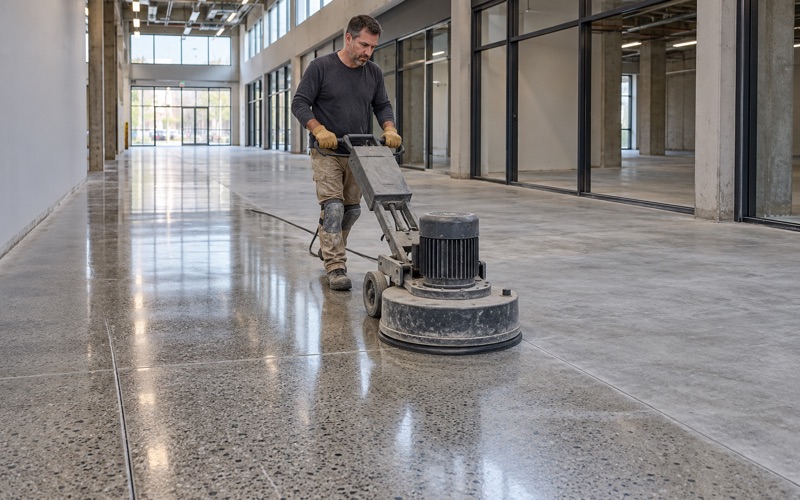
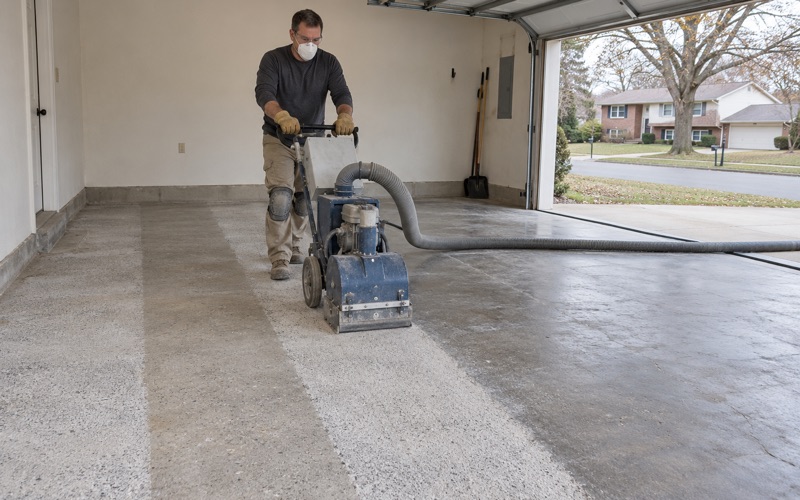
Our starting point never changes. We open every slab with a diamond grinder or a shot blaster instead of acid etching, so the coating bonds to sound concrete with a real profile rather than a rinsed skin. Moisture testing is written into the scope as its own line, on a garage slab and a basement slab alike. The proposal you sign names the product, the system build and the finished thickness, which means you can hold the finished floor up against the quote.
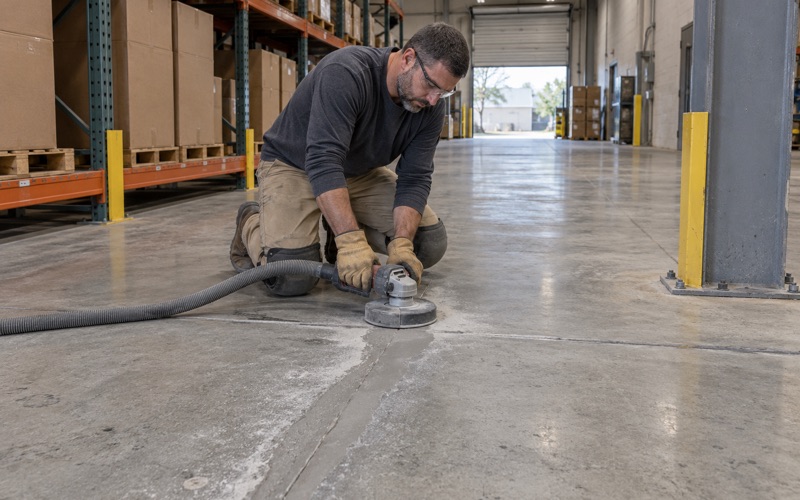
We also read the cracks and any old paint or sealer before we price the job. When a slab needs repair before it can take a coating, we say that first, and we say plainly that a coating is a film that follows the concrete under it rather than a cure for a moving slab.
A Two-Acre Grower Inside a 1950s Village
Lincolnwood is a village of 13,463 people on 2.69 square miles in Niles Township, Cook County, an inner suburb that shares its southern and eastern boundaries with Chicago and touches Skokie to the north and west. Most of it was built out in the postwar decades. Of the 4,955 housing units counted in the Census estimates, 1,967 went up in the 1950s alone, which is 39.7 percent of the stock, and roughly half date from 1940 through 1959.
Even so, the village still grows plants inside its own limits. Urhausen Greenhouses sits at 6973 North East Prairie Road, an address the Census geocoder places inside Lincolnwood and Niles Township. Business directories describe it as a two-acre greenhouse and garden center that grows its own annuals and perennials, along with vegetables, herbs, houseplants, succulents and starter plants.
Why a greenhouse makes a useful lesson
We have no work recorded at Urhausen, and we have not seen or read anything about its floors. We bring it up because it is a plain local reminder of what growing involves. Plants get watered, and they get fed, and the feed is the part people forget about when they think about a floor.
Fertilizer is a chemical first
A bag of garden feed looks harmless on a shelf. Many common fertilizers are built on ammonium salts, with ammonium nitrate and ammonium sulfate among the familiar ones. Dissolved in irrigation water or spilled as granules and then wetted, those salts reach the concrete in exactly the form that does damage, and a floor that sees them every day is a chemical-exposure floor whether anyone calls it that or not.
Three kinds of work floor in one trade
Any growing or garden business tends to have the same three floors, whatever they are made of. There is the potting and transplanting area, where soil and feed hit the ground constantly. There is the mixing spot, where concentrate is diluted and the strongest solutions get splashed. And there is the sales floor, where customers walk through damp aisles, which is the one place a slip and a stain both matter at once.
Looking for epoxy-flooring closer to Forest Park? See Epoxy-Flooring in Forest Park.
What the Lab Studies Found About Ammonium and Concrete
The concern is not folklore. A 2016 University of Manitoba thesis by Amin states that “ammonium sulfate (commonly used as a fertilizer) is extremely deleterious to concrete due to its dual acid-sulfate action.” In plain terms, the one salt brings two separate kinds of attack to the cement paste, an acid action and a sulfate action, working on the same floor at the same time.
Measured strength loss and ion penetration
Schneider and Chen took the question into the laboratory, in papers published by the American Concrete Institute in symposium volumes SP-192 in 2000 and SP-212 in 2003. They immersed both ordinary and high-strength concrete in ammonium sulfate solutions from 0.1 to 5 percent and ammonium nitrate solutions from 0.1 to 10 percent. They then measured the loss of strength and how deep the attacking ions had traveled into the concrete.
What that does and does not tell a Lincolnwood owner
Those are immersion studies, not readings of any floor in the village, and a garage that sees an occasional spill is not a test cylinder sitting in a tank. What the research does establish is the direction of travel. Bare concrete that is repeatedly wetted with fertilizer solution is losing ground, and the fix is to keep the salts off the paste with a surface built to resist them.
Matching the system to the exposure
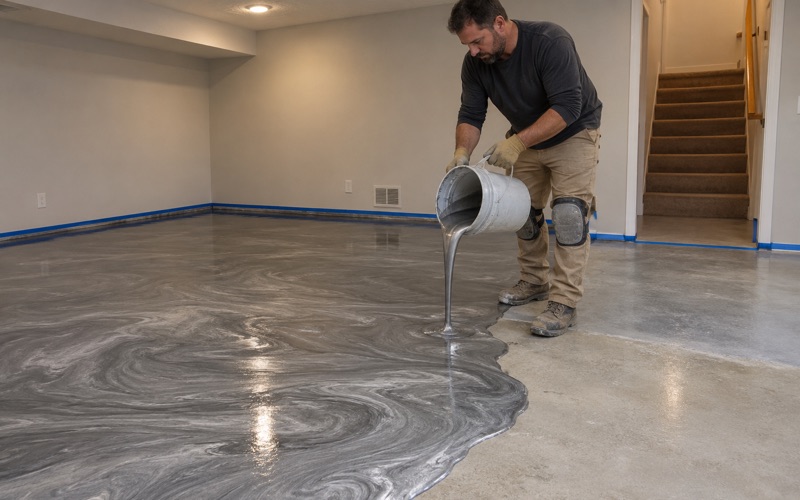
For a floor that sees feed and water daily, we look past a thin decorative coat. A 100% solids epoxy base gives the build, and a polyaspartic or polyurea topcoat adds chemical and abrasion resistance at the surface where spills sit. Where exposure is heavy and constant, urethane cement is the system we put on the table, and we explain the tradeoffs in appearance and cost before anyone commits.
None of those systems performs if it is sitting on a weak surface. Chemical-resistant topcoats are only as good as the bond underneath, so the grinding or shot blasting step targets the ICRI CSP profile the chosen product calls for. That rough, open surface is what lets the base coat key into sound concrete instead of resting on laitance, old sealer or a skin of salt residue left by years of wet use.
Wet Every Day: Hosing, Drainage and a Floor That Rinses Clean
A work floor that is hosed down daily has two jobs that pull against each other. It has to shed water and residue so nothing pools, and it has to give a sure footing to someone walking across it while it is still wet. A glossy, perfectly smooth coating handles the first job and fails the second.
Texture without trapping dirt
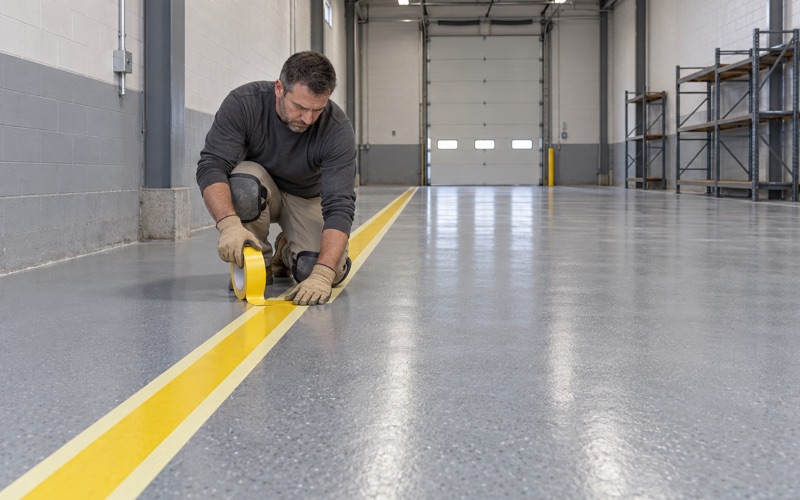
We solve the footing problem with a broadcast of quartz aggregate into the base coat, locked in by the topcoat. The size of the aggregate and the thickness of the topcoat set the texture, and we tune it so the floor grips a wet shoe without becoming so rough that potting soil and fertilizer granules lodge in it. A floor that cannot be rinsed clean simply holds the salts against the coating instead of the concrete.
Drains, pits and where the water goes
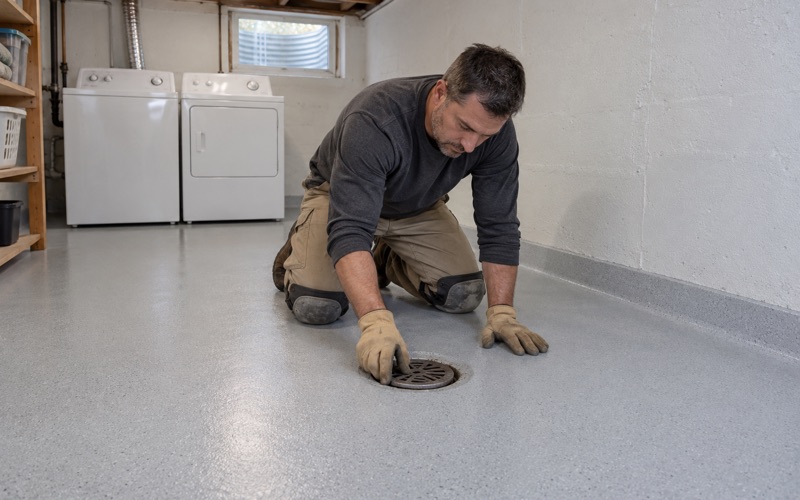
Water has to leave the room. We detail the coating at floor drains and sump pits so it seals to the edges instead of stopping short and leaving a ring of bare concrete exactly where the wash water collects. We are also clear that a coating is not waterproofing. Water rising through a slab from below is a drainage question first, and no topcoat solves it.
Moisture before the first coat
A wet-use room usually sits on a slab that has had a wet life. Before we coat, we run the tests the slab calls for, which can mean a plastic sheet test under ASTM D4263, calcium chloride emission testing under ASTM F1869 or in-situ relative humidity probes under ASTM F2170. When the numbers call for it, a moisture-mitigation primer goes into the build, and the warranty exclusions are read out before signing, with moisture named first.
Potting Benches, Garden Sheds and the Garage Where the Feed Bags Sit
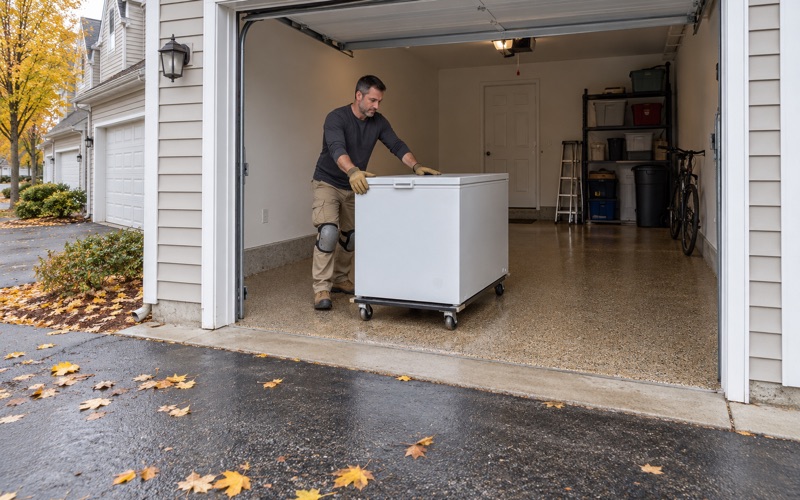
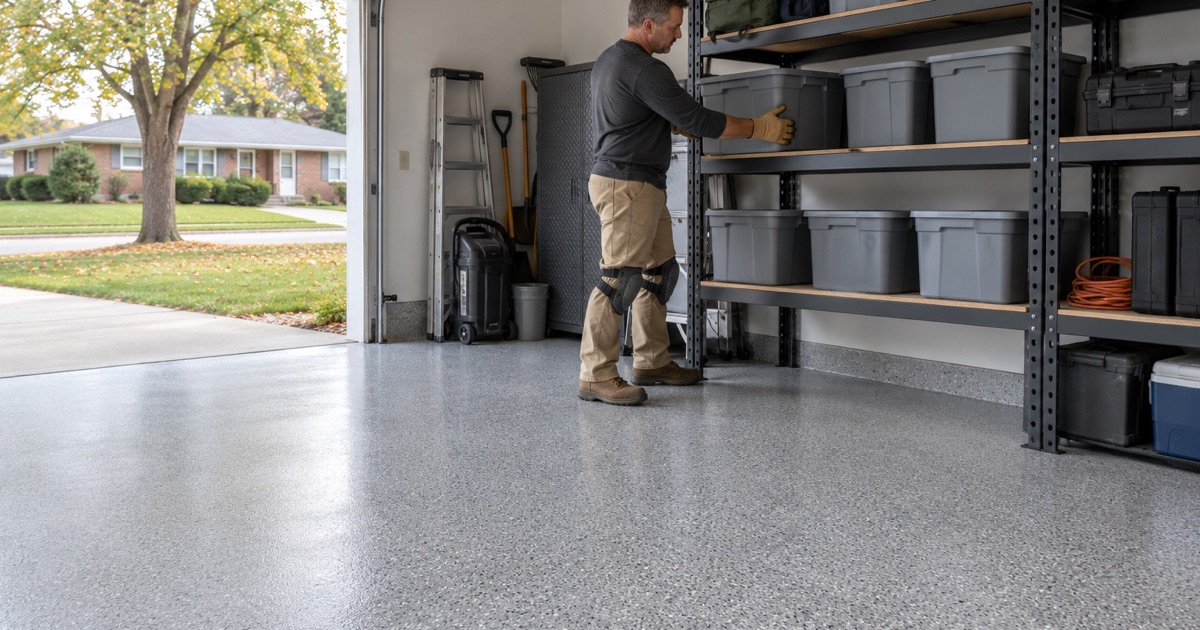
Most Lincolnwood homeowners are not running a greenhouse, but plenty of them store a season of lawn and garden feed on the garage floor. A torn bag, a damp corner and a few months of that is a small version of the same exposure. If the garage doubles as a potting area, with a hose bib and a bench, the slab sees it more often than most people realize.
Older slabs, honest prep
With half the houses in the village dating from 1940 through 1959, many garage and basement slabs here were poured before an under-slab vapor retarder was common practice, and many have carried decades of paint or sealer. On those floors, grinding the old film off and testing for moisture are the job itself, not an upsell. We read the cracks, pull up what will not hold, and tell you if repair has to come before coating.
Sometimes a garage slab is too far gone to coat at all. In Lincolnwood a replaced garage floor slab falls under a village Flatwork permit, and the village construction standard calls for 5 inches of compacted CA-6 gravel under 5 inches of concrete, with a plat of survey and itemized contractor proposals. A new slab then needs its own cure time and a moisture test before any coating goes down, so we plan the two jobs as a sequence rather than one visit.
Small habits that protect the floor
The best topcoat still works better with a cleanup habit behind it. Rinse spilled granules and liquid feed the same day rather than sweeping them into a corner, keep opened bags on a shelf or in a sealed bin instead of directly on the slab, and hose the bench area so runoff heads for the drain. Those steps cost nothing, and they keep the salts from sitting on any surface longer than they have to.
It also helps to give the feed its own zone. A shelf or bin near the door, a mat under the spreader and a habit of filling it outside keep most of the granules off the main floor. When a few do land on the coating, a broom and a rinse take care of them, which is the whole point of a sealed surface instead of bare concrete that soaks up whatever dissolves on it.
Scheduling and paperwork in the village
Curing is planned around slab temperature and the dew point spread at the surface rather than the calendar, because a cold garage can blush or cure soft, and some unheated spaces simply have to wait for spring. We work within the village’s posted construction hours, Monday through Friday from 7:00 in the morning to 6:00 in the evening and Saturday until noon, with no Sunday work. The village’s residential permit list does not name floor coatings either way, so we ask the permit desk before the job, and every home job comes with a written contract and the state’s consumer-rights pamphlet under the Illinois Home Repair and Remodeling Act.
- 20+ Years Coating Concrete
- Moisture Testing in Every Scope
- Written Contract on Every Home Job