Hoffman Estates Epoxy Flooring has put more than 20 years into epoxy flooring, and our work in Franklin Park starts from a question many floor sales skip: what does this slab actually have to survive? For a good share of the industrial floors here, the honest answer is heat and wash chemistry rather than foot traffic or forklift wheels. That answer changes the resin, the thickness and the way every edge is finished.
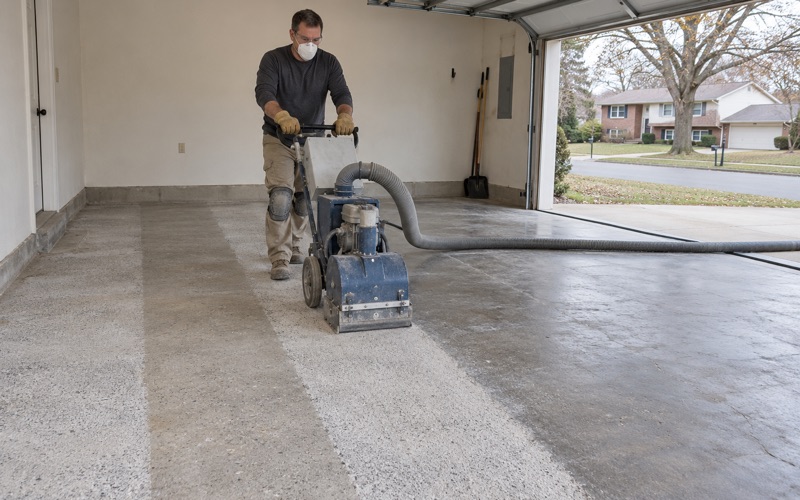
Before we quote anything, we open the concrete with a diamond grinder or a shot blaster, and we never acid etch. Moisture testing goes on the scope as its own line item, and the proposal names the product, the system build and the finished thickness. If the slab needs repair before it can be coated, we say so in writing instead of coating over the problem.
This page covers the floor problem that sets this village apart: a wash bay where near-boiling water lands on a cold slab again and again through the day. The same reasoning carries over to any washdown room, loading bay or process area where hot water and cleaning chemicals reach bare concrete.
A Food-Grade Tank Wash on King Street and the Water It Uses
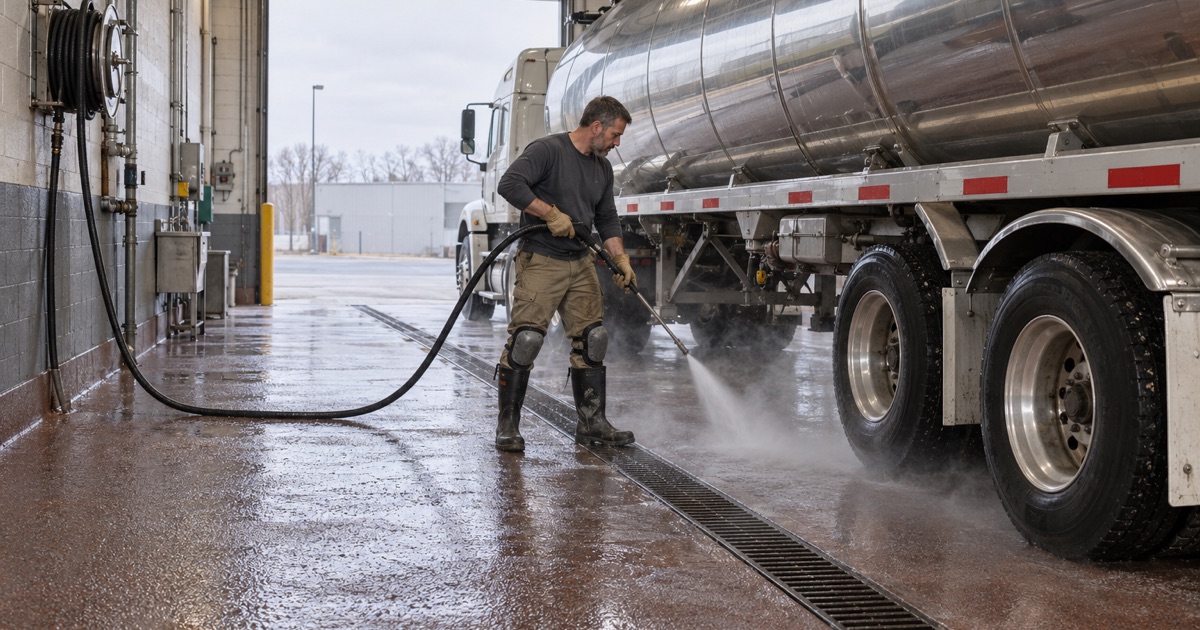
Franklin Park is a village in Cook County, inside Leyden Township, and one of its industrial addresses explains this page better than any general description could. Foodliner operates a terminal at 9200 King Street that is listed as a tank wash location offering kosher and food-grade washes for tank trailers. Foodliner’s own locations page names Franklin Park as both a hub and a wash location.
The terminal also appears on the Metropolitan Water Reclamation District’s list of significant industrial users, dated October 2, 2025. A tank wash belongs on a roll like that for a plain reason: every washout sends a large volume of hot, chemically loaded water toward a drain. To be clear, we have not seen inside those bays, we make no claim about their temperatures, chemicals or floors, and nothing on King Street is our work.
The tank wash is the sharpest example, not the only one. In 2024 the village counted 1,237 commercial and industrial water customers against 4,664 residential ones, so roughly one account in five belongs to a business. Plenty of those floors get hosed down at the end of a shift, and the same questions about heat, chemistry and drainage apply to them on a smaller scale.
Why 180 Degrees Is the Number to Know
What we can point to is the trade standard behind food-grade cargo-tank cleaning. A shipper’s food-grade standard quoted by Bulk Transporter in 1999 required wash water of at least 180 degrees F, and hot water only. That heat is the point of the process, because it is what loosens fats and sugars from the inside of a tank.
The Slab Is the Cold Half of the Equation
Now picture where that water lands. A wash bay floor sits at whatever temperature the bay sits at, and in a northern Illinois winter, a bay with doors cycling open can hold its slab close to freezing. Each washout pours water at 180 degrees or more across concrete that may be well over 100 degrees colder, then drains off and lets the surface cool again.
So the floor question in a tank wash is thermal cycling, not foot traffic. One shift of washes means many hot and cold swings a day on the same strip of floor between the trailer and the drain, and the coating has to live through every one of them for years.
Looking for epoxy-flooring closer to Deerfield? See Epoxy-Flooring Services in Deerfield.
Thermal Cycling: Why Thin, Rigid Coats Crack and Lift in a Wash Bay
Concrete and resin expand at different rates when they heat up. A thin, rigid epoxy film bonded to a cold slab is suddenly pushed to grow faster than the concrete under it, then forced to shrink back as it cools. Repeat that enough times and the stress gathers at the bond line, which is exactly where wash bay floors give out first.
What the Failure Looks Like
The usual signs are hairline cracks running across the coating, edges curling up near the drain and patches that sound hollow when tapped. Once water gets under a lifted edge, the next hot wash drives it further and the delamination spreads outward. A roll-on coat sold for a dry two-car garage is simply the wrong system for this room.
Building for Heat Instead
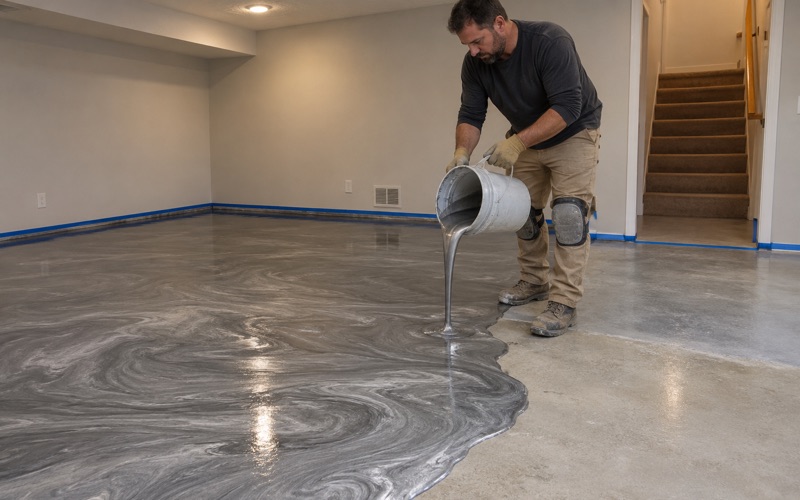
For hot washdown, the system we usually look at first is urethane cement, a troweled or slurry-applied material laid far thicker than a film coat and made to tolerate thermal shock. It moves more like the concrete does, and its thickness spreads stress out instead of focusing it at a thin bond line. Where a bay sees only occasional warm rinse water, a thick 100 percent solids epoxy with a quartz aggregate broadcast can be a reasonable build.
Either way, the finished thickness is written into the proposal so an owner can check what went down against what was quoted. We also say up front that a coating is a film that follows the slab beneath it. If that concrete is cracked and moving, the floor on top will follow it, so the crack gets repaired first.
Warranty terms get the same plain treatment. We read the exclusions aloud before the job is sold, with moisture named first, followed by chemical exposure outside what the system was specified for. An owner should know before signing which kinds of damage a wash bay floor is covered against and which it is not.
Preparing a Slab That Will Be Heat-Cycled
Profile matters more here than on a dry floor. We grind or shot blast to an ICRI CSP profile matched to the system, because a heavy urethane cement needs a coarser surface to key into than a thin sealer does. Before the grinder comes out, we test with ASTM F2170 in-situ relative humidity probes, since moisture rising through a bay slab pushes on a coating from below while the wash works on it from above.
Caustic, Detergent and the Residues a Washout Leaves Behind
Heat is only half of what a food-grade wash bay floor takes. The same Bulk Transporter standard noted that products such as chocolate and oils need higher cleaning pressures plus detergents and food-grade caustic. Whatever comes out of the tank, and whatever was used to clean it, crosses the floor on its way to the drain.
Caustic and Hot Water Together
Strong alkaline cleaners are hard on many floor resins, and heat speeds up that chemical attack. A resin that shrugs off a cold caustic spill may soften, stain or dull when the same solution arrives hot and sits in a low spot. That is why we ask what chemistry and what temperature a floor will actually see, then choose the system from those answers rather than from a brochure.
When an owner can hand us the data sheet for the cleaner in use, we compare it against the resin maker’s chemical resistance chart at the wash temperature, not at room temperature. Many charts are written for a cool spill wiped up within hours. A bay that sees hot caustic every shift needs a system rated for that exposure, and we say so when a cheaper coat is not.
Fats, Sugars and Slip Resistance
Oil and sugar residues leave a film that turns a smooth floor slick, especially when it is wet. A broadcast aggregate locked into the topcoat gives tires and boots something to grip. We pick a texture coarse enough to be safe but fine enough to rinse clean, because an overly aggressive surface holds residue and fights the wash crew every shift.
Kosher and Food-Grade Cleanability
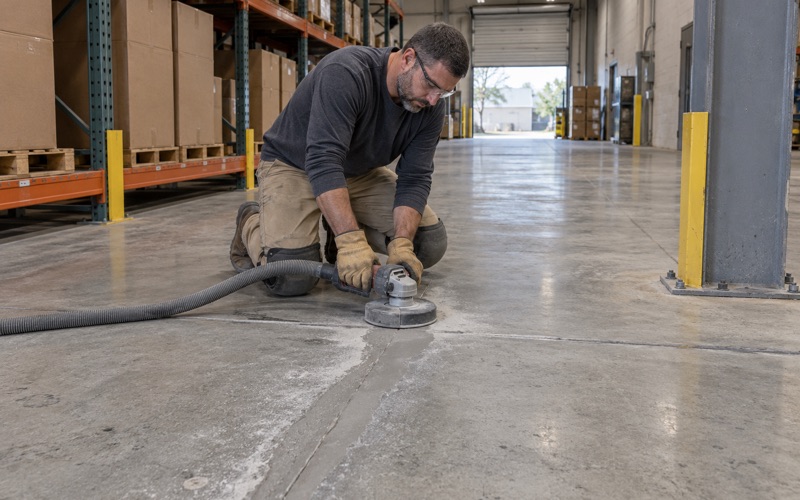
Food-grade and kosher washing put real weight on cleanability, so open joints and cracks in a floor are a sanitation problem as much as a trip hazard. We fill and detail joints as part of the system rather than leaving bare concrete gaps where residue can collect. No floor product carries a blanket food-use approval, so the honest answer is how a floor performs under the wash it actually gets.
Slope, Drains and the Bay Edges Where Hot Water Runs
Every wash bay is a drainage design before it is a floor. Water at that temperature should leave the slab quickly, because hot water standing in a low spot keeps heating and softening the same patch of coating long after the wash ends. We check the existing slope to the trench or floor drain before quoting, and where ponding shows up, we correct it in the build instead of coating over it.
Drain and Trench Edges
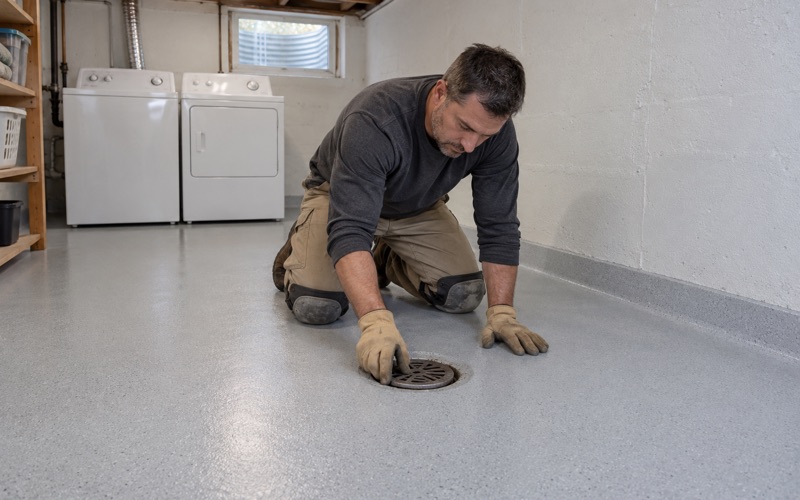
The hardest-working inches of a wash bay are where the floor meets a trench drain, a floor drain or a curb. That edge takes the hottest and most concentrated flow, and a coating that simply stops at the grate gives water a place to start working underneath. We terminate the system into the drain body or a keyed edge, so the hot flow runs over the coating rather than behind it.
Walls, Curbs and Coves
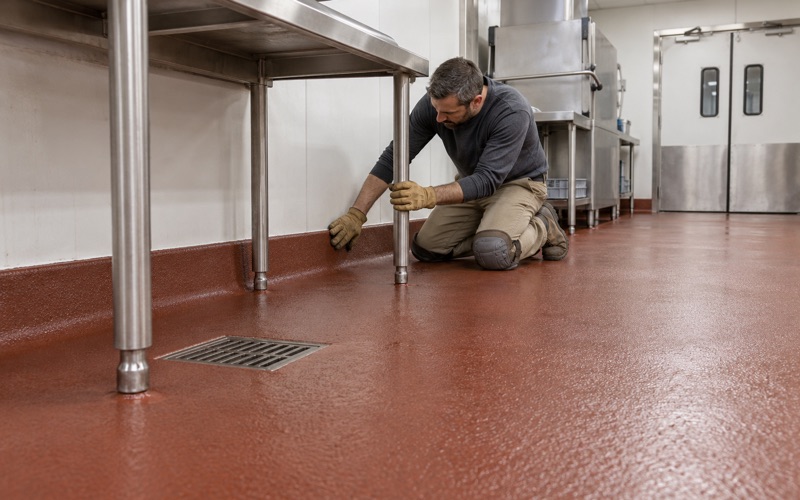
Spray from a high-pressure wand climbs walls and curbs, so the floor system usually continues up the base as a cove. That keeps hot water and caustic out of the floor-wall joint, where a square corner would trap residue and crack first. Curing is scheduled against slab temperature and dew point, and if a bay open to winter air cannot reach the right conditions, we say the floor has to wait or needs temporary heat.
Village Licensing and the Sewer Behind the Drain
Franklin Park requires every contractor working in the village to be licensed, insured and bonded: a yearly license running May 1 to April 30, a $10,000 trade-specific license and permit bond and at least $1,000,000 in liability insurance. We confirm that registration and ask the Building Department on Belmont Avenue whether the job needs a permit before it is scheduled. The village also notes that most of Franklin Park lies in a combined sewer area, where sanitary sewage and stormwater share the same pipes, so how a bay’s drains connect is a question for the owner and village engineering, not something a coating changes.
- 20+ Years Coating Concrete
- Moisture Testing in Every Scope
- Written Contract on Every Home Job