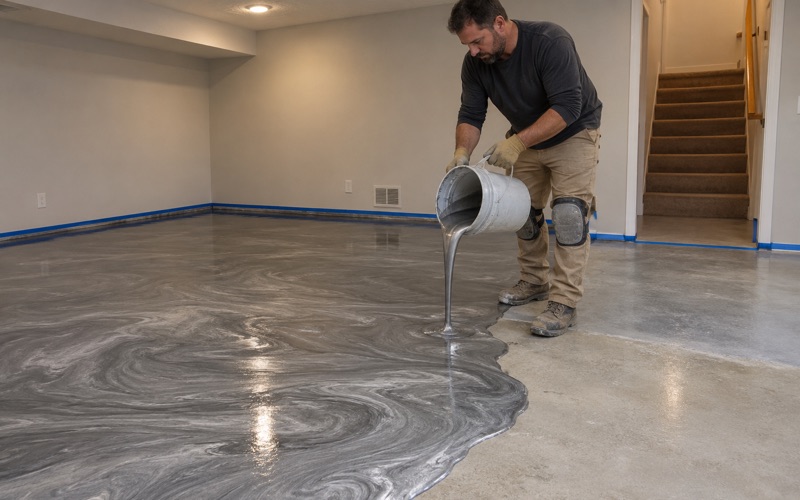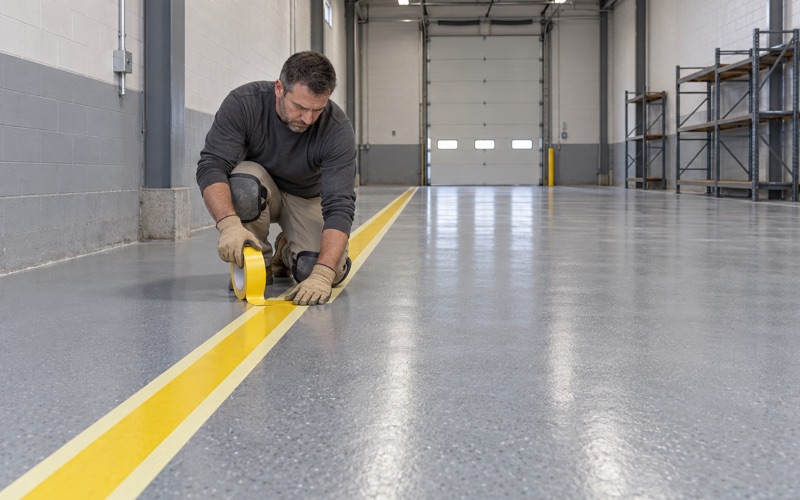
Hoffman Estates Epoxy Flooring has handled epoxy flooring in Deerfield for more than 20 years, and the question we hear most from fitness-minded owners is whether one coating can cover an entire workout room. Usually it cannot, and saying so early saves a floor. A resin system and a rubber mat each do one job well, and a good layout puts each where its job is.
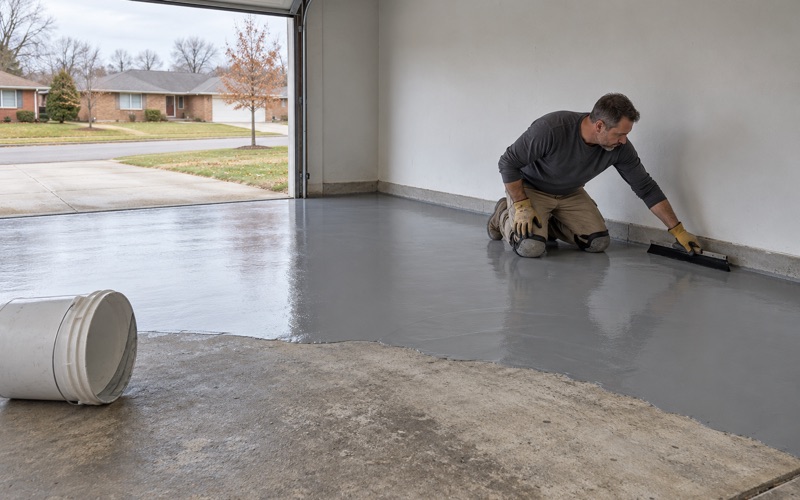
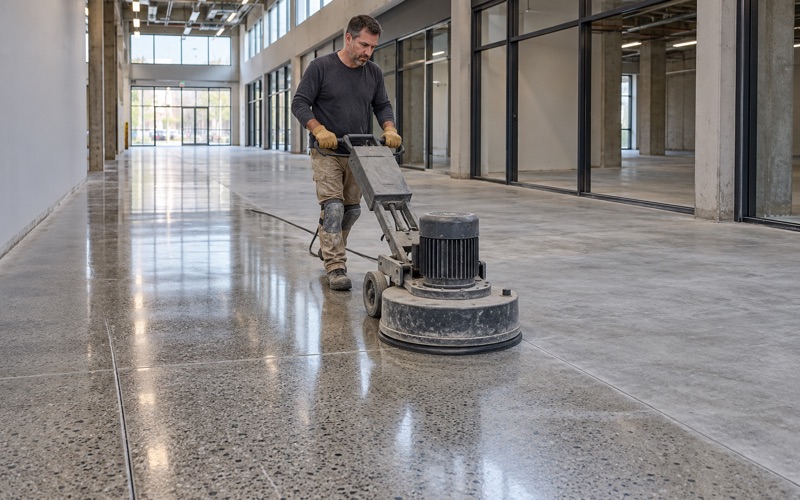
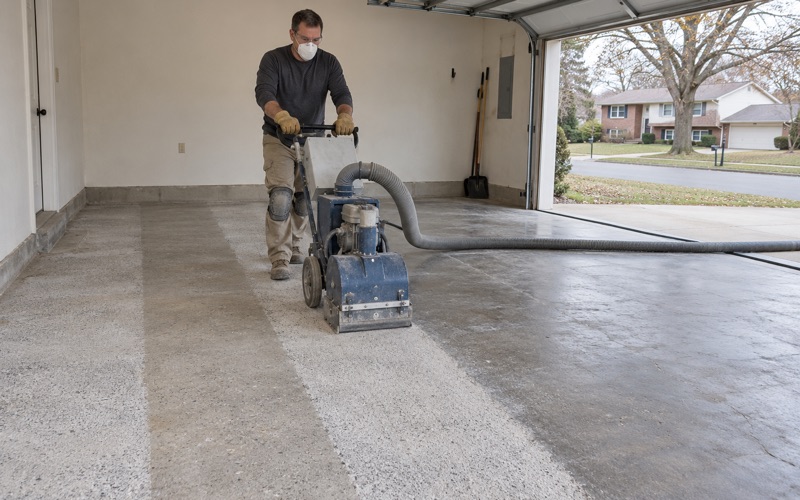
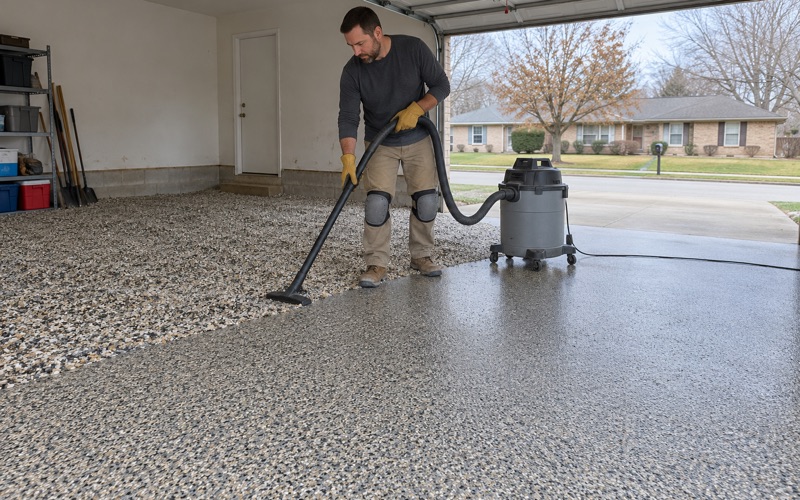
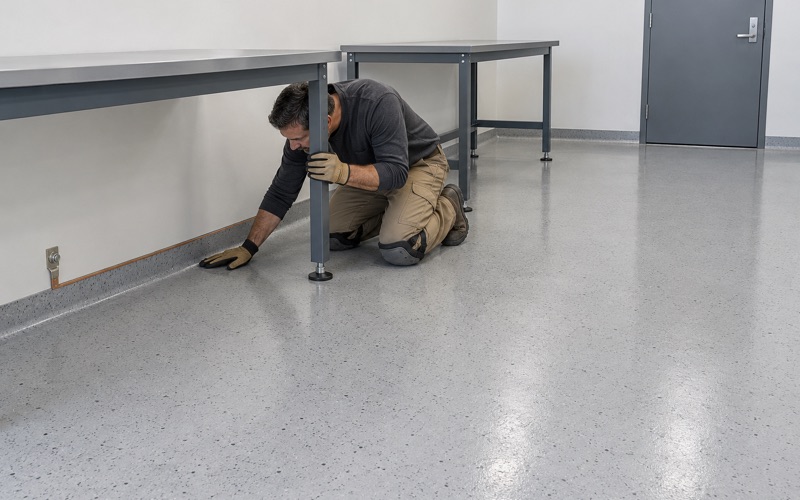
Before any product is chosen, we open the slab with a diamond grinder or a shot blaster to a measured ICRI CSP profile, and we never acid etch. Moisture testing sits in the written scope as its own line, whether the floor is in a basement or a garage. The proposal then names the product, the system build and the finished thickness, so you can check what went down against what was quoted.
That approach matters most in rooms where weights move. A coating is a thin film bonded to concrete, and it behaves like the slab beneath it. It can resist abrasion, chemicals and rolling loads very well, but it does not cushion anything, and we tell every gym owner that before a single kit of resin is opened.
A 7,500-Square-Foot Fitness Floor on Lake Cook Road
Deerfield’s clearest public example of a mixed-use fitness floor is Sachs Recreation Center, the park district building at 455 Lake Cook Road. The district lists a 7,500-square-foot fitness area there with a full line of free weight and strength resistance equipment, plus a functional training rig. The same building holds three hardwood basketball courts and a four-lane running and walking track with elevated turns.
We have no work at Sachs, and the fitness area’s floor material is not something we have seen, so this is not a case study. It is a useful reference because it puts in one room the same mix a home gym or a corporate fitness center has: plates, racks, cardio machines, cleaning carts and spilled drinks. Each of those loads the floor differently.
What a Dropped Plate Does to a Rigid Coating
A free-weight floor fails by impact, not by wear. When a loaded barbell or a single plate lands on a hard surface, its force goes straight into the coating and then into the concrete under it, because neither material gives. Gym-flooring suppliers note that heavy drops on hard surfaces put direct impact stress into the subfloor and shorten the life of the equipment as well.
On an epoxy or polyaspartic floor, that shows up as chips, a crushed spot where the film has fractured, or a crack that telegraphs up from the slab. No coating absorbs a dropped weight, whatever a label promises, and 100% solids epoxy is hard precisely because it is rigid. That rigidity is what you want under a treadmill and what you do not want under a deadlift.
Machines tell a different story. A treadmill or a cable stack that never moves wears a coating slowly through foot traffic, sweat and cleaning chemicals, and a well-bonded system handles that for years. That contrast between gradual wear and sudden impact is the whole reason one product should not cover the entire room.
Where the Damage Starts
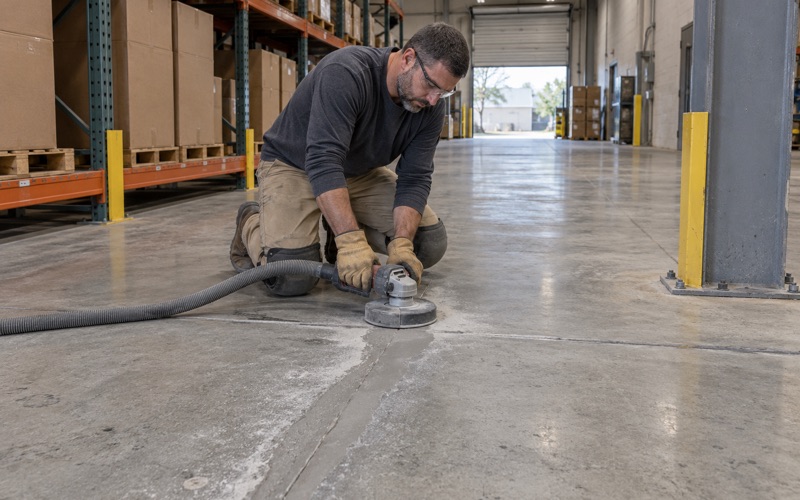
Repeated drops in the same few square feet also find weaknesses that were already there. A hairline crack, a hollow spot from a poor original pour, or an old coating that never fully bonded will give way first. We read the cracks and any existing coating before we quote, and if the slab needs repair before it can carry a new system, the proposal says that plainly.
Looking for epoxy-flooring closer to Warrenville? See Warrenville Epoxy-Flooring.
Rubber Where Weights Fall, Resin Where Machines Stand
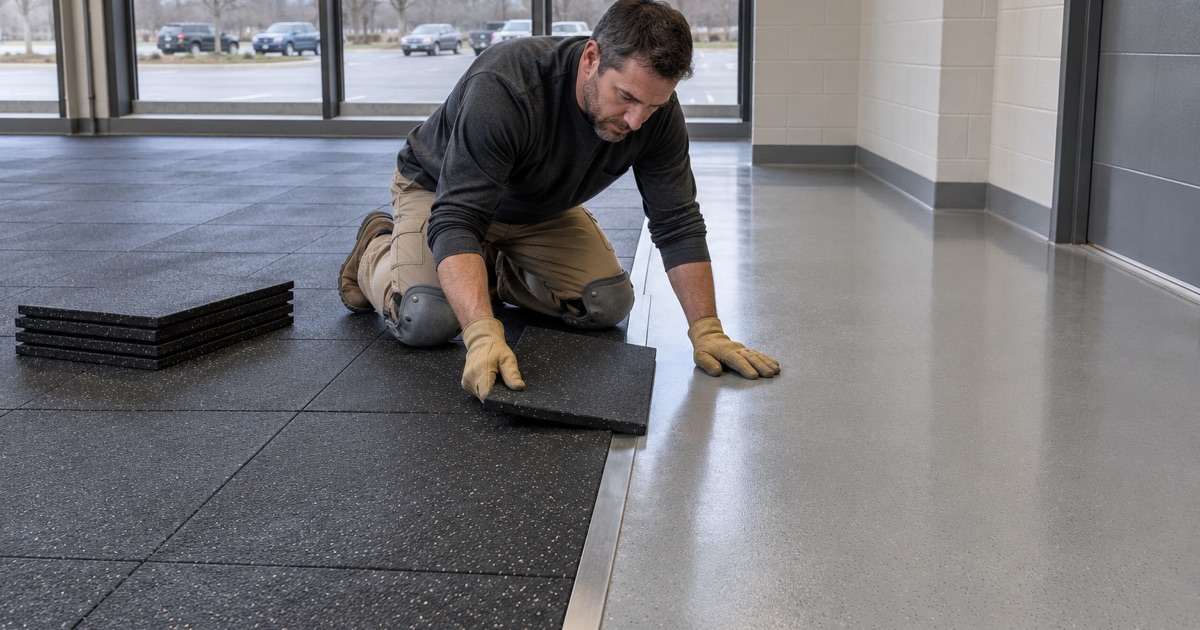
The fix is zoning rather than a tougher coating. We map the room by what each area does, then assign a surface to each zone. The lifting area gets thick high-density rubber, while the coated concrete runs everywhere machines sit, carts roll and drinks spill. The two meet at a clean, planned edge rather than a mat dropped wherever it happens to land.
Sizing the Rubber Zone
Supplier guidance calls for at least 15 to 20 mm of high-density rubber in heavy free weight areas, and 20 to 30 mm or more where plates are dropped often or in commercial gyms. That is vendor guidance, not a code or any building’s specification, but it is a sensible starting point. We size the zone to the space a lifter actually uses, with margin for a bar that rolls.
What the Resin Zone Needs
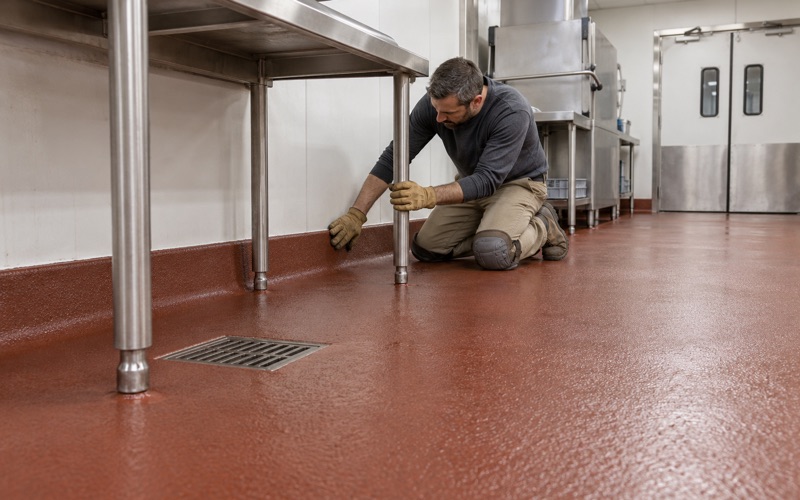
Away from the platforms, a coated floor earns its place. Cardio machines, cable stacks and selectorized equipment sit still and press down through small feet, and a ground, primed and properly built epoxy system handles that point load and wipes clean after sweat, sanitizer and sports drinks. A quartz aggregate broadcast or a fine vinyl flake broadcast adds texture so a damp floor stays manageable underfoot.
For topcoats, we often use a polyaspartic or polyurea layer over an epoxy base, because those chemistries hold up to rolling carts and frequent wet cleaning. Every product is chosen within the Illinois limit on VOC content for architectural coatings, which binds us as installers as well as the manufacturer. Where a rubber zone meets the coating, we finish the resin edge cleanly so the mat seats flat instead of riding up on a ridge.
Keeping the Two From Fighting
Loose rubber tiles dragged across a fresh topcoat can scuff it, and a mat laid over a coating that has not fully cured can imprint or mark the finish. We schedule mat placement after the cure the product sheet calls for, and we leave room at the seam for cleaning. Getting the sequence right is cheaper than refinishing a zone the week after the room opens.
One Week in August: Fitting Floor Work Into a Shutdown
Facilities that cannot close often plan floor work the way the park district plans its own maintenance. Sachs Recreation Center closed from August 13 through August 20, 2025 for facility work that included the annual screening and sealing of the wood floors in Gymnasiums A and B and the Group Exercise Studio, along with new lighting above the gyms and in the fitness area.
That pattern is a good model for any fitness room, clubhouse gym or office wellness center. A known, short window each year lets floor work be planned around everything else instead of squeezed into a weekend. We schedule office, hotel and other commercial floors around the hours a building has to stay open, including overnight and between-event windows, and a planned shutdown is the easiest version of that.
What Fits in a Week
A grind, crack and joint repair, primer, body coat and topcoat can fit inside a short closure on a modest room, provided the slab is dry and warm enough. What takes the time is cure, not application. We schedule each coat against slab temperature and the dew point spread at the slab surface rather than the calendar, because a coat laid too close to dew point can develop amine blush and a weak bond.
Moisture testing happens before the window, not on its first morning. We use ASTM F2170 in-situ relative humidity probes or ASTM F1869 calcium chloride tests so the results are in hand when the closure starts. If the numbers call for a moisture-mitigation primer, that step goes into the schedule up front instead of becoming a surprise that pushes reopening back.
Equipment Out, Equipment Back
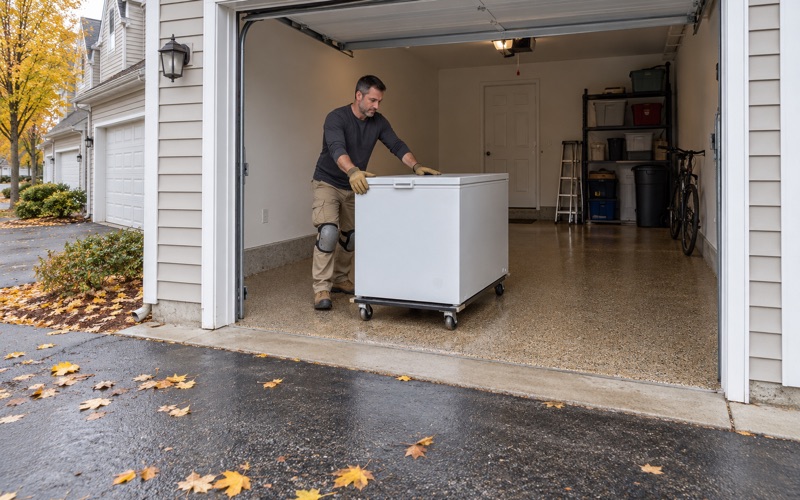
Equipment has to leave the room before grinding starts and should stay out until the topcoat reaches the cure the manufacturer lists for heavy loads. Racks and machines set back too early can dent or mark a fresh film. We give the facility a written timeline showing the day each zone is walkable, the day it takes light traffic and the day it can carry equipment again.
Home Gyms in Deerfield Garages and Basements
Most Deerfield floors we would be asked about are not in public buildings. Census figures count 6,203 owner-occupied homes in the village and 5,873 detached houses, and plenty of garages and basements now hold a rack, a bench and a stack of plates. The same zoning rule applies at home: rubber under the lifting area, a coated floor around it.
Older Slabs and Newer Ones
Some 43.1 percent of the village’s housing went up in the 1950s and 1960s, which puts many slabs at 55 to 75 years old and ahead of ASTM E1745 under-slab vapor retarder practice. About 21 percent of the stock is 2000 or newer, yet a newer garage slab is not automatically a dry one, since the model code exempts garages from the vapor retarder requirement. We test both kinds before we coat.
Basements and Water
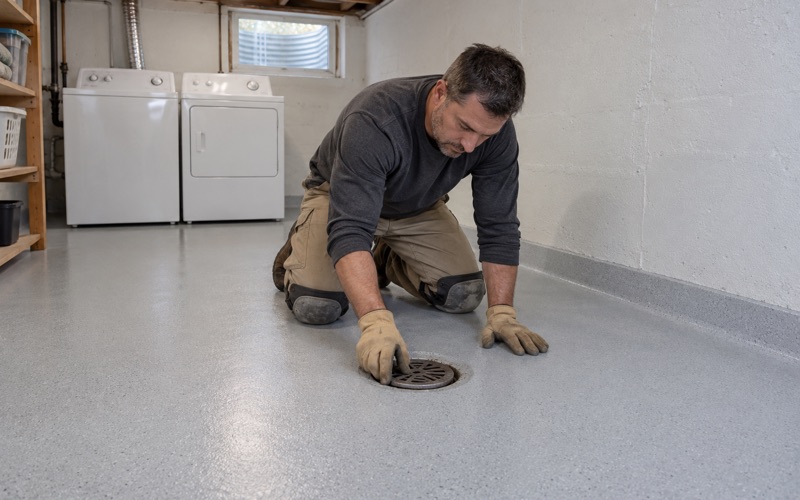
A basement gym is a water question before it is a coating question. If water comes up through the slab, that is a drainage matter first, and we never sell a floor coating as waterproofing. Efflorescence, a white crust at the joints, or stains around the sump pit and floor drain tell us the slab has a moisture history worth measuring before anything is applied.
Garages That Also Park a Car
A garage that doubles as a gym still has to hold a car through a northern Illinois winter. We build those floors for the calcium chloride brine and rock salt that ride in on the tires, with a topcoat chosen to resist hot tire pickup. In an unheated garage the curing schedule follows slab temperature, and we say plainly when a project has to wait for spring.
Every home job gets a written contract and the Home Repair: Know Your Consumer Rights pamphlet before work starts, as the Illinois Home Repair and Remodeling Act requires. Illinois issues no state license for coatings work, so we confirm the Village of Deerfield’s own registration, bond and insurance rules and ask the permit desk whether the job needs a permit. Warranty exclusions, with moisture named first, are read out before anything is signed.
- 20+ Years Coating Concrete
- Moisture Testing in Every Scope
- Written Contract on Every Home Job