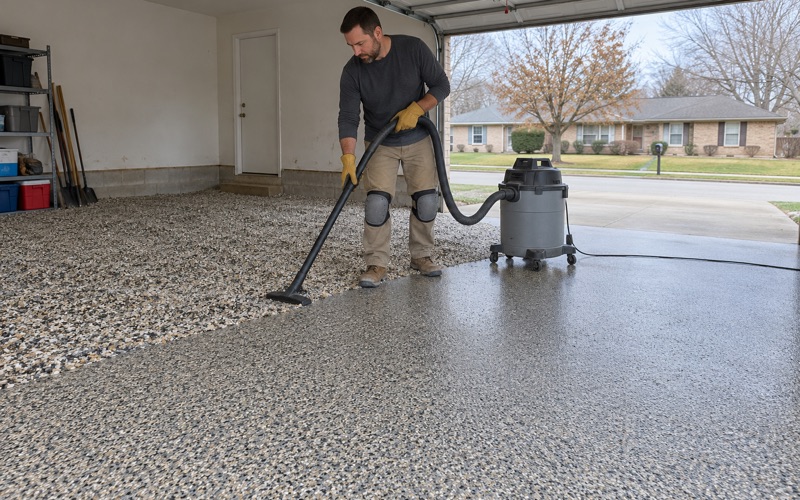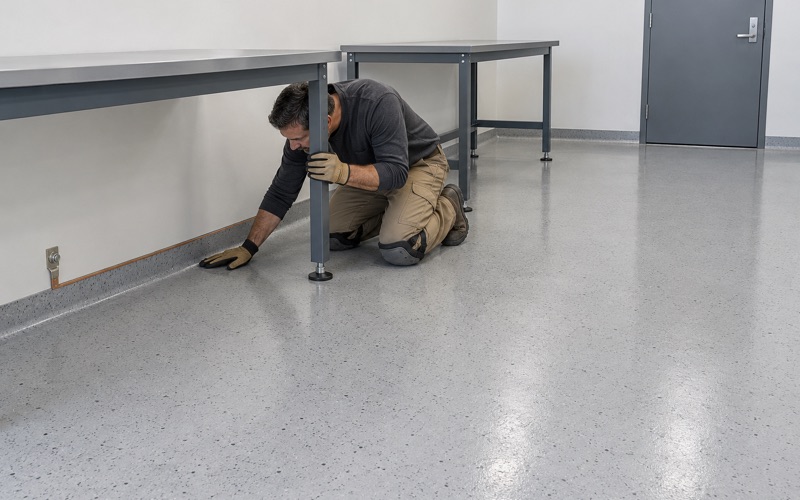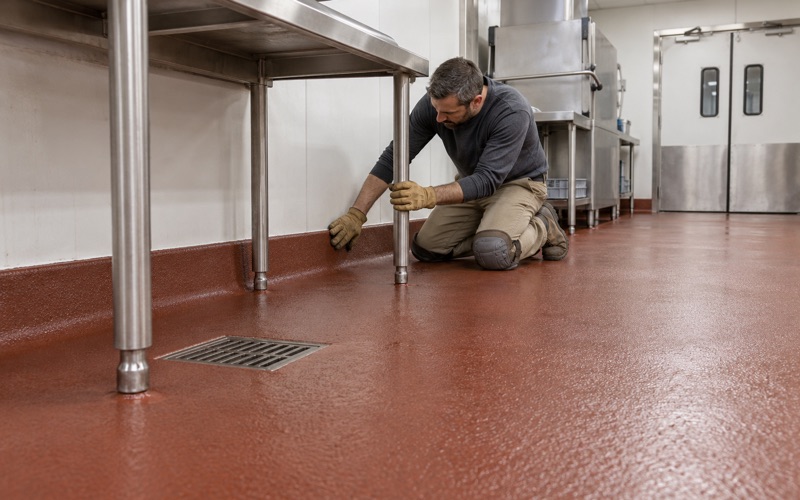
Hoffman Estates Epoxy Flooring brings more than 20 years of work to epoxy flooring in Campton Hills, and here the slab in question is not always under a car. Plenty of the calls we take start with a garage and then turn to the outbuilding: a horse stall, a barn aisle, a wash bay where a hose runs most days. Those floors deserve a straight answer about what a resin coating can and cannot do.
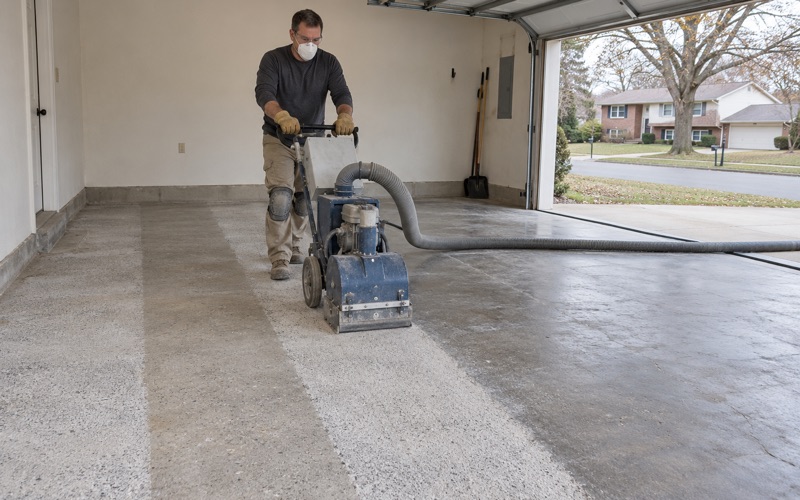
Our process starts the same way on every slab. We open the concrete mechanically with a diamond grinder or a shot blaster, never acid, and we put moisture testing in the written scope as its own line rather than offering it after a blister appears. The proposal names the product, the system build and the finished thickness, so you can check the floor against the quote.
Barn floors add problems a garage never sees. Waste and washwater reach the concrete daily, hooves need grip on a wet surface, and drains and joints carry more of the load than any topcoat. Below we walk through where that thinking comes from, what a livestock floor actually has to survive, and how we scope one honestly.
A 1906 Dairy Barn and the Case for Concrete
Campton Hills is a village in Kane County, a western suburb of Chicago with 10,885 residents at the 2020 Census, and it keeps a working-farm museum within its boundaries. Garfield Farm Museum sits in Campton Township, and its grounds hold the 1842 hay and grain barn, the 1846 inn and several later barns, among them a dairy barn built in 1906.
The restoration at Garfield Farm
Under a 2017 Hamill Family Foundation grant, the Trillium Dell Timber Works crew lifted, repaired, restored and re-sided the 1906 dairy barn over 11 months. The museum says the barn reflects the thousands of dairy farms that once existed across northern Illinois and southern Wisconsin. Concrete was poured inside it during the work, with the barn raised about 2 feet above its foundation.
We had no part in that project and have not seen how the new floor was finished, so we will not describe it. What interests us is simpler: when a century-old dairy barn was put back into shape, fresh concrete went in, because a barn built around daily washing was always meant to stand on a hard, cleanable floor.
Why dairy rules asked for concrete
The Grade A Pasteurized Milk Ordinance, in its 2023 revision, says gutters, floors and feed troughs are constructed of good quality concrete or equally impervious material, and that floors shall be easily cleaned. That rule governs licensed Grade A dairies, not museums or backyard barns. Its reasoning, though, applies to any floor where animals stand and waste lands.
The key word is impervious. Bare concrete is porous; liquids wick into it, and what soaks in stays behind to feed odor. A dense, well-finished slab resists that better than a rough one, and a sound resin coating over properly prepared concrete can make the surface itself shed liquid, which is the part of the rule a coating can actually address.
The benchmark for a modern barn floor
For a horse owner or a family with a few goats, the dairy standard is a useful benchmark rather than a legal duty. Ask of any barn floor whether it can be hosed clean, whether water leaves rather than pools, and whether the surface stays intact after years of scraping. Those three questions shape every livestock scope we write.
Looking for epoxy-flooring closer to Northlake? See Northlake Epoxy-Flooring.
Manure, Urine and the Hose: What a Barn Floor Takes
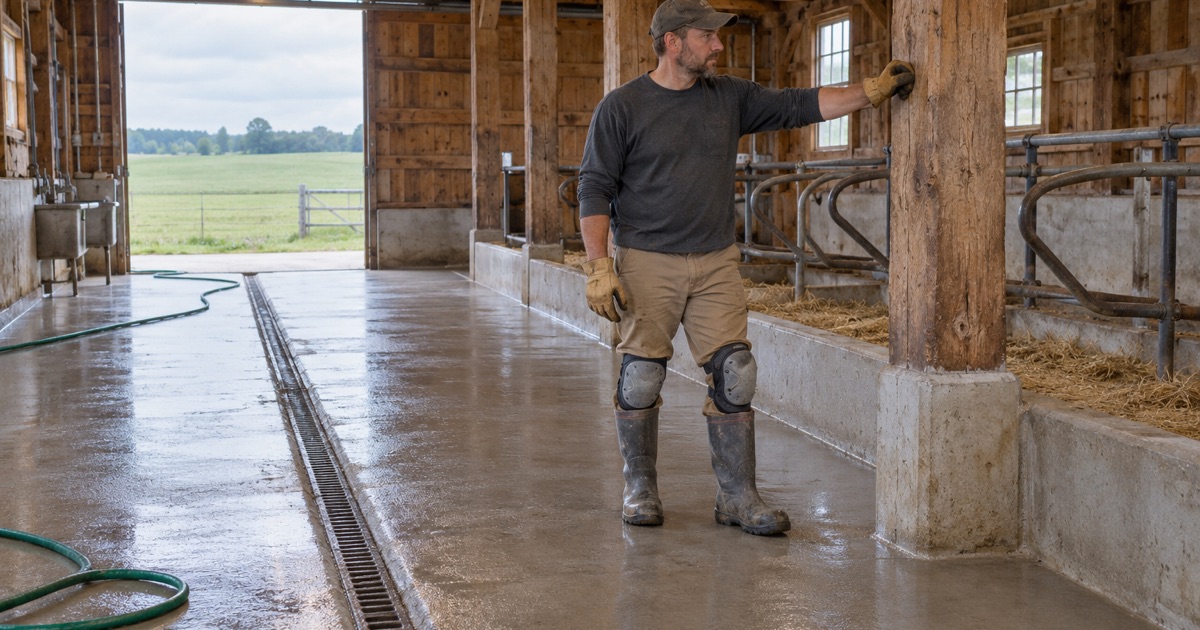
A garage floor sees deicer brine in winter and an oil drip now and then. A stall or barn aisle meets manure, urine and washwater every day of the year, plus steel shovels, wheelbarrow tires and the shifting weight of a large animal. That is a harder service than most residential floors face, and it changes what we recommend.
What daily washdown does to concrete
Urine is the hard part. It carries ammonia and salts that work into open pores, and repeated wetting and drying lets those salts move through the top of the slab. Over years an uncoated aisle can lose its surface paste, leaving exposed aggregate that holds waste and gets harder to clean every season.
Where a coating fits, and where it does not
A coating is a film that follows the slab under it. It can make a sound floor easier to hose, but it will not stop a crack from moving, and it is not waterproofing. We do not call epoxy the right answer for every working barn; where animals stand on it daily, a coating is one option weighed against a densified bare slab, rubber mats or a urethane cement system.
Urethane cement tolerates hot water, thermal swings and heavy wet use better than a thin epoxy film, which is why it shows up in wash bays and food plants. For a feed room, a tack room or an aisle that sees occasional hosing rather than standing stalls, a 100% solids epoxy with a textured topcoat is often the reasonable choice. We set out the tradeoff in writing before you pick.
Moisture under the barn
Outbuilding slabs are often poured without a vapor retarder, and a coating applied over a damp slab can blister and lift. We use ASTM F1869 calcium chloride kits or ASTM F2170 in-situ relative humidity probes before any resin is mixed, and moisture leads the warranty exclusions we read aloud before the job is sold. A slab that fails gets a moisture-mitigation primer or a different system.
Drains, slope and joints
No topcoat fixes a floor that holds water. Washwater should run toward a drain or a door, and we check slope and drain detailing during the walkthrough. Control joints and cracks are where liquids collect first, so we read every crack before quoting and say plainly when a slab needs repair before any coating goes down.
Footing for Hooves on a Washable Floor
Here the dairy rule runs into a problem of its own. The smoother and tighter a floor is, the easier it is to wash, and the more slippery it becomes once wet. A horse that slips on a hosed aisle can be hurt, and so can the person leading it. A barn floor has to balance cleanability against grip.
Broadcast texture instead of gloss
Glossy, clear finishes that look sharp in a garage are the wrong choice under hooves. We build livestock-area floors with a quartz aggregate broadcast into the base coat, then lock it in with a topcoat applied thin enough that the texture survives. Vinyl flake alone does not give the same bite, so where traction matters we lean on aggregate.
How coarse is coarse enough
More grit means more grip and a floor that takes a little more effort to scrub. In a stall where an animal stands for hours, many owners pair a coarse floor with rubber mats; in an aisle or wash area, a medium broadcast often strikes the balance. Before the full floor is committed, it is worth wetting a sample board and walking it in the boots you wear in the barn.
The bond under the texture
Grip means nothing if the coating lets go. The mechanical prep described earlier leaves a measured ICRI CSP surface profile, so the resin keys into sound concrete instead of resting on old sealer or weak surface paste. On an older barn slab, that prep often uncovers soft spots and patched areas that have to be repaired before the first coat.
Stalls and Barn Aisles on a Campton Hills Lot
The village’s Zoning Commission letter permits equines and barnyard animals in the RE-1 through R-1 districts, so a stall or small barn behind the house is part of residential life here. The museum’s annual Rare Breeds Show of heritage livestock and poultry is another sign that animals still have a place in the village.
An owner’s village with middle-aged slabs
Of 3,695 occupied homes, 3,647 are owner-occupied, so the person who books a barn or garage floor nearly always lives with the result. Most of the housing dates from the 1970s through the 1990s, with another 767 homes from the 2000s, which puts many slabs at 25 to 55 years old.
Slabs that age often carry an earlier sealer or coating, and an outbuilding floor may have been patched more than once. We identify what is already on the concrete before quoting, because a new system laid over a failing old one inherits that failure.
Timing the work around the animals
A barn floor job means moving animals out for the whole installation and cure. We schedule curing against slab temperature and the dew point spread at the surface rather than the date on the calendar, and an unheated barn in a cold stretch may simply have to wait for spring. Saying that up front costs far less than a soft floor under a horse.
Paperwork before the first pass
The village’s permit snapshot lists accessory structures among the work that needs a permit; whether a coating on an existing barn floor needs one is the Building and Zoning Department’s call, and we ask before scheduling. Every home job also gets a written contract and the Home Repair: Know Your Consumer Rights pamphlet before work begins, as the Illinois Home Repair and Remodeling Act requires.
The coatings we use stay within the Illinois VOC limits, which bind the installer as well as the manufacturer, and good ventilation during application matters in a closed barn either way. If water is coming up through a slab rather than off the hose, that is a drainage question first, and we will say so before selling anything.
- 20+ Years Coating Concrete
- Moisture Testing in Every Scope
- Written Contract on Every Home Job