Hoffman Estates Epoxy Flooring has spent more than 20 years on epoxy flooring in Bensenville and the rest of the northwest suburbs, and the floors that teach us the most are the ones that are never fully clean. A slab that lives under a light film of oil asks different questions than a showroom floor.
Can a worker keep footing on it? Can it be scrubbed hard without losing its texture? Can it take a new coat later without being torn out?
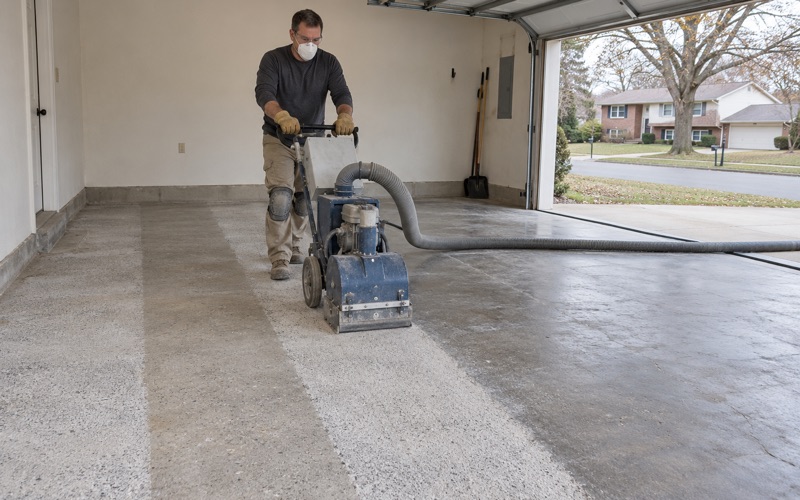
Those questions decide the system before color ever comes up. We open every slab with a diamond grinder or a shot blaster, never acid, because an etch cannot reach oil that has worked its way into the pores. We test for moisture as a priced line in the scope, and the proposal names the product, the build and the finished thickness, so a plant manager can hold what we quoted against what actually went down.
We also look at the cracks, the old coating and the stains before we put a number on paper. When a slab needs repair or deeper cleaning before it can carry a coating, we say so in the first conversation, not after the first coat lifts.
A Die-Casting Plant on Route 83 and the Film It Makes
Bensenville borders the southwest corner of O’Hare and carries one of the largest industrial parks in Illinois, with more than 1,500 businesses inside a village of about 5.53 square miles. Most of that stock is warehousing and distribution, but some of it makes metal parts, and metal-forming floors behave differently from storage floors. The difference starts with what lands on the concrete every shift.
Chicago White Metal Casting
At 649 Route 83, in the Addison Township part of the village, Chicago White Metal Casting describes itself as a full-service high-pressure die casting company producing aluminum, zinc and magnesium components, with machining, finishing and assembly alongside the casting work. It cites nearly 90 years of experience. It is not a customer of ours, and we have not seen its floors; we name it because it shows the kind of production that shapes a floor decision here.
How die casting coats its own floor
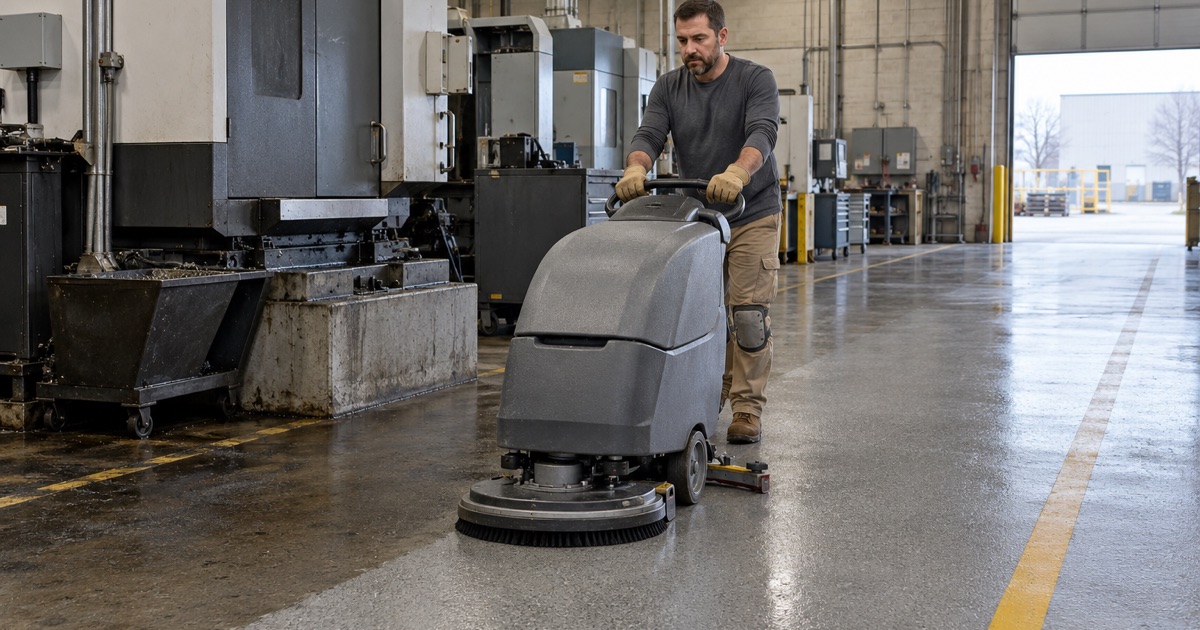
High-pressure die casting forces molten metal into a steel die at speed, and the die and the plunger both need lubricant on every cycle to release the part and protect the tooling. That lubricant is usually sprayed. Some of it stays where it was aimed, and some drifts as mist and settles on the machine frame, the guarding and the concrete around the cell. Over a shift, the floor near the press picks up a thin layer that never quite goes away.
What one die caster reported
An industry case study from another die caster, not a Bensenville plant, describes the problem plainly. Running a water-based oil and graphite plunger tip lubricant, that shop reported overspray areas on its die cast machines and safety issues with dirty, slippery floors. After it changed to a wax-bead lubricant, it reported no more greasy floors or messy spills, and a lower hazard for slips and falls.
Looking for epoxy-flooring closer to Winfield? See Epoxy-Flooring in Winfield.
Traction on a Floor That Is Never Quite Dry of Oil
That case study is useful because it puts the failure where it belongs. A die-casting floor rarely fails because a load crushes it. It fails because a person steps into overspray, the boot loses grip and somebody goes down. So the coating question on a floor like that is traction first, cleanability second and appearance a distant third.
Why a smooth, glossy epoxy is the wrong answer
A high-gloss 100% solids epoxy looks right on the day it cures and turns hazardous the first time an oily mist settles on it. Smooth resin and a film of lubricant together give a shoe almost nothing to hold. The fix is texture built into the coating itself, not a mat thrown over the worst spot, because overspray does not stay inside the border of a mat.
Building slip resistance into the system
For this kind of floor we broadcast quartz aggregate into the body coat and lock it in with a topcoat, sized so a boot sole bites into it while a deck brush and degreaser can still reach the valleys. Too coarse and the texture traps grime, too fine and an oily film levels it out. Where heat, chemistry or ongoing oil exposure is heavy, urethane cement is often the better body than epoxy, and we say which one the floor needs.
Keeping it cleanable and recoatable
An oily floor gets scrubbed constantly, and every scrub wears the peaks of the texture down a little. That is expected, which is why we plan the floor as something that will be degreased and topcoated again in place rather than ground off and replaced. A polyaspartic or urethane topcoat over a sound base can be cleaned, abraded and recoated, as long as the oil has stayed on top of the film instead of soaking through it.
Degreasing Before a Coating, and Why Oil in the Slab Defeats Bond
The most common reason a coating lets go on an industrial floor is not the product. It is oil that was already in the concrete when the coating went on. Concrete is porous, and years of lubricant, cutting fluid and hydraulic leaks wick down into it. A coating can bond only to clean, open concrete, so anything sitting in those pores becomes a release layer under the new floor.
Why grinding alone is not enough
Diamond grinding and shot blasting remove the top skin of a slab and leave the profile a coating needs, measured against the ICRI CSP scale. On a clean slab, that is the whole job. On an oil-contaminated slab, grinding can drag surface oil across fresh concrete and smear it into newly opened pores. We degrease before mechanical preparation, prepare, and then check again, because oil that rises after grinding tells us it went deeper than the surface.
Reading the slab before we quote
Dark stains that stay dark after cleaning, water that beads instead of soaking in and spots that feel slick to bare fingers after grinding are all signs that oil is still in the concrete. When we see them, we say so before quoting. Some slabs clean up with repeated degreasing and heat. Others need the contaminated layer cut out and patched, and a coating laid over oil will fail no matter how good the resin is.
Moisture and temperature still apply
Oil is not the only thing coming up through the slab. We still run moisture testing, using ASTM F1869 calcium chloride or ASTM F2170 in-situ relative humidity probes as the slab calls for, and add a moisture-mitigation primer where the readings require one. We schedule curing against slab temperature and the dew point spread at the surface, and warranty exclusions are read aloud before the job is signed, with moisture named first.
Cells, Trim Presses and the Cleaner Machining Side
A die-casting plant is several floors under one roof. The ground around a casting cell lives with overspray and dropped parts. The area around the trim presses, where flash is sheared from fresh castings, collects metal scrap and some lubricant.
The machining, finishing and assembly side can be much cleaner, with coolant at the machines and lighter foot traffic. One coating spec across all of it usually means one of those zones is wrong.
Zoning the system to the process
We prefer to map the plant first and match each area to its own build. A heavier textured system goes around the cells, a durable body with moderate texture goes through the trim and scrap aisles, and a smoother, easier-to-clean finish goes into assembly or inspection rooms where small parts get dropped and need to be found. Transitions are laid out on the floor before work starts so no one steps from a rough surface onto a slick one by surprise.
Working around production
A plant cannot stop because the floor is being redone. We schedule in sections, on nights, weekends and shutdown windows, so one cell or one aisle is out of service at a time while the rest keeps running. Fast-cure polyaspartic topcoats help close a section in fewer hours, but only when the slab temperature and dew point allow it; we do not push a cure faster than the conditions underneath it.
Who else looks at the floor
The Village of Bensenville spans DuPage and Cook counties, and 649 Route 83 sits on the DuPage side in Addison Township. The Bensenville Fire Protection District No. 2, a separate district from the village, conducts annual inspections of non-residential businesses. Slip hazards and housekeeping are part of how an industrial floor reads to anyone walking it, so a floor that keeps its texture under overspray is easier to keep in order between visits.
Illinois issues no state license for flooring or coating work, so before a job is scheduled we confirm the village’s own contractor registration, insurance and permit expectations. Our coatings are chosen within the Illinois limit on VOC content, which binds the installer as much as the manufacturer, and that matters most indoors, inside an operating plant, where people keep working next to the area being coated.
- 20+ Years Coating Concrete
- Moisture Testing in Every Scope
- Written Contract on Every Home Job